


- Ronny Mor
- •
- 7 Min Read
- •
- 17 hours ago
Key Points
- Eli Lilly is committing $2 billion to AI-driven drug development through a Hong Kong biotech partnership.
- The deal reflects growing industry reliance on artificial intelligence to accelerate R&D.
- AI-led discovery could reshape timelines, costs, and competitive dynamics in pharmaceuticals.

A Strategic Bet on AI-Driven Drug Discovery
Eli Lilly is reportedly preparing to sign a $2 billion agreement with a Hong Kong-based biotechnology firm, marking one of the most significant investments yet in artificial intelligence for drug development. The move underscores a broader shift across the pharmaceutical industry, where companies are increasingly turning to AI to accelerate research timelines and improve success rates.
Traditional drug development is notoriously expensive and time-consuming, often taking more than a decade and billions of dollars to bring a single therapy to market. By integrating AI into early-stage discovery, companies aim to identify promising compounds faster, reduce trial failures, and streamline the overall development process.
For Eli Lilly, the deal signals a strategic push to remain competitive in an industry where speed and innovation are becoming decisive advantages.
The Race to Transform Pharmaceutical R&D
The pharmaceutical sector is undergoing a structural transformation as AI technologies gain traction. Machine learning models can analyze vast datasets—from genetic information to clinical trial results—far more efficiently than traditional methods, enabling researchers to uncover patterns and targets that were previously difficult to identify.
This shift is attracting substantial investment. Major drugmakers are forming partnerships with biotech firms and AI startups to gain access to specialized technologies and expertise. The goal is not only to accelerate discovery but also to improve the probability of success, which remains one of the biggest challenges in drug development.
In this context, Eli Lilly’s $2 billion commitment reflects both opportunity and necessity. As competitors adopt similar strategies, failing to invest in AI could result in a significant competitive disadvantage.
Balancing Innovation With Execution Risk
Despite its potential, AI-driven drug development is not without risks. While early results have been promising, the technology is still evolving, and its ability to consistently deliver successful therapies at scale remains unproven.
There are also operational challenges. Integrating AI into existing R&D frameworks requires significant changes in workflows, talent, and infrastructure. Partnerships with external biotech firms introduce additional complexity, including alignment of objectives, data sharing, and intellectual property considerations.
From an investor perspective, the key question is whether these large-scale investments will translate into tangible returns. While AI has the potential to reduce costs and accelerate timelines, the financial benefits may take years to materialize.
Global Implications and Competitive Positioning
The international dimension of the deal is also notable. Partnering with a Hong Kong-based biotech firm highlights the increasingly global nature of pharmaceutical innovation. As AI development expands across regions, companies are seeking partnerships that provide access to diverse talent pools and technological ecosystems.
This trend may reshape competitive dynamics, as geographic boundaries become less relevant in the race for innovation. Companies that can effectively leverage global partnerships may gain an edge in developing next-generation therapies.
Looking ahead, Eli Lilly’s investment could serve as a bellwether for the industry. If successful, it may accelerate the adoption of AI across pharmaceutical R&D, prompting further deals and increased competition. If challenges emerge, it could temper expectations around the speed and scale of AI’s impact.
The Bottom Line
Eli Lilly’s $2 billion AI partnership reflects a pivotal moment for the pharmaceutical industry.
Drug discovery is becoming faster, more data-driven, and increasingly reliant on advanced technology. The stakes are high, and the outcomes uncertain.
As AI reshapes the foundations of R&D, the companies that successfully integrate these tools may define the next era of healthcare innovation.
Comparison, examination, and analysis between investment houses
Leave your details, and an expert from our team will get back to you as soon as possible
* This article, in whole or in part, does not contain any promise of investment returns, nor does it constitute professional advice to make investments in any particular field.
To read more about the full disclaimer, click here
- Arik Arkadi Sluzki
- •
- 6 Min Read
- •
- ago 3 days
SKN | TMC the Metals Q4 Earnings Spotlight Deep-Sea Mining Ambitions: Opportunity or Execution Risk?
TMC the Metals Company reported its fourth-quarter results with a continued emphasis on long-term resource development rather than immediate
- ago 3 days
- •
- 6 Min Read

TMC the Metals Company reported its fourth-quarter results with a continued emphasis on long-term resource development rather than immediate

- Lior mor
- •
- 6 Min Read
- •
- ago 3 days
SKN | Autolus Therapeutics Q4 Earnings Highlight Clinical Progress: Can Pipeline Momentum Drive Long-Term Value?
Autolus Therapeutics delivered its fourth-quarter update with a clear focus on clinical development progress, as the company continues to
- ago 3 days
- •
- 6 Min Read

Autolus Therapeutics delivered its fourth-quarter update with a clear focus on clinical development progress, as the company continues to

- omer bar
- •
- 6 Min Read
- •
- ago 3 days
SKN | Carnival Q1 Earnings Signal Strong Demand Recovery: Can Momentum Offset Cost Pressures?
Carnival Corporation delivered a strong first-quarter performance, signaling continued recovery in the global travel sector as consumer demand for
- ago 3 days
- •
- 6 Min Read
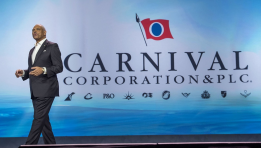
Carnival Corporation delivered a strong first-quarter performance, signaling continued recovery in the global travel sector as consumer demand for
- Lior mor
- •
- 6 Min Read
- •
- ago 4 days
SKN | Argan Delivers Strong Q4 Results as Revenue Climbs—Is Energy Infrastructure Demand Driving Growth?
Argan Inc. reported robust fiscal Q4 earnings and revenue growth, with shares rising in after-hours trading as investors responded
- ago 4 days
- •
- 6 Min Read
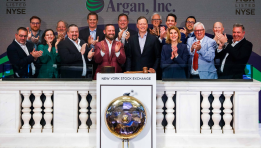
Argan Inc. reported robust fiscal Q4 earnings and revenue growth, with shares rising in after-hours trading as investors responded


