


- omer bar
- •
- 6 Min Read
- •
- 58 minutes ago
Key Points
- The FTSE 100 Index (^FTSE) closed relatively flat at 9,967.35, shedding a mere 4.82 points (0.05%) after a highly volatile trading session.
- Following a steep morning selloff that dragged the index to a daily low of 9,883.15, strong afternoon buying pressure erased the majority of the deficit.
- This intra-week resilience highlights shifting domestic growth expectations, requiring careful consideration for global and Israeli investment portfolios.
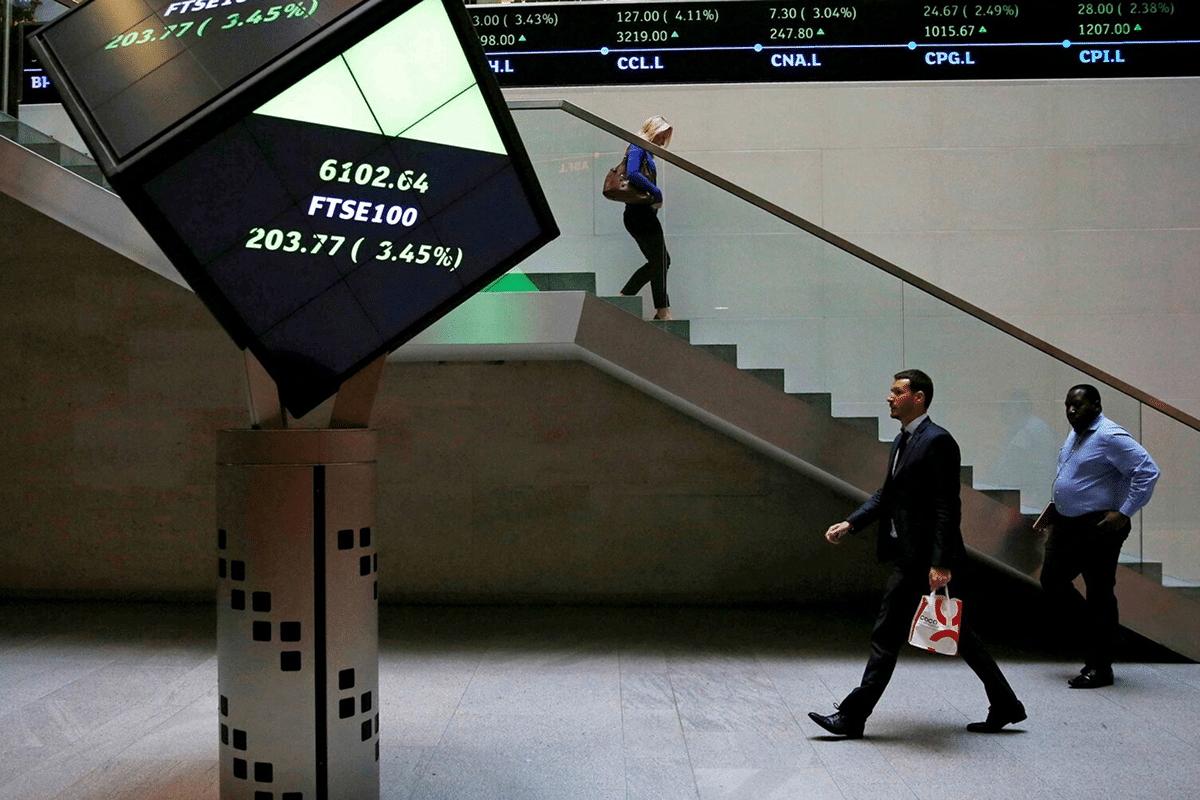
The FTSE 100 Index navigated a highly turbulent trading session this week, reflecting shifting sentiment regarding the underlying health of European and domestic UK markets. Ultimately settling at 9,967.35, the benchmark’s marginal 0.05% decline masks a dramatic intraday reversal that underscores a broader recalibration of risk premiums. This complex price action compels sophisticated investors across global and domestic markets to fundamentally reassess their exposure and defensive posturing.
Analyzing the Intraday Volatility and Technical Reversal
A granular review of the trading chart illustrates a pronounced technical V-shaped recovery. The index opened near its previous close at 9,972.30 but immediately encountered aggressive selling pressure, plunging to a daily trough of 9,883.15 by late morning. However, this downward momentum was sharply curtailed as institutional capital rotated back into the market during the afternoon sessions. The steady ascent back toward the 9,960 level suggests that while near-term profit-taking is present, buyers remain willing to defend critical support zones, absorbing the volatility and preventing a systemic structural breakdown.
Macroeconomic Catalysts and Sector-Specific Resilience
The trajectory of the UK’s primary equity gauge is deeply intertwined with global commodity cycles and multinational banking health. The morning selloff likely reflects resurfacing anxieties over sticky inflation or the trajectory of central bank interest rate policies across Europe. Yet, the robust recovery indicates constructive sentiment regarding resilient corporate dividend distributions and value-oriented sector strength. As international inflationary pressures show signs of shifting, indices like the FTSE 100 capture the attention of asset managers seeking alternatives to highly concentrated growth benchmarks, providing a defensive ballast against broader global capital market volatility.
Cross-Border Implications for Israeli Portfolios
For sophisticated investors operating within the Israeli domestic ecosystem, the UK equity landscape presents a compelling opportunity for strategic portfolio diversification. While the Tel Aviv Stock Exchange (TASE) offers robust exposure to regional innovation, incorporating FTSE 100 assets allows Israeli capital to capture defensive, dividend-yielding industrial exposure. Monitoring the foreign exchange dynamics between the British Pound, the US Dollar, and the Israeli Shekel remains crucial for these allocations. Fluctuations can significantly alter the risk premium and total return, making rigorous financial planning essential when navigating cross-border equity investments.
Looking ahead to the coming weeks, the primary outlook for the FTSE 100 hinges on its ability to definitively reclaim and sustain trading activity above the psychological 10,000 milestone. Market resilience will be rigorously tested as participants digest incoming macroeconomic data releases and interpret forward-looking central bank commentary. Strategic investors should prioritize dynamic portfolio management, utilizing these periods of technical consolidation to scale into fundamentally mispriced assets. By maintaining a disciplined focus on capital preservation, sophisticated allocators can effectively position themselves to capture sustainable, robust economic growth in the forthcoming financial quarters.
Comparison, examination, and analysis between investment houses
Leave your details, and an expert from our team will get back to you as soon as possible
* This article, in whole or in part, does not contain any promise of investment returns, nor does it constitute professional advice to make investments in any particular field.
To read more about the full disclaimer, click here
- Ronny Mor
- •
- 6 Min Read
- •
- ago 25 seconds
SKN | Does the CAC 40’s Volatile Five-Day Trajectory Signal Resilient European Equities?
The CAC 40 Index navigated a week defined by sharp intra-week fluctuations, ultimately securing a fractional five-day advance as
- ago 25 seconds
- •
- 6 Min Read

The CAC 40 Index navigated a week defined by sharp intra-week fluctuations, ultimately securing a fractional five-day advance as

- Lior mor
- •
- 6 Min Read
- •
- ago 4 hours
SKN | Navigating the NASDAQ Contraction: Is the Recent Tech Pullback a Strategic Reset?
The NASDAQ Composite faced pronounced headwinds this week, contracting 3.23% over the five-day trading period to close at 20,948.36.
- ago 4 hours
- •
- 6 Min Read

The NASDAQ Composite faced pronounced headwinds this week, contracting 3.23% over the five-day trading period to close at 20,948.36.

- Arik Arkadi Sluzki
- •
- 6 Min Read
- •
- ago 5 hours
SKN | Does the Russell 2000’s Late-Week Selloff Overshadow Its Modest Five-Day Advance?
The Russell 2000 Index (^RUT) navigated a highly turbulent trading week, reflecting shifting sentiment regarding the underlying health of
- ago 5 hours
- •
- 6 Min Read

The Russell 2000 Index (^RUT) navigated a highly turbulent trading week, reflecting shifting sentiment regarding the underlying health of

- sagi habasov
- •
- 6 Min Read
- •
- ago 5 hours
SKN | Navigating the Dow’s Weekly Contraction: Strategic Insights for Global Equities
The Dow Jones Industrial Average registered a notable contraction this week, shedding nearly 800 points in its final session
- ago 5 hours
- •
- 6 Min Read

The Dow Jones Industrial Average registered a notable contraction this week, shedding nearly 800 points in its final session

