


- omer bar
- •
- 6 Min Read
- •
- 1 day ago
Key Points
- VIG prioritizes dividend growth and quality, offering stability but lower yield.
- Its overlap with large-cap indexes limits diversification in today’s tech-driven market.
- Higher-yield ETFs may offer better income and diversification in the current macro environment.
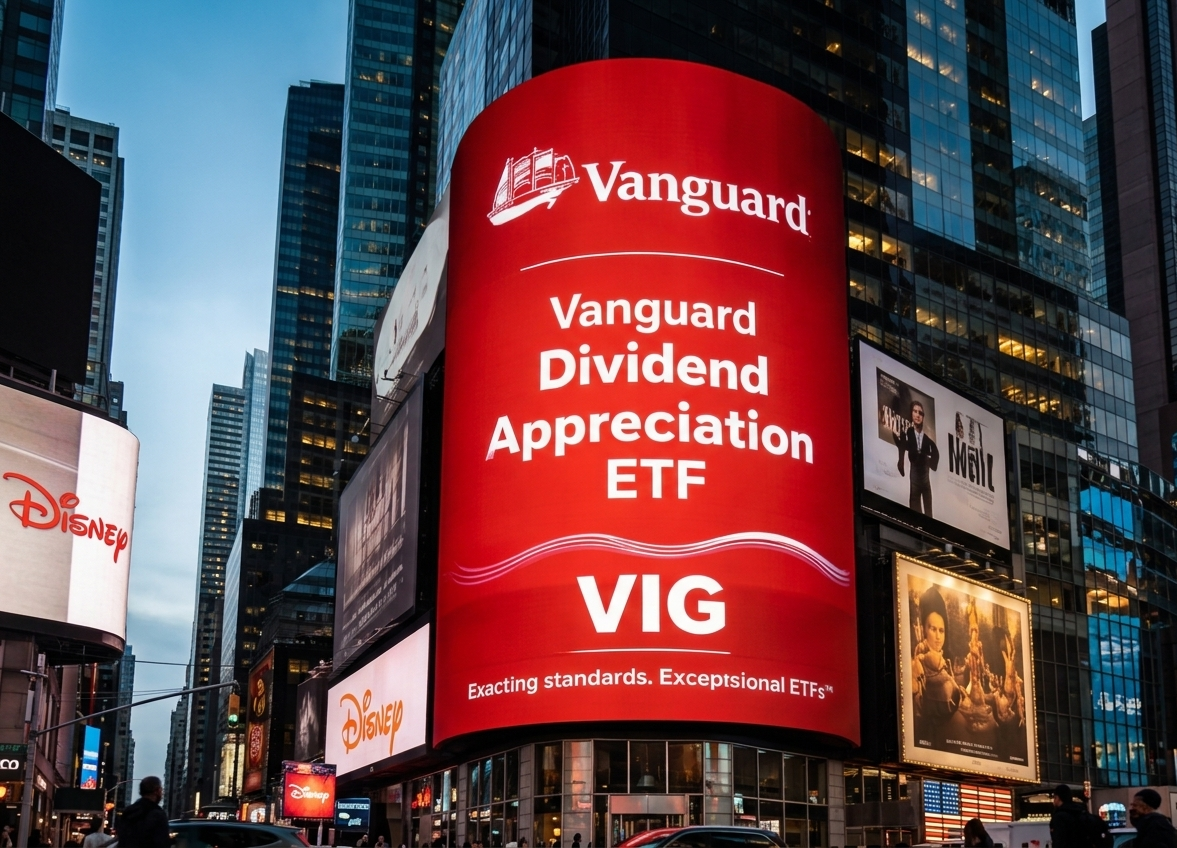
The Vanguard Dividend Appreciation ETF remains one of the most widely held dividend ETFs globally, built around a simple but powerful idea: invest in companies that consistently grow their dividends over time. However, in today’s market—marked by higher interest rates, inflation pressure, and concentration in mega-cap tech—investors are increasingly questioning whether dividend growth alone is enough.
Quality Over Yield: The Core Strategy Behind VIG
VIG tracks the S&P U.S. Dividend Growers Index, which includes companies that have increased dividends for at least 10 consecutive years. This approach emphasizes financial discipline, balance sheet strength, and earnings consistency.
Importantly, the index excludes the top 25% highest-yielding stocks. This is designed to avoid so-called “yield traps,” where unusually high dividends may signal underlying financial weakness or unsustainable payout ratios.
The result is a portfolio dominated by high-quality, large-cap companies with moderate yields but strong long-term growth potential. Historically, this has delivered a balance of capital appreciation and steadily rising income—particularly attractive in stable or low-rate environments.
Diversification Challenges in a Tech-Driven Market
One of the key concerns today is that VIG’s portfolio closely resembles broader large-cap benchmarks. Many of its holdings overlap with major indexes, meaning its performance often tracks the overall market rather than providing true diversification.
In a market heavily influenced by technology stocks, this correlation becomes more pronounced. If mega-cap tech names face volatility or valuation pressure, VIG may not offer significant downside protection.
By comparison, higher-yield dividend ETFs like Schwab US Dividend Equity ETF tend to have greater exposure to value-oriented sectors such as financials, energy, and industrials. These sectors can behave differently from growth stocks, offering potential diversification benefits during periods of market rotation.
Income vs. Growth in a High-Rate Environment
The macro backdrop is shifting investor priorities. With interest rates elevated and inflation concerns lingering, income has become a more critical component of portfolio construction.
VIG’s yield, while stable, is relatively modest compared to higher-yield alternatives. For investors seeking immediate cash flow or protection against inflation, this can be a disadvantage.
However, dividend growth should not be overlooked. Companies that consistently raise payouts can provide a hedge against inflation over time, as income streams increase alongside earnings. This makes VIG more suitable for long-term investors focused on total return rather than short-term income.
The key distinction is timing. In the current environment, higher-yield strategies may outperform due to immediate income advantages. Over a longer horizon, dividend growth strategies like VIG could regain leadership if rates stabilize or decline.
Looking ahead
The decision to buy VIG depends on investor objectives. Those seeking stability, quality, and long-term compounding may still find it attractive. Meanwhile, investors prioritizing income and diversification in a volatile market may lean toward higher-yield alternatives.
Comparison, examination, and analysis between investment houses
Leave your details, and an expert from our team will get back to you as soon as possible
* This article, in whole or in part, does not contain any promise of investment returns, nor does it constitute professional advice to make investments in any particular field.
To read more about the full disclaimer, click here
- sagi habasov
- •
- 5 Min Read
- •
- ago 2 hours
SKN | South Korea’s Market Trends Offer Insight for Global Investors
South Korea’s stock market has become a critical indicator for global technology demand and Asian export performance. The iShares MSCI
- ago 2 hours
- •
- 5 Min Read

South Korea’s stock market has become a critical indicator for global technology demand and Asian export performance. The iShares MSCI

- orshu
- •
- 6 Min Read
- •
- ago 13 hours
SKN | Oil ETF Surges as Energy Markets Tighten: Can USO Sustain Its Uptrend?
The United States Oil Fund (USO) advanced on March 26, closing at 117.62 after gaining 3.73 percent, as energy
- ago 13 hours
- •
- 6 Min Read

The United States Oil Fund (USO) advanced on March 26, closing at 117.62 after gaining 3.73 percent, as energy

- Lior mor
- •
- 5 Min Read
- •
- ago 1 day
SKN | How Tech Market Trends Are Shaping Nasdaq 100 Exposure
Investors in Israel and globally are evaluating the implications of rising U.S. interest rates and technology sector momentum on major
- ago 1 day
- •
- 5 Min Read

Investors in Israel and globally are evaluating the implications of rising U.S. interest rates and technology sector momentum on major
- orshu
- •
- 6 Min Read
- •
- ago 2 days
SKN | Small-Cap Momentum Builds: Can the iShares Russell 2000 ETF Sustain Its Breakout?
The iShares Russell 2000 ETF (IWM), a key benchmark for U.S. small-cap equities, advanced on March 25, rising 0.84
- ago 2 days
- •
- 6 Min Read

The iShares Russell 2000 ETF (IWM), a key benchmark for U.S. small-cap equities, advanced on March 25, rising 0.84

