


- Lior mor
- •
- 6 Min Read
- •
- 42 minutes ago
Key Points
- Workday forecast fiscal 2027 revenue below expectations.
- Company plans increased spending on agentic AI initiatives.
- Elongated enterprise sales cycles add near-term growth pressure.
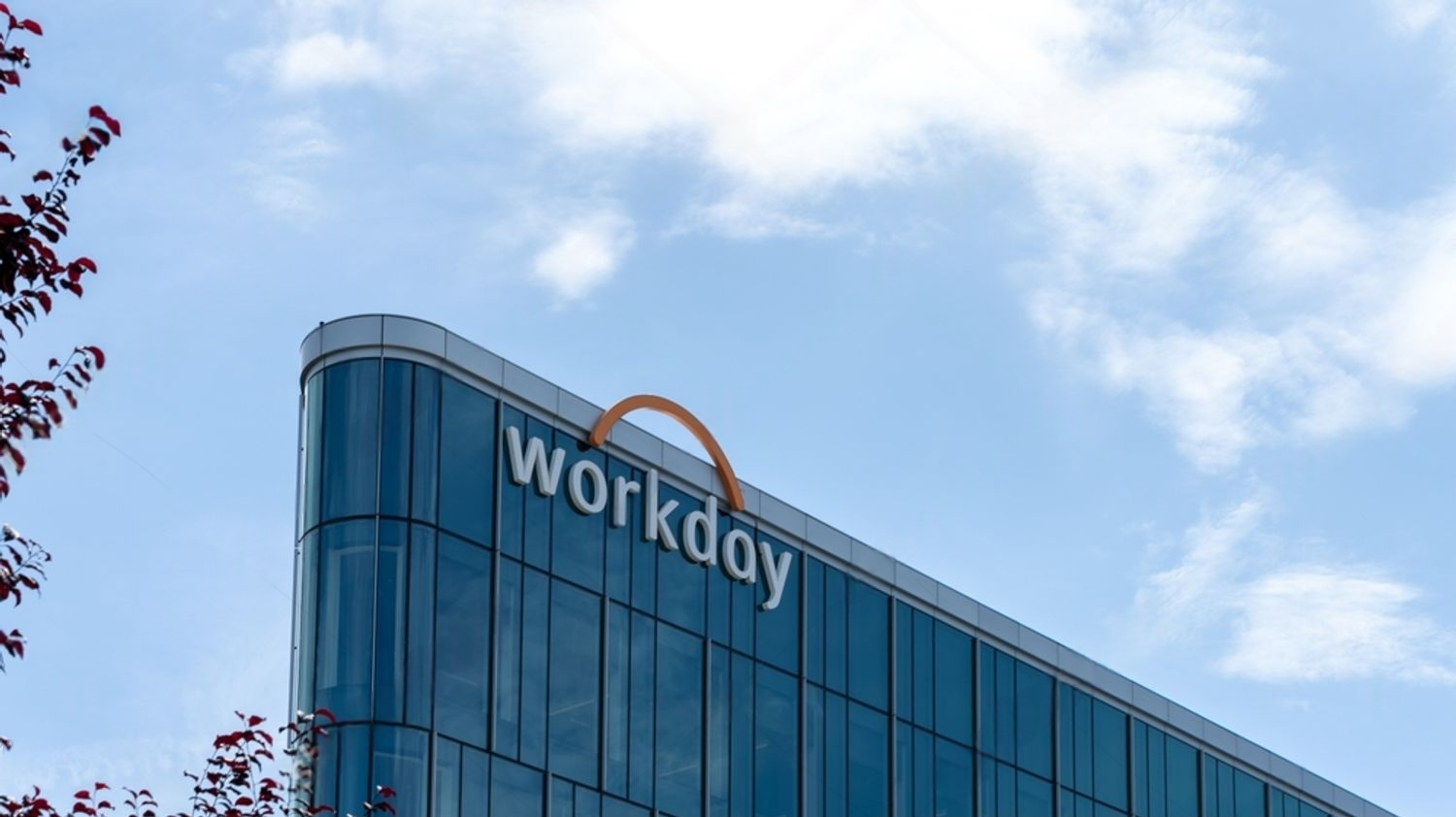
Workday shares fell sharply after the company issued a fiscal 2027 subscription revenue forecast below market expectations, reigniting concerns about the durability of traditional enterprise software models in the age of artificial intelligence. The cautious guidance, coupled with plans to increase investment in “agentic AI,” left investors questioning whether growth headwinds are cyclical — or structural.
Guidance Miss Overshadows Strategic AI Push
The Pleasanton, California-based HR and payroll software provider projected fiscal 2027 subscription revenue between $9.93 billion and $9.95 billion, falling short of analysts’ expectations of roughly $10 billion. In a market highly sensitive to forward growth signals, even a modest gap proved consequential.
Management indicated that additional spending would be directed toward advancing its “agentic AI” roadmap — an initiative aimed at embedding more autonomous, AI-driven capabilities into its platform. While this reflects proactive adaptation, investors appear concerned that incremental AI investment may pressure margins before delivering measurable revenue acceleration.
Analysts at Piper Sandler noted that in an environment where software valuations are already under scrutiny amid AI disruption debates, the outlook does little to ease skepticism around application-layer vendors.
Elongated Sales Cycles Signal Demand Friction
Workday cited lengthening sales cycles across government, education, healthcare, and parts of the commercial sector as factors delaying large enterprise contracts. Although management emphasized that most deals remain active — with some closing early in the new quarter — the slowdown highlights tighter spending controls among institutional buyers.
Such caution is consistent with a broader enterprise recalibration. Organizations are increasingly evaluating AI-driven productivity gains before committing to large-scale software renewals or expansions. This dynamic has created uneven demand patterns across SaaS providers, with spending shifting toward infrastructure and AI enablement rather than traditional workflow systems.
Workday’s forward 12-month price-to-earnings ratio of 11.94 sits slightly below Salesforce’s 13.98, reflecting relatively more conservative growth expectations. The compressed multiple suggests the market is already discounting moderate expansion compared with prior high-growth SaaS cycles.
Leadership Transition and Strategic Messaging
The earnings update follows the return of co-founder Aneel Bhusri as CEO earlier this month after stepping down as co-CEO in 2024. On the post-earnings call, Bhusri downplayed the notion that AI will displace traditional enterprise software, instead positioning it as an enhancement layer that complements core systems.
This messaging aligns with broader industry narratives suggesting AI will integrate into existing workflows rather than replace them outright. However, the market remains cautious, particularly as AI-native competitors and automation platforms emerge.
Looking ahead, investors will focus on three factors: the pace of enterprise budget recovery, tangible monetization of AI features, and stabilization of sales cycles. If AI investments translate into higher retention and upsell rates, Workday could reaccelerate growth. Conversely, prolonged deal scrutiny may limit near-term upside.
In the current climate, execution clarity matters more than vision. Workday’s path forward depends on demonstrating that AI integration strengthens — rather than cannibalizes — its core subscription model.
Comparison, examination, and analysis between investment houses
Leave your details, and an expert from our team will get back to you as soon as possible
* This article, in whole or in part, does not contain any promise of investment returns, nor does it constitute professional advice to make investments in any particular field.
To read more about the full disclaimer, click here
- Ronny Mor
- •
- 6 Min Read
- •
- ago 4 hours
SKN | Axon Enterprise Surges 15% After Earnings Beat: Is Security Tech Entering a New Growth Phase?
Axon Enterprise delivered a decisive fourth-quarter earnings beat, sending shares up 15% in extended trading as investors responded to strong
- ago 4 hours
- •
- 6 Min Read
Axon Enterprise delivered a decisive fourth-quarter earnings beat, sending shares up 15% in extended trading as investors responded to strong

- sagi habasov
- •
- 6 Min Read
- •
- ago 14 hours
SKN | Can Axon Sustain Its Momentum After a 15% Post-Earnings Surge?
Axon Enterprise delivered a decisive fourth-quarter beat, sending shares up roughly 15% in extended trading as investors rewarded strong demand
- ago 14 hours
- •
- 6 Min Read

Axon Enterprise delivered a decisive fourth-quarter beat, sending shares up roughly 15% in extended trading as investors rewarded strong demand

- omer bar
- •
- 6 Min Read
- •
- ago 17 hours
SKN | Can Spirit Airlines Rebound After Its Second Chapter 11 Filing?
Spirit Airlines says it expects to exit Chapter 11 bankruptcy by late spring or early summer after reaching a preliminary
- ago 17 hours
- •
- 6 Min Read

Spirit Airlines says it expects to exit Chapter 11 bankruptcy by late spring or early summer after reaching a preliminary
- Ronny Mor
- •
- 6 Min Read
- •
- ago 24 hours
SKN | Sterling Infrastructure Earnings Preview: Can STRL Sustain 28% Growth Momentum?
Sterling Infrastructure (NASDAQ: STRL) reports fourth-quarter results after Wednesday’s close, entering earnings week with strong price momentum and elevated growth
- ago 24 hours
- •
- 6 Min Read

Sterling Infrastructure (NASDAQ: STRL) reports fourth-quarter results after Wednesday’s close, entering earnings week with strong price momentum and elevated growth

