


- omer bar
- •
- 6 Min Read
- •
- 3 hours ago
Key Points
- The Pentagon added Alibaba, Baidu and BYD to its Section 1260H list of firms allegedly aiding China’s military.
- The designation carries no immediate sanctions but raises reputational and compliance risks.
- The move comes ahead of a planned Trump-Xi meeting and amid ongoing AI chip export tensions.
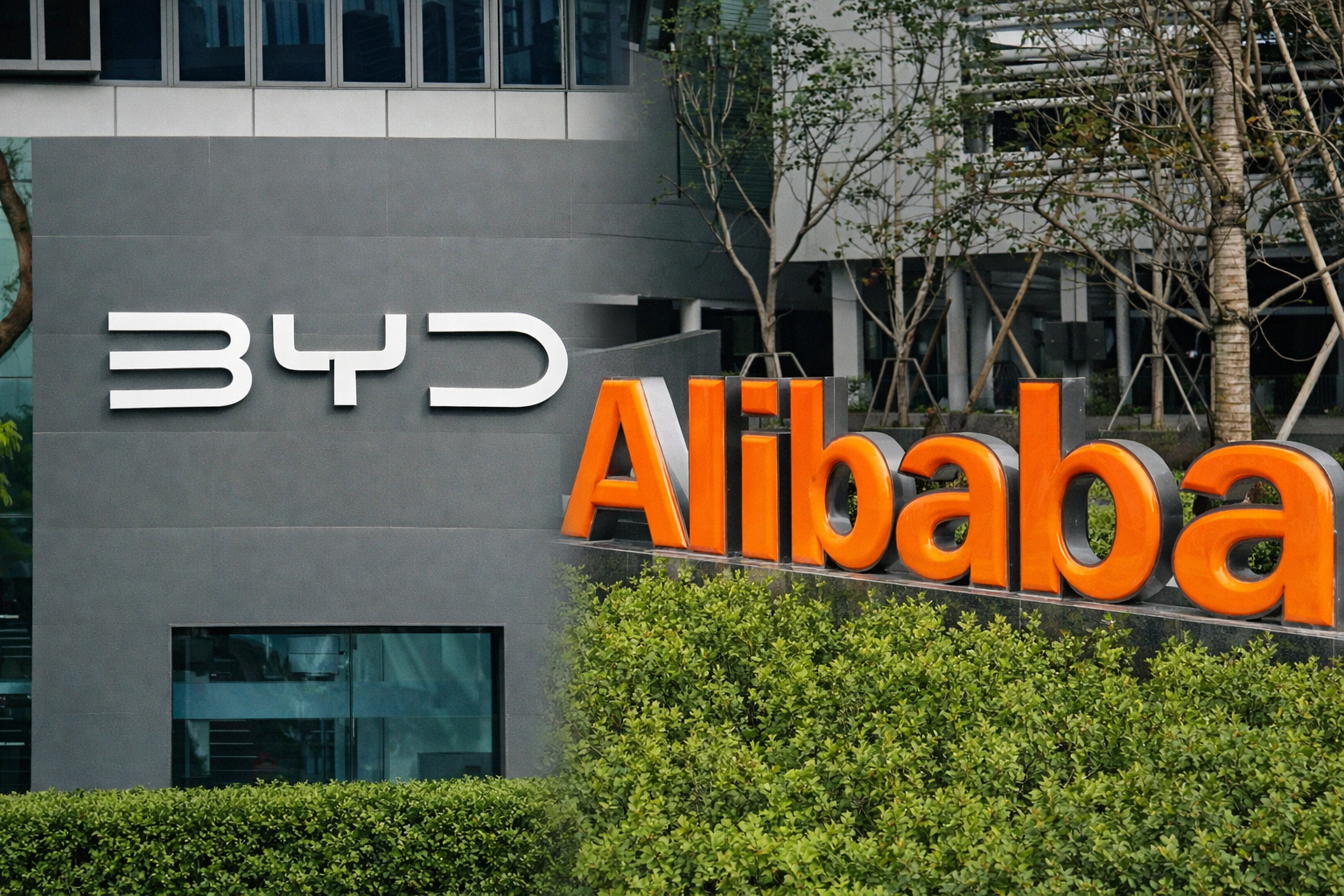
The U.S. Department of Defense has added Alibaba Group, Baidu and BYD to its Section 1260H list of companies deemed to be supporting China’s military, intensifying geopolitical scrutiny of some of China’s most globally recognized corporations. While the designation does not impose direct sanctions, it serves as a strong warning signal to investors and could complicate cross-border business activity at a sensitive moment in U.S.-China relations.
The announcement arrives just weeks before President Donald Trump’s expected April visit to Beijing, where discussions with President Xi Jinping are likely to include semiconductor exports and artificial intelligence cooperation. The timing underscores how technology and national security remain tightly intertwined.
Market Reaction and Immediate Implications
Markets responded swiftly. Alibaba’s American depositary receipts fell as much as 5% in extended trading, while Baidu’s shares declined 4.5%. Though the Section 1260H list does not automatically trigger sanctions or trading bans, it can affect investor sentiment, institutional mandates and future regulatory scrutiny.
Legal analysts note that inclusion on the list may restrict U.S. defense-related contracts and increase compliance obligations. It can also serve as a precursor to additional restrictions, including placement on other U.S. government blacklists. For multinational investors, the reputational dimension alone can alter portfolio allocation decisions, particularly for funds with ESG or geopolitical risk constraints.
Alibaba has rejected the designation, stating there is “no basis” for its inclusion and emphasizing it is neither a military company nor part of a military-civil fusion strategy. The company has indicated it may pursue legal avenues to challenge the classification.
AI, Semiconductors and Strategic Competition
The move carries broader strategic implications, particularly in artificial intelligence. Alibaba and Baidu are central players in China’s AI ecosystem and potential recipients of advanced Nvidia H200 chips, which remain subject to U.S. export controls.
Washington’s scrutiny reflects concern that advanced computing capabilities could indirectly support military modernization. At the same time, the U.S. administration faces the delicate task of balancing economic engagement with national security objectives, especially as American chipmakers seek access to the Chinese market.
For investors, this episode reinforces how AI-related valuations are increasingly shaped not only by technological progress but also by regulatory and geopolitical risk premiums. Heightened policy uncertainty can compress multiples even in high-growth sectors.
Geopolitical Signaling Ahead of High-Stakes Diplomacy
The designation may complicate diplomatic optics ahead of the Trump-Xi meeting. While trade and semiconductor policy are expected to dominate the agenda, the expansion of the military-affiliation list signals that Washington’s concerns extend beyond tariffs to structural technological competition.
Since its creation in 2021, the Section 1260H list has expanded to more than 130 entities across sectors including aviation, shipping, construction and telecommunications. The breadth of coverage highlights an evolving U.S. strategy that views economic infrastructure and advanced technology as components of strategic rivalry.
Looking forward, markets will monitor whether this action escalates into stricter measures or remains primarily symbolic. For global investors, the key question is whether regulatory friction becomes a persistent drag on cross-border capital flows and technology partnerships. As AI and defense capabilities converge, corporate strategy and geopolitics are likely to remain inseparable.
Comparison, examination, and analysis between investment houses
Leave your details, and an expert from our team will get back to you as soon as possible
* This article, in whole or in part, does not contain any promise of investment returns, nor does it constitute professional advice to make investments in any particular field.
To read more about the full disclaimer, click here
- Lior mor
- •
- 9 Min Read
- •
- ago 12 seconds
SKN | Donald Trump Plans to Roll Back Steel and Aluminium Tariffs Amid Affordability Crisis and Midterm Election Pressure
Former President Donald Trump is preparing to ease parts of his aggressive tariff regime on steel and aluminium goods, signaling
- ago 12 seconds
- •
- 9 Min Read

Former President Donald Trump is preparing to ease parts of his aggressive tariff regime on steel and aluminium goods, signaling

- Ronny Mor
- •
- 7 Min Read
- •
- ago 2 days
SKN | Is Trump Preparing to Exit USMCA? Trade Pact Uncertainty Rattles North American Markets
President Donald Trump is reportedly questioning whether the United States should remain in the US-Mexico-Canada Agreement (USMCA), the very trade
- ago 2 days
- •
- 7 Min Read
President Donald Trump is reportedly questioning whether the United States should remain in the US-Mexico-Canada Agreement (USMCA), the very trade

- sagi habasov
- •
- 4 Min Read
- •
- ago 2 days
SKN | Trump Considers Withdrawing from His Own Trade Deal
A Strategic Reversal President Donald Trump is privately considering whether to exit the US-Mexico-Canada Agreement (USMCA), the landmark trade pact
- ago 2 days
- •
- 4 Min Read
A Strategic Reversal President Donald Trump is privately considering whether to exit the US-Mexico-Canada Agreement (USMCA), the landmark trade pact

- orshu
- •
- 6 Min Read
- •
- ago 7 days
SKN | Oil Prices Rise as Iran–US Tensions Rekindle Geopolitical Risk Premium
Crude prices moved higher as markets digested renewed geopolitical tensions linked to Iran–US relations, reviving concerns over supply disruptions
- ago 7 days
- •
- 6 Min Read
Crude prices moved higher as markets digested renewed geopolitical tensions linked to Iran–US relations, reviving concerns over supply disruptions

