





- Lior mor
- •
- 7 Min Read
- •
- 5 months ago
Key Points
- Trading activity in the Consumer Staples Select Sector SPDR ETF (XLP) has accelerated as investors rotate defensively.
- Rising volumes reflect a shift toward earnings stability and dividends amid macro uncertainty.
- The fund’s structure reveals how market psychology is reshaping risk allocation in early 2026.

The U.S. equity market has entered February with a noticeably defensive tone, and one of the clearest signals of that shift is the surge in activity around the Consumer Staples Select Sector SPDR ETF, known by its ticker XLP. As volatility resurfaces across growth-heavy segments, XLP has become one of the most actively traded instruments in the market, drawing capital from both institutional allocators and tactical traders seeking resilience rather than momentum.
XLP closed the latest session near $87, up roughly 1.3% on the day, while trading volumes surged well above recent averages. That combination of rising prices and expanding turnover is typically associated with conviction flows, not short-term noise. In the current environment, it suggests investors are rebalancing portfolios toward perceived safety as macro risks reassert themselves.
Defensive Rotation Takes Center Stage
Consumer staples have historically played a stabilizing role during periods of economic ambiguity, and that dynamic is clearly re-emerging. Sticky inflation in services, uncertainty around the pace of U.S. rate cuts, and geopolitical risk have all contributed to a cautious risk appetite. Rather than exiting equities outright, many investors are choosing to rotate within the market, favoring sectors with predictable cash flows and pricing power.
XLP’s year-to-date return of just over 10% stands out against broader equity benchmarks, which have struggled to maintain consistent upside. This relative outperformance has reinforced the narrative that defensive positioning is not merely about capital preservation, but also about capturing steadier returns in an uneven market.
What the Holdings Say About Investor Psychology
The ETF’s concentration provides further insight into why activity has intensified. With over 60% of assets allocated to its top ten holdings, including global consumer giants with strong brand loyalty, XLP offers exposure to companies that tend to maintain margins even when growth slows. These businesses benefit from inelastic demand, allowing them to pass through costs more effectively than cyclical peers.
From a behavioral standpoint, the heavy trading interest suggests a shift from optimism-driven strategies toward risk management. Investors appear less focused on chasing upside surprises and more concerned with downside protection, yield stability, and balance-sheet strength.
Valuation, Yield, and Risk Metrics in Focus
At current levels, XLP trades at a trailing price-to-earnings ratio in the mid-20s, not cheap by historical standards, but increasingly attractive relative to high-growth sectors facing earnings compression. A dividend yield approaching 3% adds another layer of appeal, particularly for income-oriented portfolios in both the U.S. and Israel, where global diversification and dollar exposure remain key considerations.
Risk metrics further explain the surge in activity. With a beta close to 0.5, XLP offers significantly lower volatility than the broader market, making it a favored tool for portfolio hedging rather than outright speculation.
What Comes Next for Market Activity
Looking ahead, XLP’s status as one of the most actively traded market instruments will likely depend on macro data and central bank signaling. Stronger-than-expected growth could slow defensive flows, while renewed inflation or delayed rate cuts may intensify them. For now, elevated volumes suggest that investors are not merely parking cash, but actively repositioning for a more uncertain phase of the cycle.
Comparison, examination, and analysis between investment houses
Leave your details, and an expert from our team will get back to you as soon as possible
* This article, in whole or in part, does not contain any promise of investment returns, nor does it constitute professional advice to make investments in any particular field.
To read more about the full disclaimer, click here
- orshu
- •
- 7 Min Read
- •
- ago 8 hours
SKN | SPY Climbs Toward Recent Highs as Investors Embrace Broad US Market Exposure
The SPDR S&P 500 ETF Trust (NYSEARCA: SPY), the world's largest exchange-traded fund tracking the S&P 500 Index, traded
- ago 8 hours
- •
- 7 Min Read
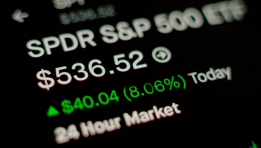
The SPDR S&P 500 ETF Trust (NYSEARCA: SPY), the world's largest exchange-traded fund tracking the S&P 500 Index, traded

- Ronny Mor
- •
- 7 Min Read
- •
- ago 15 hours
SKN | Is Institutional Demand Reshaping Bitcoin Exposure Through ETF Vehicles?
Global cryptocurrency markets are once again being shaped by the accelerating adoption of exchange-traded products linked to Bitcoin, with ProShares
- ago 15 hours
- •
- 7 Min Read
Global cryptocurrency markets are once again being shaped by the accelerating adoption of exchange-traded products linked to Bitcoin, with ProShares
- orshu
- •
- 7 Min Read
- •
- ago 1 day
SKN | Direxion Daily S&P 500 Bear 1X ETF Gains as Investors Increase Defensive Positioning
The Direxion Daily S&P 500 Bear 1X Shares ETF (NYSE Arca: SPDN) moved higher on June 23, reflecting growing
- ago 1 day
- •
- 7 Min Read
The Direxion Daily S&P 500 Bear 1X Shares ETF (NYSE Arca: SPDN) moved higher on June 23, reflecting growing

- sagi habasov
- •
- 8 Min Read
- •
- ago 2 days
SKN | Is the Semiconductor Downside Trade Gaining Momentum? What Investors Should Know About Leveraged Bear Exposure
Global semiconductor markets are once again at the center of heightened volatility, as investors reassess the sustainability of the recent
- ago 2 days
- •
- 8 Min Read

Global semiconductor markets are once again at the center of heightened volatility, as investors reassess the sustainability of the recent


