





- Ronny Mor
- •
- 6 Min Read
- •
- 5 hours ago
Key Points
- A kilogram of Nutella costs approximately €13.32 at Lidl and €14.48 at Rimi in Latvia, compared with about €7.72 in Germany.
- The price difference represents a premium of roughly 42% to 47%, despite both countries sharing the euro as their common currency.
- Analysts suggest the disparity reflects differences in retail competition, market structure, and pricing strategies rather than foreign exchange movements.
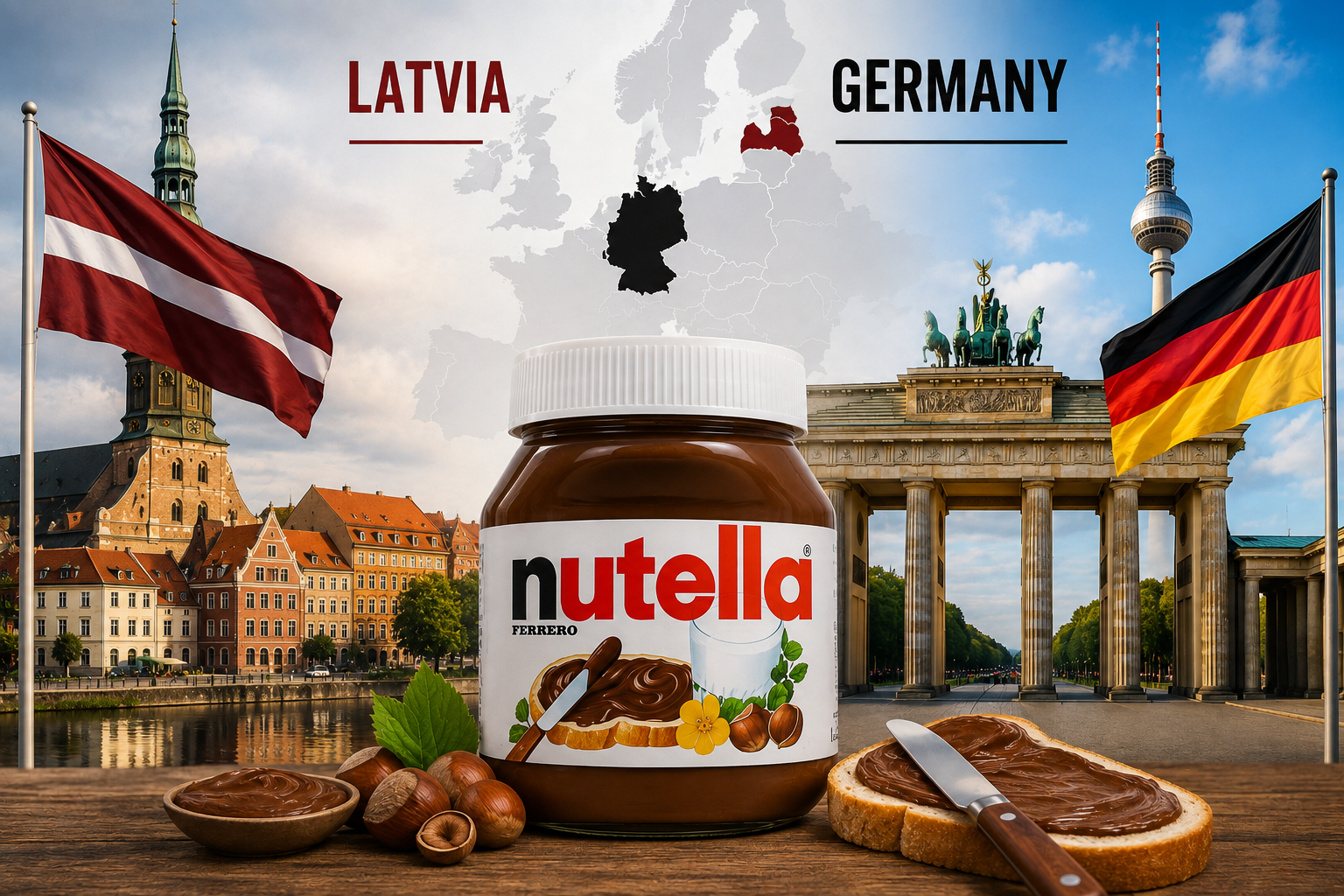
Consumer prices within the eurozone are once again drawing attention after a comparison of Nutella prices revealed a substantial gap between Latvia and Germany. Although both countries use the euro, shoppers in Latvia are paying significantly more for the same product, with prices ranging from €13.32 to €14.48 per kilogram compared with approximately €7.72 in Germany. The difference highlights an important economic reality: even within a shared currency area, retail prices can vary considerably due to market competition, supply chain dynamics, and local business conditions rather than exchange rate fluctuations.
Common Currency Does Not Guarantee Uniform Prices
The euro was introduced to eliminate exchange-rate uncertainty and facilitate trade across member states, but it was never intended to equalize retail pricing. Businesses continue to operate in distinct national markets with varying levels of competition, consumer purchasing behavior, logistics costs, and operating expenses. These factors often result in noticeable price differences for identical products across the eurozone.
In the case of Nutella, the premium paid by Latvian consumers far exceeds what might reasonably be explained by transportation or distribution costs alone. The comparison suggests that market-specific pricing strategies and competitive dynamics play a much larger role in determining shelf prices than currency considerations.
Retail Competition May Be the Key Driver
Economists frequently point to competition as one of the strongest influences on consumer pricing. Germany’s grocery sector is among Europe’s most competitive, with discount chains such as Lidl, Aldi, Kaufland, and numerous regional supermarkets competing aggressively for market share. This intense rivalry often results in lower profit margins and more attractive prices for consumers.
By contrast, smaller retail markets typically have fewer large-scale competitors, reducing pressure to lower prices. In markets where consumer choice is more limited, retailers may possess greater pricing power, enabling them to maintain higher margins even for internationally recognized products. Such structural differences can persist regardless of whether countries share the same monetary system.
Broader Implications for Inflation and Consumer Purchasing Power
Price disparities within the eurozone have implications beyond supermarket shelves. Higher grocery costs directly affect household purchasing power and can contribute to differing inflation experiences across member states. Policymakers closely monitor these variations because persistent price gaps may influence consumer confidence, wage negotiations, and broader perceptions of economic fairness within the single market.
Looking ahead, investors and economists will continue monitoring retail competition, food inflation, and consumer spending trends across Europe. Increased market competition, expanding discount retail networks, and improvements in supply chain efficiency could gradually narrow pricing differences over time. However, unless competitive conditions become more closely aligned across national markets, consumers are likely to continue experiencing meaningful differences in the cost of everyday goods despite sharing the same currency.
Comparison, examination, and analysis between investment houses
Leave your details, and an expert from our team will get back to you as soon as possible
* This article, in whole or in part, does not contain any promise of investment returns, nor does it constitute professional advice to make investments in any particular field.
To read more about the full disclaimer, click here
- omer bar
- •
- 7 Min Read
- •
- ago 1 day
SKN | Could the Federal Reserve Raise Rates Again? Fed’s Cook Signals Inflation Remains the Deciding Factor
The Federal Reserve may not be finished tightening monetary policy if inflation remains persistent, according to comments from Governor Lisa
- ago 1 day
- •
- 7 Min Read

The Federal Reserve may not be finished tightening monetary policy if inflation remains persistent, according to comments from Governor Lisa

- Arik Arkadi Sluzki
- •
- 7 Min Read
- •
- ago 1 day
SKN | ECB Says AI Investment Is Softening the Impact of Uncertainty on Euro Zone Growth
The European Central Bank (ECB) believes that rising investment in artificial intelligence and other intangible assets is helping cushion
- ago 1 day
- •
- 7 Min Read
The European Central Bank (ECB) believes that rising investment in artificial intelligence and other intangible assets is helping cushion
- omer bar
- •
- 7 Min Read
- •
- ago 2 days
SKN | U.S. Promises Strong Support for Japan After Yen Intervention: What Does It Mean for Currency Markets?
The United States has signaled strong backing for Japan following recent efforts to support the yen, highlighting the growing importance
- ago 2 days
- •
- 7 Min Read
The United States has signaled strong backing for Japan following recent efforts to support the yen, highlighting the growing importance

- Lior mor
- •
- 8 Min Read
- •
- ago 2 days
SKN | A Macroeconomic Gamble in Tokyo: Takaichi’s Cutback Plan Collides with Rising Interest Rates in Japan
Japanese Prime Minister Sanae Takaichi continues to advance her ambitious and controversial economic agenda, centered around a first-of-its-kind consumption tax
- ago 2 days
- •
- 8 Min Read
Japanese Prime Minister Sanae Takaichi continues to advance her ambitious and controversial economic agenda, centered around a first-of-its-kind consumption tax


