


- Lior mor
- •
- 6 Min Read
- •
- 3 months ago
Key Points
- Federal Reserve Governor Austan Goolsbee dissented against the latest rate cut, citing persistent inflation concerns.
- His stance reflects a more cautious view of economic momentum compared with the rest of the FOMC.
- The dissent adds uncertainty to the Fed’s policy trajectory heading into 2025.
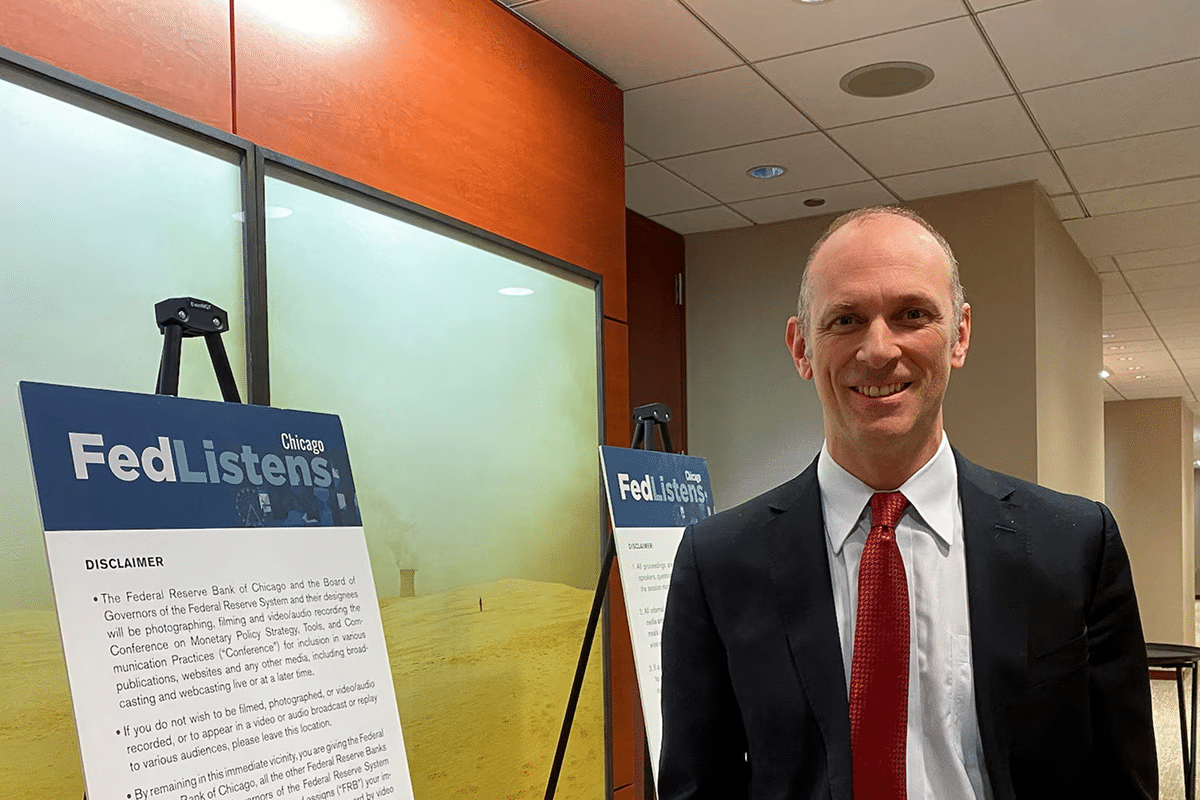
Financial markets were taken aback after Austan Goolsbee, one of the Federal Reserve’s more moderate voices, voted against the central bank’s most recent interest-rate cut. His dissent underscores the delicate balance the Fed is attempting to strike as inflation cools but remains uneven across sectors. For investors, the move reopens debate about how quickly the central bank can—or should—ease monetary conditions without reigniting price pressures.
Goolsbee warns against premature easing
Goolsbee emphasized that the decision to vote “no” stemmed from lingering inflation risks that, in his view, have not abated enough to justify policy loosening. While headline inflation has retreated meaningfully from 2022 highs, he argued that underlying components—particularly in services—remain too elevated to warrant confidence in a sustained trend lower. His stance contrasts with the more optimistic tone of the committee majority, who see cooling price data as sufficient justification for incremental cuts.
His dissent highlights an important internal divide: how to balance progress on inflation with emerging signs of economic deceleration. For institutional investors in Israel and abroad, the shift signals that the Fed may not move as uniformly dovish as markets had anticipated.
Market reaction: cautious but not alarmed
Equity markets largely absorbed the dissent without significant volatility, though bond yields showed mild upward pressure as traders reassessed the pace of easing. Futures markets had priced in additional rate cuts for later in the year, but Goolsbee’s comments suggest the runway may be shorter than expected. The Fed’s messaging, already carefully calibrated, now carries an added layer of complexity that investors will need to interpret with greater nuance.
For global markets—especially rate-sensitive sectors such as technology, real estate, and credit—the dissent serves as a reminder that the Fed’s path is not predetermined. With inflation in Europe and parts of Asia also showing mixed trajectories, central bank divergence could become a defining theme for 2025.
Broader economic backdrop shapes policy debate
Goolsbee’s argument rests on concerns that the economy, while slowing, remains resilient enough to risk a renewed inflation uptick should rates fall too quickly. Labor market conditions, though softening, remain historically tight, and wage growth continues to outpace pre-pandemic norms. These dynamics complicate the Fed’s attempt to achieve a “soft landing” without sacrificing recent gains in price stability.
Moreover, geopolitical pressures—from supply chain disruptions to energy volatility—pose additional risks to inflation forecasts. For policymakers like Goolsbee, the prudent course is to maintain a restrictive stance longer, even if doing so slows the pace of economic expansion.
Looking ahead, investors will focus on upcoming inflation data, labor market metrics, and future FOMC commentary to assess whether Goolsbee’s caution will gain broader support. If price pressures remain sticky, the Fed may slow or pause its easing cycle. Conversely, materially softer data could isolate Goolsbee’s dissent as a one-off. Either way, the vote signals a more contested policy landscape as the central bank navigates the final stages of its anti-inflation campaign.
Comparison, examination, and analysis between investment houses
Leave your details, and an expert from our team will get back to you as soon as possible
* This article, in whole or in part, does not contain any promise of investment returns, nor does it constitute professional advice to make investments in any particular field.
To read more about the full disclaimer, click here
- sagi habasov
- •
- 8 Min Read
- •
- ago 6 hours
SKN | Will U.S. Jobs Data Redefine the Federal Reserve’s Rate Path as Oil Prices Stir Inflation Fears?
Global bond markets are entering a critical phase as traders analyze U.S. labor market data to better understand the Federal
- ago 6 hours
- •
- 8 Min Read

Global bond markets are entering a critical phase as traders analyze U.S. labor market data to better understand the Federal

- Ronny Mor
- •
- 6 Min Read
- •
- ago 1 day
SKN | China Sets Lowest Growth Target in Decades Ahead of Trump Summit
China has announced its lowest economic growth target in decades, signaling a more cautious outlook as the world’s second-largest economy
- ago 1 day
- •
- 6 Min Read

China has announced its lowest economic growth target in decades, signaling a more cautious outlook as the world’s second-largest economy
- sagi habasov
- •
- 6 Min Read
- •
- ago 3 days
SKN | Currency Markets Signal a Supply-Side Inflation Shock: Are FX Traders Ahead of Central Banks?
Global currency markets are increasingly pricing in the risk of a supply-driven inflation resurgence. Moves across the U.S. dollar,
- ago 3 days
- •
- 6 Min Read
Global currency markets are increasingly pricing in the risk of a supply-driven inflation resurgence. Moves across the U.S. dollar,

- Lior mor
- •
- 6 Min Read
- •
- ago 3 days
SKN | Can Europe’s Economy Withstand the Iran War if It Ends Within a Month?
The trajectory of Europe’s economic recovery may hinge on a single variable: duration. If the current Iran conflict subsides within
- ago 3 days
- •
- 6 Min Read

The trajectory of Europe’s economic recovery may hinge on a single variable: duration. If the current Iran conflict subsides within

