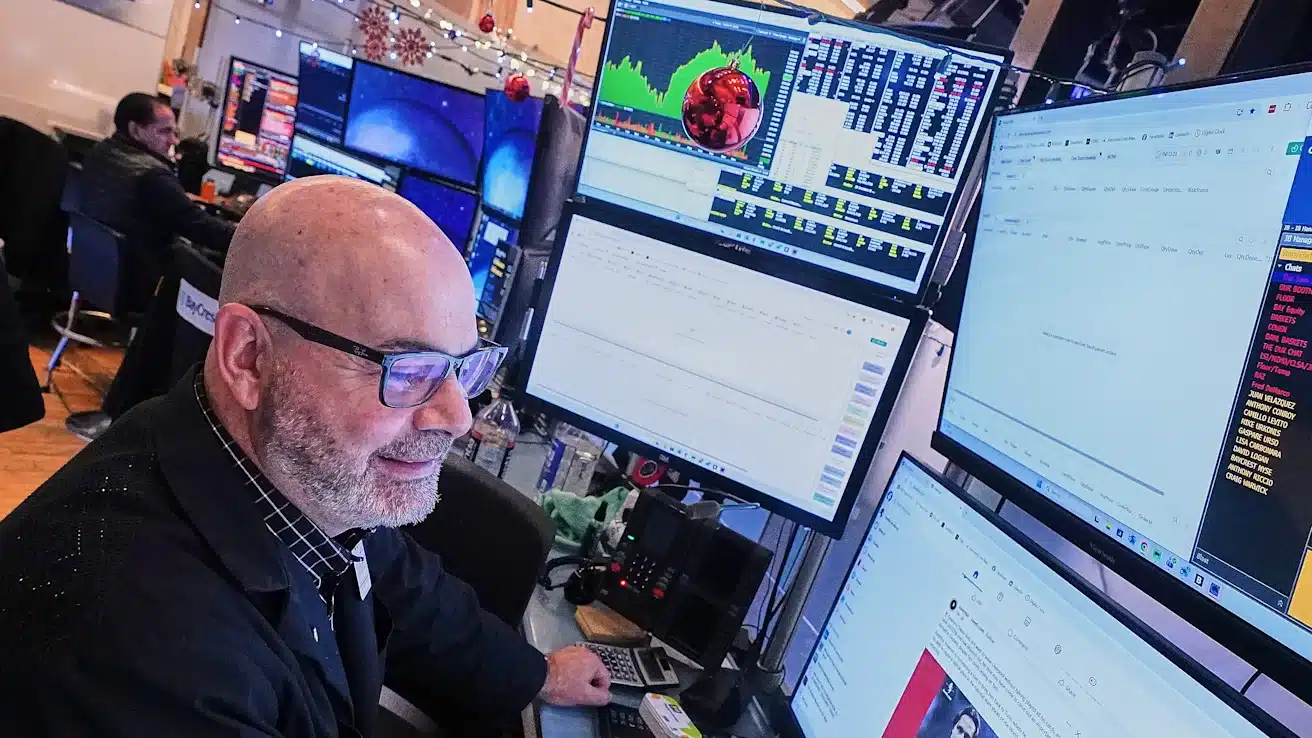
US equity futures edged higher after a sharp tech-driven sell-off on Wall Street, signaling tentative stabilization in market sentiment following heightened volatility. The rebound in Dow, S&P 500, and Nasdaq futures reflects investor repositioning rather than a broad risk-on shift, as markets remain sensitive to macroeconomic uncertainty, valuation pressures, and shifting expectations around interest rates and economic growth.
Technology Sector Weakness and Market Repricing
The latest sell-off was concentrated in large-cap technology and high-growth stocks, which have faced increasing pressure from valuation concerns and profit-taking after extended rallies. Market participants have become more cautious toward segments that are highly sensitive to interest rate expectations, as higher-for-longer rate scenarios directly affect discount rates and future earnings valuations. This repricing dynamic has amplified volatility in the Nasdaq, which remains more exposed to growth and innovation-driven sectors.
The decline in tech shares also reflects broader portfolio rebalancing strategies among institutional investors, who have gradually shifted capital toward sectors with more stable cash flows and lower valuation risk. Financials, industrials, and selected defensive segments have shown relative resilience, highlighting a tactical rotation rather than a full-scale market risk-off move. Futures market gains indicate that investors are selectively re-entering positions rather than signaling broad-based confidence.
Macro Signals, Policy Expectations, and Investor Positioning
Beyond sector-specific factors, macroeconomic conditions continue to shape market direction. Investors remain focused on inflation trends, labor market resilience, and central bank policy signals, all of which directly influence equity valuations and capital allocation decisions. Uncertainty around the pace and timing of potential monetary policy easing has kept markets highly reactive to economic data releases and policy commentary.
This environment has reinforced short-term trading behavior and increased sensitivity to earnings guidance, economic indicators, and forward-looking corporate outlooks. For global investors, including those in Israel, US market movements continue to play a central role in shaping international capital flows, currency trends, and risk appetite across global markets. The linkage between Wall Street performance and global asset allocation remains structurally strong.
Strategic Market Implications and Risk Dynamics
The rebound in futures does not necessarily signal the end of volatility but reflects a tactical adjustment following an accelerated sell-off. Markets are increasingly characterized by rapid sentiment shifts, where downside moves are often followed by technical rebounds driven by positioning and liquidity dynamics rather than fundamental shifts in outlook. This pattern underscores the importance of distinguishing between short-term market noise and longer-term structural trends.
From a strategic perspective, the current market environment highlights the growing divide between growth-driven valuations and cash-flow stability. Investors are placing greater emphasis on earnings quality, balance sheet strength, and macro resilience rather than purely on growth narratives. This recalibration process is reshaping sector leadership and market structure, particularly within US equities.
Looking ahead, market participants will closely monitor upcoming economic data releases, corporate earnings updates, and central bank communications for confirmation of macro trends and policy direction. Risks remain tied to inflation persistence, policy mispricing, and potential growth slowdowns, while opportunities may emerge from valuation normalization and sector rotation dynamics. For sophisticated global and Israeli investors, the key focus will remain on risk management, cross-asset correlations, and disciplined portfolio positioning as markets navigate an increasingly complex and data-driven investment landscape.
Comparison, examination, and analysis between investment houses
Leave your details, and an expert from our team will get back to you as soon as possible
* This article, in whole or in part, does not contain any promise of investment returns, nor does it constitute professional advice to make investments in any particular field.
The global auto industry’s push to survive an era of electrification, automation, and geopolitical fragmentation is forcing unlikely conversations behind
ago 23 hours
•
7 Min Read
The global auto industry’s push to survive an era of electrification, automation, and geopolitical fragmentation is forcing unlikely conversations behind
As transatlantic relations grow more strained under President Donald Trump’s renewed tariff threats and unconventional foreign policy rhetoric, a once-technical
ago 3 days
•
7 Min Read
As transatlantic relations grow more strained under President Donald Trump’s renewed tariff threats and unconventional foreign policy rhetoric, a once-technical
Sectors Status
Sector
Weight (%)
YTD Return
All Sectors
100.00%
+2.77%
Technology
28.51%
-3.25%
Financial Services
14.77%
+0.43%
Consumer Cyclical
10.71%
+2.80%
Communication Services
10.42%
+2.74%
Healthcare
10.01%
+9.41%
Industrials
8.95%
+9.59%
Consumer Defensive
4.99%
+10.00%
Energy
4.50%
+12.55%
Basic Materials
2.93%
+12.38%
Real Estate
2.15%
+3.25%
Utilities
2.07%
+1.33%
For comparison, examination, and analysis between investment firms
Leave your details, and one of our experts will get back to you as soon as possible