





- orshu
- •
- 7 Min Read
- •
- 2 hours ago
Key Points
- The S&P 500 and Nasdaq advanced as investors continued to favor large-cap growth and technology stocks.
- The Russell 2000 lagged, signaling ongoing caution toward smaller companies and domestic economic sensitivity.
- The VIX declined while the US Dollar Index strengthened, reflecting improving risk sentiment alongside continued demand for dollar-denominated assets.

US equity markets traded with a mixed but generally constructive tone on June 24 as investors balanced optimism in large-cap growth stocks against continued weakness in smaller companies. The S&P 500 rose by 0.23% to 7,382.44, while the Nasdaq gained 0.16% to 25,628.02, extending the market’s preference for technology and growth-oriented sectors.
At the same time, the Dow Jones Industrial Average slipped marginally by 0.02%, and the Russell 2000 fell by 0.96%, highlighting a growing divergence between market leaders and economically sensitive segments. Investors are increasingly focused on whether the current rally can broaden beyond mega-cap stocks or remain concentrated in a narrow group of market leaders.
Technology and Large Caps Continue to Lead Market Performance
The strongest support for US equities came from large-cap stocks, particularly within technology-related sectors. The Nasdaq’s advance reflects continued investor confidence in companies tied to artificial intelligence, cloud infrastructure, semiconductor demand, and digital transformation trends.
The S&P 500 also moved higher, supported by its heavy weighting toward technology and communication services companies. These sectors have continued to attract capital due to their earnings resilience and ability to generate growth even amid uncertain economic conditions.
However, the modest nature of today’s gains suggests investors remain selective. Rather than embracing the entire market, capital continues flowing toward companies with strong balance sheets, pricing power, and visible earnings growth. This selective participation remains one of the defining characteristics of the current market environment.
Small-Cap Weakness Raises Questions About Economic Momentum
While large-cap benchmarks moved higher, the Russell 2000 declined by 0.96%, making it one of the weakest major indexes of the session. Small-cap companies are often viewed as a barometer of domestic economic conditions because they generally have greater exposure to local demand, financing costs, and credit conditions.
The underperformance of smaller companies may indicate lingering investor concerns regarding borrowing costs and economic growth prospects. Many small-cap businesses remain more vulnerable to higher interest rates than larger corporations, which typically have stronger access to capital markets and greater financial flexibility.
Meanwhile, Canada’s S&P/TSX Composite Index fell by 0.66%, while Brazil’s IBOVESPA edged lower by 0.03%. These movements suggest that investors remain cautious toward certain cyclical and commodity-sensitive markets even as US large-cap equities continue to demonstrate resilience.
Falling Volatility and Stronger Dollar Shape Investor Sentiment
One of the most notable developments during the session was the decline in the CBOE Volatility Index (VIX), which fell by 2.20% to 19.06. The retreat in volatility suggests that investors are becoming more comfortable with current market conditions following recent periods of elevated uncertainty.
At the same time, the US Dollar Index rose by 0.27% to 101.68. A stronger dollar typically reflects continued demand for US assets and can signal confidence in the relative strength of the American economy. However, dollar strength can also create headwinds for multinational companies by reducing the value of overseas earnings when translated back into US currency.
The combination of declining volatility and a firmer dollar indicates that investors remain cautiously optimistic. Market participants appear willing to take on risk in selected sectors while maintaining a degree of defensive positioning through exposure to US assets.
Looking ahead, investors will closely monitor upcoming economic data, Federal Reserve commentary, corporate earnings guidance, and labor market trends for clues about the next phase of market direction. Opportunities may emerge if economic growth remains stable and earnings continue to exceed expectations. However, risks remain tied to interest-rate uncertainty, slowing global growth, and the market’s ongoing dependence on a relatively narrow group of large-cap leaders. Whether participation broadens into small-cap and cyclical sectors may become one of the most important indicators of market strength during the second half of the year.
Comparison, examination, and analysis between investment houses
Leave your details, and an expert from our team will get back to you as soon as possible
* This article, in whole or in part, does not contain any promise of investment returns, nor does it constitute professional advice to make investments in any particular field.
To read more about the full disclaimer, click here
- orshu
- •
- 7 Min Read
- •
- ago 46 minutes
SKN | SPY Climbs Toward Recent Highs as Investors Embrace Broad US Market Exposure
The SPDR S&P 500 ETF Trust (NYSEARCA: SPY), the world's largest exchange-traded fund tracking the S&P 500 Index, traded
- ago 46 minutes
- •
- 7 Min Read
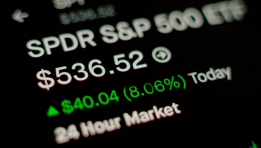
The SPDR S&P 500 ETF Trust (NYSEARCA: SPY), the world's largest exchange-traded fund tracking the S&P 500 Index, traded
- orshu
- •
- 7 Min Read
- •
- ago 2 hours
SKN | Nasdaq Holds Near Record Territory as Technology Stocks Extend Market Leadership
The Nasdaq Composite traded higher on June 24, rising by 0.16% to 25,628.23 as investors continued to favor growth-oriented
- ago 2 hours
- •
- 7 Min Read

The Nasdaq Composite traded higher on June 24, rising by 0.16% to 25,628.23 as investors continued to favor growth-oriented
- orshu
- •
- 6 Min Read
- •
- ago 6 hours
SKN | Asia Markets Rebound on June 24, 2026 as South Korea Jumps 3.26% Following Sharp Selloff
Asian markets rebounded on June 24, 2026, as investors returned to equities following one of the region’s sharpest selloffs of
- ago 6 hours
- •
- 6 Min Read

Asian markets rebounded on June 24, 2026, as investors returned to equities following one of the region’s sharpest selloffs of
- orshu
- •
- 7 Min Read
- •
- ago 8 hours
SKN | European Markets Mixed as France and U.K. Rebound While Germany Extends Decline
European markets delivered a mixed performance on June 24, 2026, as investors attempted to stabilize following the previous session’s broad-based
- ago 8 hours
- •
- 7 Min Read

European markets delivered a mixed performance on June 24, 2026, as investors attempted to stabilize following the previous session’s broad-based


