


- orshu
- •
- 7 Min Read
- •
- 3 hours ago
Key Points
- The VIX surged 5.08% to 20.06, signaling a notable rise in short-term market anxiety.
- Major U.S. indices are mixed, with the S&P 500 up 0.03% while the Nasdaq and Dow trade slightly lower.
- The U.S. Dollar Index slipped 0.12%, suggesting limited safe-haven demand despite elevated volatility.

U.S. markets opened February 23 with a cautious tone, as volatility picked up while major equity benchmarks showed mixed performance. The divergence between a rising VIX and relatively stable index levels highlights growing investor sensitivity to macro risks, even as headline indices remain near elevated territory.
Volatility Reawakens as the VIX Breaks Above 20
The CBOE Volatility Index, or VIX, climbed 5.08% to 20.06 during the session, crossing the psychologically significant 20 threshold. Historically, a VIX reading above 20 signals heightened uncertainty and an increased demand for options-based hedging strategies. While not indicative of panic, the move reflects a measurable shift in sentiment.
The rise in volatility comes even as the S&P 500 posted a modest 0.03% gain to 6,911.58. This divergence suggests that institutional investors may be positioning defensively despite limited index-level declines. Such conditions often precede larger directional moves, particularly when macroeconomic data or policy commentary loom.
Market participants are likely evaluating upcoming economic releases, Federal Reserve guidance, and geopolitical developments that could influence interest rate expectations and risk appetite.
Mixed Index Performance Signals Sector Rotation
The Nasdaq slipped 0.20% to 22,839.44, while the Dow Jones Industrial Average edged down 0.04% to 49,606.51. Small-cap stocks, represented by the Russell 2000, declined 0.05%, suggesting limited appetite for higher-beta exposure. Meanwhile, Canada’s S&P/TSX Composite rose 0.45%, highlighting relative resilience in commodity-linked sectors.
Brazil’s IBOVESPA fell 0.48%, potentially reflecting emerging market sensitivity to global capital flows and currency dynamics. The modest decline in the U.S. Dollar Index, down 0.12% to 97.68, indicates that the dollar is not yet serving as a dominant safe-haven destination.
The current setup points toward sector-level repositioning rather than broad liquidation. Investors may be trimming exposure to high-multiple technology stocks while reallocating toward defensive or income-oriented sectors.
Currency and Global Signals Add Context
The U.S. Dollar Index’s slight decline contrasts with the uptick in volatility, underscoring that currency markets are not yet pricing in systemic stress. In many historical episodes, sharp equity sell-offs are accompanied by pronounced dollar strength. The absence of such a move suggests that investors view current volatility as contained.
Cross-border performance also provides insight. Gains in Canada’s benchmark may reflect stabilization in energy and materials shares, sectors that often benefit from resilient commodity pricing. Conversely, Brazil’s decline could signal caution toward emerging markets amid fluctuating capital flows.
For Israeli and global investors with diversified exposure to U.S. equities, the combination of rising volatility and stable index levels reinforces the importance of monitoring macro catalysts. Concentrated positions in growth sectors may experience amplified swings if volatility accelerates further.
Looking ahead, traders will watch whether the VIX sustains levels above 20 or retreats as the session progresses. Key risks include unexpected macroeconomic data, shifts in Federal Reserve rhetoric, or geopolitical escalation that could intensify risk aversion. Opportunities may arise in sectors demonstrating relative strength during volatility spikes, particularly defensive industries or dividend-focused equities. If volatility remains elevated without a sharp equity decline, markets could be entering a consolidation phase rather than a correction. The next few sessions will clarify whether today’s divergence between volatility and price action represents a temporary hedge buildup or the early stages of broader market repositioning.
Comparison, examination, and analysis between investment houses
Leave your details, and an expert from our team will get back to you as soon as possible
* This article, in whole or in part, does not contain any promise of investment returns, nor does it constitute professional advice to make investments in any particular field.
To read more about the full disclaimer, click here
- orshu
- •
- 6 Min Read
- •
- ago 51 minutes
SKN | European Markets Close Lower as DAX Slides 1.18% While Sterling and Euro Edge Higher
European equities closed lower on February 23, with Germany’s benchmark index leading regional declines. The session reflected cautious positioning
- ago 51 minutes
- •
- 6 Min Read

European equities closed lower on February 23, with Germany’s benchmark index leading regional declines. The session reflected cautious positioning
- orshu
- •
- 6 Min Read
- •
- ago 7 hours
SKN | Asia Markets Close Mixed on February 23, 2026 as Hang Seng Jumps 2.35% While Japan Slips; China and Tokyo Shut for Holidays
Asian markets ended February 23, 2026, on a mixed note as strong gains in Hong Kong and South Korea contrasted
- ago 7 hours
- •
- 6 Min Read

Asian markets ended February 23, 2026, on a mixed note as strong gains in Hong Kong and South Korea contrasted
- orshu
- •
- 5 Min Read
- •
- ago 9 hours
SKN | European Markets Rally Broadly as France Leads Strong Start to the Week
European markets opened the week on a strong footing on Monday, February 23, 2026, with broad-based gains across major indices.
- ago 9 hours
- •
- 5 Min Read
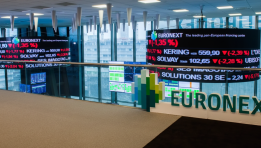
European markets opened the week on a strong footing on Monday, February 23, 2026, with broad-based gains across major indices.

- Ronny Mor
- •
- 7 Min Read
- •
- ago 20 hours
SKN | Is the AI Scare Trade Redefining Market Leadership Beyond Big Tech?
Wall Street is undergoing a notable shift as capital rotates out of mega-cap technology stocks and into sectors that lagged
- ago 20 hours
- •
- 7 Min Read

Wall Street is undergoing a notable shift as capital rotates out of mega-cap technology stocks and into sectors that lagged

