


- orshu
- •
- 7 Min Read
- •
- 1 hour ago
Key Points
- U.S. equity markets declined sharply on March 6, with the Dow Jones, S&P 500, and Nasdaq all trading lower as investor caution increased.
- The VIX volatility index surged 17.40% to 27.87, signaling rising market anxiety and demand for hedging strategies.
- Small-cap stocks underperformed, with the Russell 2000 dropping 2.19%, reflecting growing concerns about economic sensitivity and financing conditions.
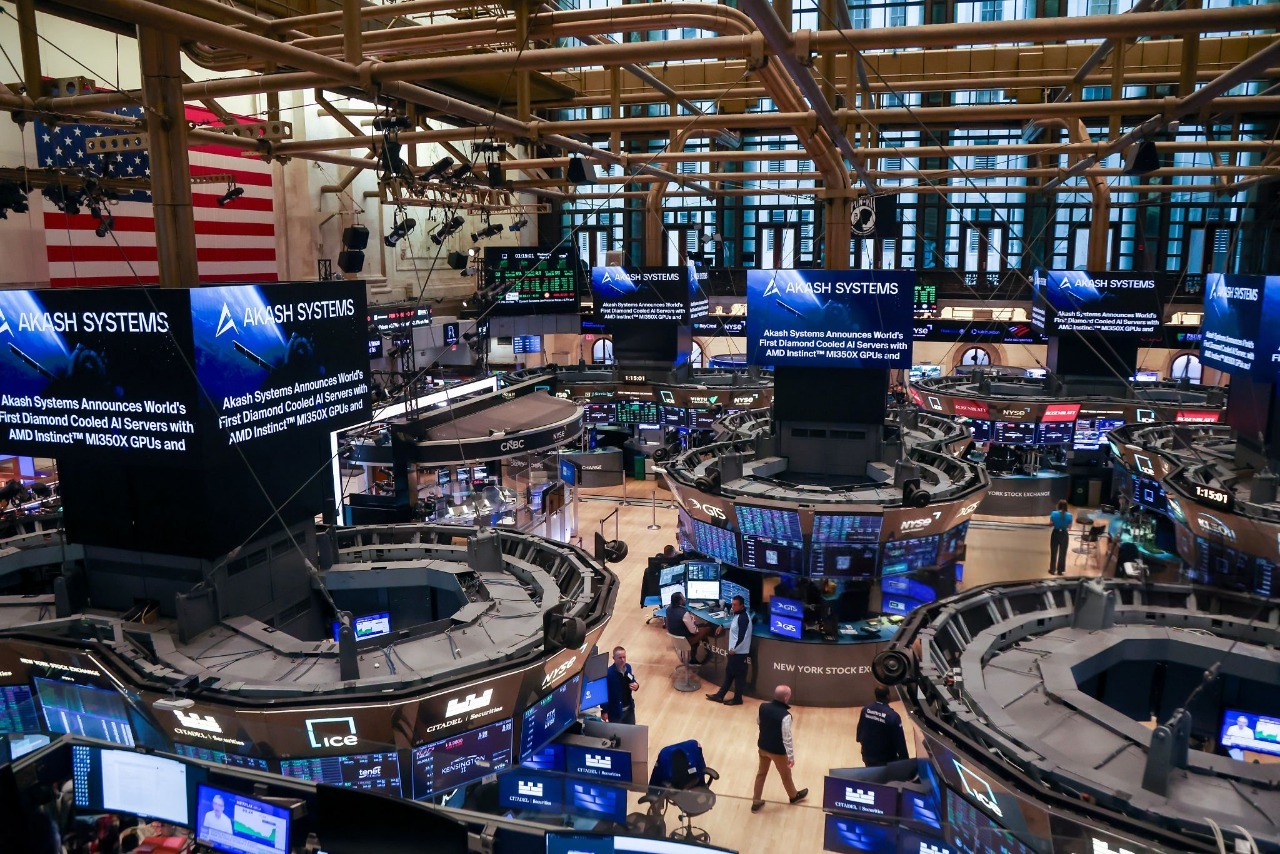
U.S. equity markets moved lower during the March 6 trading session as investors adopted a more defensive stance amid rising volatility and uncertainty across global financial markets. Major indices including the S&P 500, Nasdaq Composite, and Dow Jones Industrial Average all traded in negative territory, while the CBOE Volatility Index (VIX) surged sharply. The combination of declining equities and rising volatility suggests investors are reassessing risk exposure as macroeconomic and geopolitical uncertainties remain in focus.
Volatility Spikes as Investors Reduce Risk Exposure
One of the most notable developments during the session has been the sharp rise in the VIX volatility index, which climbed 17.40% to 27.87. Often referred to as Wall Street’s “fear gauge,” the VIX tends to rise when investors increase demand for portfolio protection through options and other hedging strategies. A reading near 28 indicates significantly elevated volatility compared with historical averages.
The jump in volatility reflects growing caution among market participants following a period of strong equity market performance earlier in the year. When volatility increases, institutional investors often rebalance portfolios by reducing exposure to riskier assets such as technology stocks and small-cap companies.
This shift in sentiment can trigger broad market declines, particularly in sectors that had previously experienced strong gains. As volatility rises, traders also tend to increase short-term hedging activity, which can amplify price movements across equity indices.
Major U.S. Indices Move Lower
Across the major benchmarks, losses were widespread. The Dow Jones Industrial Average declined approximately 1.96% to 47,015.94, while the S&P 500 dropped 1.71% to 6,714.04. Technology stocks also faced pressure, pushing the Nasdaq Composite down 1.51% to 22,404.78.
Small-cap equities experienced even steeper declines, with the Russell 2000 falling 2.19% to 2,528.97. Smaller companies are generally more sensitive to economic conditions and interest rate changes because they often rely more heavily on financing and domestic demand. As a result, they tend to underperform during periods of rising uncertainty or tightening financial conditions.
Outside the United States, Brazil’s IBOVESPA index also moved lower, declining 0.59% to 179,407.48. Meanwhile, the S&P/TSX Composite Index in Canada dropped 1.86%, reflecting broader weakness across North American equity markets.
Currency Stability Offers Limited Market Support
While equity markets declined, currency markets remained relatively stable. The U.S. Dollar Index traded near 99.30, showing only a marginal change of -0.01%. The muted movement in the dollar suggests that the equity market decline is being driven more by risk sentiment than by major currency fluctuations.
A stable dollar can sometimes help limit downside pressure in global markets because it indicates that capital flows are not rapidly shifting between currencies. However, when volatility increases in equity markets, investors often prioritize capital preservation over currency considerations.
In recent months, currency stability has played a key role in supporting global financial conditions. Should the dollar begin strengthening significantly alongside rising volatility, the impact on global equities and emerging markets could become more pronounced.
Looking ahead, investors will be closely monitoring several factors that could influence market direction in the coming sessions. Key developments include upcoming economic data releases, central bank policy signals, and geopolitical developments that could affect global risk sentiment. Additionally, continued movement in the VIX volatility index will likely serve as an important indicator of investor confidence. If volatility remains elevated, markets may experience continued short-term fluctuations. Conversely, stabilization in volatility and improving economic signals could support a rebound in equities as investors reassess risk opportunities across global markets.
Comparison, examination, and analysis between investment houses
Leave your details, and an expert from our team will get back to you as soon as possible
* This article, in whole or in part, does not contain any promise of investment returns, nor does it constitute professional advice to make investments in any particular field.
To read more about the full disclaimer, click here
- orshu
- •
- 7 Min Read
- •
- ago 2 minutes
SKN | SLV Rises Over 3% on March 6 as Investors Turn to Silver Amid Market Volatility
The iShares Silver Trust (NYSEARCA: SLV) traded higher on March 6, rising approximately 3.04% to around $76.53 during the
- ago 2 minutes
- •
- 7 Min Read

The iShares Silver Trust (NYSEARCA: SLV) traded higher on March 6, rising approximately 3.04% to around $76.53 during the
- orshu
- •
- 7 Min Read
- •
- ago 37 minutes
SKN | VIX Jumps Nearly 16% on March 6 as Market Volatility Returns to Wall Street
The CBOE Volatility Index (VIX), often referred to as Wall Street’s “fear gauge,” climbed sharply on March 6, reaching
- ago 37 minutes
- •
- 7 Min Read

The CBOE Volatility Index (VIX), often referred to as Wall Street’s “fear gauge,” climbed sharply on March 6, reaching
- orshu
- •
- 6 Min Read
- •
- ago 6 hours
SKN | Asia Markets Close Mixed on March 6, 2026 as Hong Kong Rallies 1.72% While India and Australia Slide
Asian markets ended March 6, 2026, with mixed performance as gains in Hong Kong, Japan, and China contrasted with declines
- ago 6 hours
- •
- 6 Min Read

Asian markets ended March 6, 2026, with mixed performance as gains in Hong Kong, Japan, and China contrasted with declines
- orshu
- •
- 7 Min Read
- •
- ago 19 hours
SKN | US Markets Diverge on March 5, 2026 as Volatility Surges and Small Caps Slide
U.S. equity markets closed with mixed performance on Thursday, March 5, 2026, as a sharp rise in volatility unsettled investors
- ago 19 hours
- •
- 7 Min Read

U.S. equity markets closed with mixed performance on Thursday, March 5, 2026, as a sharp rise in volatility unsettled investors

