


- Ronny Mor
- •
- 7 Min Read
- •
- 3 hours ago
Key Points
- Oil markets face immediate upside risk tied to Strait of Hormuz disruptions.
- Safe-haven flows expected into gold and the U.S. dollar.
- Asian economies most exposed to sustained energy price shock.

The Middle East has been thrust into one of its most dangerous escalations in decades after coordinated U.S. and Israeli strikes on Iranian targets reportedly killed Supreme Leader Ayatollah Ali Khamenei. Tehran responded with a sweeping wave of retaliatory attacks across the region, targeting Israel and countries hosting U.S. military bases. As global markets prepare to reopen, investors are bracing for volatility across energy, currencies, equities, and safe-haven assets, with the potential for significant spillover into inflation expectations and monetary policy paths in both the U.S. and Asia.
Energy Shock Looms as Strait of Hormuz Risk Intensifies
The immediate focal point for markets is oil. Iran remains the fourth-largest producer within Organization of the Petroleum Exporting Countries (OPEC), and any disruption to its exports — or to transit through the Strait of Hormuz — would have global implications. More than 14 million barrels per day flowed through the Strait in 2025, representing roughly a third of global seaborne crude exports, with Asia absorbing the majority.
On crypto derivatives platform Hyperliquid, oil-linked perpetual futures jumped nearly 5% to $71.7 per barrel over the weekend, offering a preview of how traditional markets may respond. Former White House energy adviser Bob McNally estimated crude could rise $5 to $7 per barrel at the open absent de-escalation. In a more extreme scenario involving sustained shipping disruptions, oil could test or exceed $100 per barrel — a level that would materially alter global inflation trajectories.
For Israel and Gulf economies, elevated crude prices could provide fiscal relief. For oil-importing nations such as China, Japan, South Korea, and India, however, the shock would likely pressure currencies and widen trade deficits.
Safe Havens in Focus as Investors Reprice Geopolitical Risk
Markets had arguably been underpricing geopolitical risk heading into the weekend. Standard Chartered’s research team noted that while the U.S. dollar is only modestly weaker year-to-date, commodity-linked currencies have quietly outperformed, reflecting subtle positioning for resource scarcity.
Gold futures on Hyperliquid rose about 1.2% to $5,334 per ounce, reinforcing its role as a hedge in systemic crises. Meanwhile, Bitcoin initially sold off before stabilizing near $66,000, underscoring crypto’s evolving but still fragile safe-haven narrative.
The U.S. dollar’s performance against Asian currencies may become the clearest early barometer of stress. A sustained rally in the greenback could tighten financial conditions globally, complicating policy decisions for central banks already balancing inflation persistence and growth risks.
Equities and Travel Disruptions Add to Uncertainty
Equity markets are expected to open under pressure, particularly in sectors sensitive to energy costs, transportation, and emerging-market exposure. Airlines face immediate operational disruptions, with more than 1,800 regional flights canceled Saturday and another 1,400 Sunday. Major carriers including Qatar Airways and Emirates suspended services as airspace closures rippled across the region and beyond.
From a strategic standpoint, investors now face a binary scenario. A swift de-escalation or political realignment in Tehran could trigger relief rallies, particularly in risk assets. Conversely, a prolonged conflict or expanded regional engagement would likely entrench risk-off positioning, elevate energy prices, and revive stagflation concerns.
As trading resumes, the interplay between crude oil, the U.S. dollar, and Asian currency markets will provide the first meaningful signals of how deeply this geopolitical shock is being priced into global financial systems.
Comparison, examination, and analysis between investment houses
Leave your details, and an expert from our team will get back to you as soon as possible
* This article, in whole or in part, does not contain any promise of investment returns, nor does it constitute professional advice to make investments in any particular field.
To read more about the full disclaimer, click here
- orshu
- •
- 6 Min Read
- •
- ago 57 seconds
SKN | Wall Street Slides as VIX Surges 18% and Dollar Strengthens: Is Risk Aversion Taking Control?
U.S. equities opened the week under pressure on March 2, with major benchmarks declining amid a sharp spike in
- ago 57 seconds
- •
- 6 Min Read

U.S. equities opened the week under pressure on March 2, with major benchmarks declining amid a sharp spike in

- omer bar
- •
- 6 Min Read
- •
- ago 3 hours
SKN | Is SKN | Is Retail Abandoning Crypto for Equities as Volatility and Momentum Shift? as Volatility and Momentum Shift?
Retail investors, once the lifeblood of the cryptocurrency boom, are increasingly reallocating capital toward equities and thematic exchange-traded funds, signaling
- ago 3 hours
- •
- 6 Min Read

Retail investors, once the lifeblood of the cryptocurrency boom, are increasingly reallocating capital toward equities and thematic exchange-traded funds, signaling
- orshu
- •
- 6 Min Read
- •
- ago 4 hours
SKN | Asia Markets Slide on March 2, 2026 as Hong Kong Drops 2.14% and Japan Falls 1.35%; Korea and Sri Lanka Shut for Holidays
Asian markets ended March 2, 2026, sharply lower as selling pressure intensified across major benchmarks. The decline was led by
- ago 4 hours
- •
- 6 Min Read

Asian markets ended March 2, 2026, sharply lower as selling pressure intensified across major benchmarks. The decline was led by
- orshu
- •
- 5 Min Read
- •
- ago 6 hours
SKN | European Markets Slide Sharply as Broad Sell-Off Hits Regional Benchmarks
European markets opened March on a sharply negative note on Monday, March 2, 2026, as a broad-based sell-off swept across
- ago 6 hours
- •
- 5 Min Read
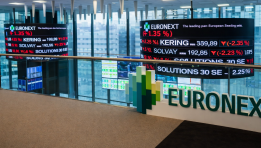
European markets opened March on a sharply negative note on Monday, March 2, 2026, as a broad-based sell-off swept across

