





- sagi habasov
- •
- 8 Min Read
- •
- 2 hours ago
Key Points
- U.S. healthcare spending climbed to approximately $5.7 trillion, reflecting continued growth driven by an aging population, rising demand for medical services, and pharmaceutical innovation.
- Eli Lilly and Intuitive Surgical are among the industry's strongest performers, benefiting from structural trends in obesity treatment, diabetes care, and robotic-assisted surgery.
- Healthcare remains one of the most resilient long-term sectors, supported by demographic tailwinds and sustained investment in medical technology and innovation.
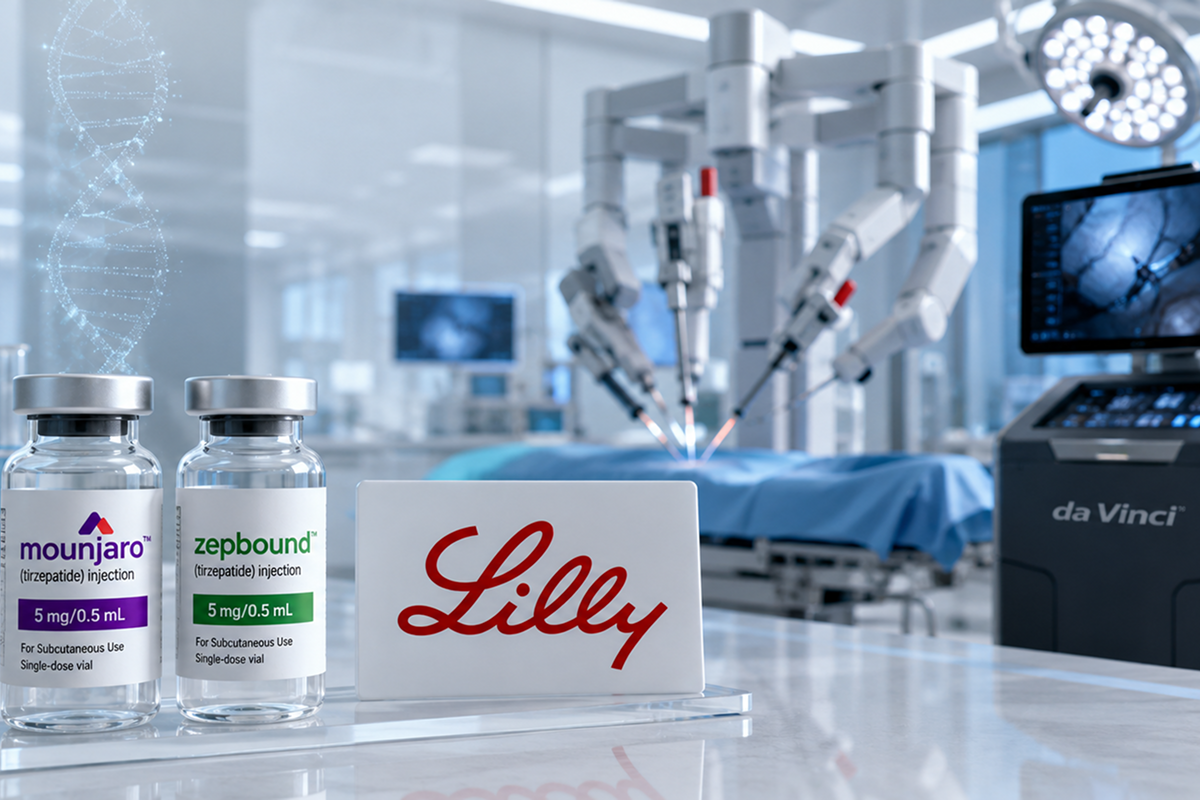
Healthcare spending in the United States continues to expand at a pace that outstrips much of the broader economy, reaching an estimated $5.7 trillion in 2025, an increase of approximately 7.3% from the previous year. The growth reflects rising demand for healthcare services, increased pharmaceutical consumption, advances in medical technology, and the long-term impact of an aging population.
For investors, the sector represents more than a defensive allocation. Structural demographic trends and continuous medical innovation have positioned healthcare as one of the most durable growth industries globally. Companies capable of combining scientific leadership with operational execution continue attracting institutional capital despite broader market volatility.
Healthcare Spending Continues to Outpace Economic Growth
The expansion of U.S. healthcare spending reflects several long-term forces rather than short-term economic fluctuations. Rising life expectancy, chronic disease management, broader access to advanced therapies, and increasing utilization of outpatient procedures continue supporting industry-wide revenue growth.
Medical innovation has become another important driver. New treatments for obesity, diabetes, oncology, cardiovascular disease, and rare illnesses are expanding the addressable market for pharmaceutical companies, while hospitals continue investing in technologies that improve clinical outcomes and operating efficiency.
Unlike many cyclical industries, healthcare demand remains relatively stable regardless of broader economic conditions. This resilience has made healthcare companies important components of institutional portfolios seeking consistent long-term earnings growth alongside reduced economic sensitivity.
Eli Lilly Strengthens Its Leadership in Pharmaceutical Innovation
Eli Lilly has emerged as one of the healthcare sector’s strongest growth companies, driven primarily by the exceptional commercial success of its diabetes and obesity therapies. Products including Mounjaro and Zepbound have transformed the company’s revenue profile while establishing Lilly as a global leader in one of the fastest-growing therapeutic markets.
Beyond metabolic diseases, the company maintains a diversified research pipeline spanning oncology, neuroscience, immunology, and Alzheimer’s disease. Continued investment in research and manufacturing capacity reflects management’s expectation that demand for next-generation medicines will remain elevated over the coming decade.
Although competition within obesity treatments continues intensifying, analysts generally expect global demand to remain significantly larger than current supply, supporting continued industry expansion.
Intuitive Surgical Benefits From the Evolution of Robotic Medicine
Intuitive Surgical represents another major beneficiary of expanding healthcare expenditure through its leadership in robotic-assisted surgery. The company’s da Vinci Surgical System has become widely adopted across hospitals worldwide, supporting minimally invasive procedures in specialties ranging from urology and gynecology to general surgery.
Unlike traditional medical device manufacturers that rely primarily on equipment sales, Intuitive Surgical generates recurring revenue through instruments, accessories, software, and service agreements tied to its installed base. This business model provides greater revenue visibility while benefiting from increasing procedural volumes.
As healthcare systems continue emphasizing improved patient outcomes, shorter hospital stays, and greater operating efficiency, robotic-assisted surgery is expected to remain an important area of capital investment. The company also continues expanding internationally, creating additional growth opportunities beyond the United States.
Long-Term Demographics Continue Supporting the Healthcare Sector
The outlook for healthcare remains closely linked to demographic change. Aging populations across developed economies, including the United States, Europe, and Israel, are expected to increase demand for pharmaceuticals, surgical procedures, diagnostics, and digital healthcare solutions throughout the coming decades.
At the same time, governments and private healthcare providers continue investing heavily in advanced treatment technologies aimed at improving efficiency and patient outcomes. These investments are creating opportunities across biotechnology, medical devices, artificial intelligence-driven diagnostics, and precision medicine.
Looking ahead, investors will monitor prescription trends for obesity therapies, adoption rates of robotic-assisted surgical systems, regulatory approvals, reimbursement policies, and research pipeline developments. While healthcare companies continue facing competitive, pricing, and regulatory pressures, the industry’s underlying growth drivers remain supported by powerful demographic and technological trends. For global investors, including institutions in Israel, the sector continues to represent one of the world’s most important areas of innovation, combining resilient demand with long-term earnings potential as healthcare spending continues expanding across developed economies.
Comparison, examination, and analysis between investment houses
Leave your details, and an expert from our team will get back to you as soon as possible
* This article, in whole or in part, does not contain any promise of investment returns, nor does it constitute professional advice to make investments in any particular field.
To read more about the full disclaimer, click here
- Lior mor
- •
- 8 Min Read
- •
- ago 10 minutes
SKN | Mohawk Industries Leads Home Furnishings Sector as First-Quarter Earnings Highlight Operational Resilience
The first-quarter earnings season demonstrated that the consumer discretionary home furnishings sector remains closely tied to the health of
- ago 10 minutes
- •
- 8 Min Read
The first-quarter earnings season demonstrated that the consumer discretionary home furnishings sector remains closely tied to the health of

- omer bar
- •
- 8 Min Read
- •
- ago 27 minutes
SKN | Dycom Leads Engineering and Design Services as Infrastructure Spending Drives Strong First-Quarter Earnings
The first-quarter earnings season demonstrated that the engineering and design services sector continues to benefit from long-term infrastructure investment,
- ago 27 minutes
- •
- 8 Min Read
The first-quarter earnings season demonstrated that the engineering and design services sector continues to benefit from long-term infrastructure investment,

- Ronny Mor
- •
- 8 Min Read
- •
- ago 40 minutes
SKN | Radian Group Stands Out as First-Quarter Earnings Reveal a Split Across Property & Casualty Insurers
The first-quarter earnings season underscored an increasingly selective environment for the property and casualty insurance industry, with companies delivering
- ago 40 minutes
- •
- 8 Min Read

The first-quarter earnings season underscored an increasingly selective environment for the property and casualty insurance industry, with companies delivering

- orshu
- •
- 8 Min Read
- •
- ago 50 minutes
SKN | RH Leads Home Furnishing Retailers as First-Quarter Earnings Reveal a Divided Consumer Landscape
The first-quarter earnings season highlighted a growing divide across the home furnishing and home improvement retail industry. While many
- ago 50 minutes
- •
- 8 Min Read

The first-quarter earnings season highlighted a growing divide across the home furnishing and home improvement retail industry. While many


