


- orshu
- •
- 7 Min Read
- •
- 3 hours ago
Key Points
- The U.S. Dollar Index (DXY) rose to 99.06, gaining about 0.23% during the March 11 trading session.
- The index traded within a 98.70–99.18 intraday range, reflecting steady demand for the world’s primary reserve currency.
- Currency markets remain focused on interest rate expectations, global capital flows, and macroeconomic signals shaping dollar strength.

The U.S. Dollar Index (DXY), which measures the dollar’s strength against a basket of major global currencies, moved higher on March 11, rising to approximately 99.06. The gain of roughly 0.23% reflects steady investor demand for the U.S. currency amid evolving global economic conditions. Currency markets are currently balancing expectations surrounding monetary policy, economic growth indicators, and international capital flows.
Dollar Strength Reflects Currency Market Positioning
The U.S. Dollar Index traded between 98.70 and 99.18 during the session, showing moderate upward momentum as investors adjusted currency positions. The dollar remains one of the most widely traded financial instruments in global markets, serving as the dominant reserve currency and a key benchmark for international trade and finance.
Movements in the dollar index often reflect shifts in investor confidence and expectations regarding economic performance. When the dollar strengthens, it may indicate capital inflows into U.S. assets such as Treasury bonds, equities, and other financial instruments.
Currency traders also closely monitor technical levels within the dollar index. The move above the 99 level may signal a near-term strengthening trend if momentum continues and macroeconomic data supports the currency.
Interest Rate Expectations Continue to Influence the Dollar
One of the primary drivers behind movements in the U.S. dollar is the outlook for interest rates set by the Federal Reserve. Higher interest rates generally support the dollar by increasing yields on dollar-denominated assets, making them more attractive to global investors.
At the same time, expectations about inflation, employment data, and economic growth play a critical role in shaping currency markets. When investors anticipate tighter monetary policy or stronger economic performance in the United States compared with other regions, the dollar often gains strength against competing currencies.
The dollar index measures performance against several major currencies including the euro, Japanese yen, British pound, Canadian dollar, Swedish krona, and Swiss franc. As a result, shifts in economic conditions across these regions can also influence the index’s trajectory.
Global Market Impact of a Stronger Dollar
Changes in the U.S. Dollar Index have wide-reaching implications across financial markets. A stronger dollar can influence commodity prices, international trade flows, and emerging market capital movements.
For example, commodities such as gold, oil, and industrial metals are typically priced in U.S. dollars. When the dollar strengthens, these commodities may become more expensive for buyers using other currencies, which can sometimes dampen demand and affect pricing dynamics.
In equity markets, multinational corporations often experience currency-related impacts on revenue and earnings when the dollar fluctuates. Companies that generate significant international revenue may face translation effects when converting foreign earnings into U.S. dollars.
Looking ahead, investors will closely monitor several catalysts that could influence the direction of the U.S. Dollar Index. Upcoming economic data releases, inflation indicators, and central bank policy decisions are likely to shape expectations for interest rates and currency movements. Additionally, geopolitical developments and shifts in global risk sentiment may influence demand for safe-haven currencies such as the dollar. If U.S. economic indicators remain resilient and interest rate differentials continue to favor dollar-denominated assets, the currency could maintain upward momentum. However, changes in monetary policy expectations or stronger economic performance in other major regions could introduce new volatility in currency markets.
Comparison, examination, and analysis between investment houses
Leave your details, and an expert from our team will get back to you as soon as possible
* This article, in whole or in part, does not contain any promise of investment returns, nor does it constitute professional advice to make investments in any particular field.
To read more about the full disclaimer, click here
- orshu
- •
- 7 Min Read
- •
- ago 35 minutes
SKN | iShares Ethereum Trust ETF (ETHA) Rises 1.72% as Crypto-Linked ETFs Track Renewed Digital Asset Momentum
The iShares Ethereum Trust ETF (ETHA) advanced during the March 11 trading session, rising to approximately $15.66, up 1.72%
- ago 35 minutes
- •
- 7 Min Read

The iShares Ethereum Trust ETF (ETHA) advanced during the March 11 trading session, rising to approximately $15.66, up 1.72%
- orshu
- •
- 6 Min Read
- •
- ago 1 hour
SKN | European Stocks Retreat as DAX Slides 1.55% and Regional Indices Close Lower on March 11
European equity markets ended the March 11 trading session in negative territory, with most major indices closing lower as
- ago 1 hour
- •
- 6 Min Read

European equity markets ended the March 11 trading session in negative territory, with most major indices closing lower as

- Lior mor
- •
- 7 Min Read
- •
- ago 2 hours
SKN | Why Are the S&P 500 and Nasdaq Rising While the Dow Slips Amid Inflation Data and Iran War Tensions?
U.S. stock markets opened mixed on Wednesday as investors balanced steady inflation data with rising geopolitical risks stemming from the
- ago 2 hours
- •
- 7 Min Read

U.S. stock markets opened mixed on Wednesday as investors balanced steady inflation data with rising geopolitical risks stemming from the
- orshu
- •
- 7 Min Read
- •
- ago 4 hours
SKN | Nasdaq Leads as Volatility Falls: U.S. Markets Show Mixed Signals During March 11 Session
U.S. equity markets displayed mixed performance on March 11 as investors balanced declining volatility, currency strength, and shifting sector
- ago 4 hours
- •
- 7 Min Read
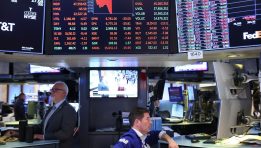
U.S. equity markets displayed mixed performance on March 11 as investors balanced declining volatility, currency strength, and shifting sector

