




- sagi habasov
- •
- 6 Min Read
- •
- 17 seconds ago


Key Points
- The United States imposed 50% tariffs on approximately $20 billion of Canadian goods, increasing pressure on one of the world’s largest bilateral trade relationships.
- Canada announced plans for dollar-for-dollar retaliation, targeting products including plywood, liquor and hockey equipment.
- The renewed trade dispute introduces additional uncertainty for businesses, supply chains and North American economic growth expectations.
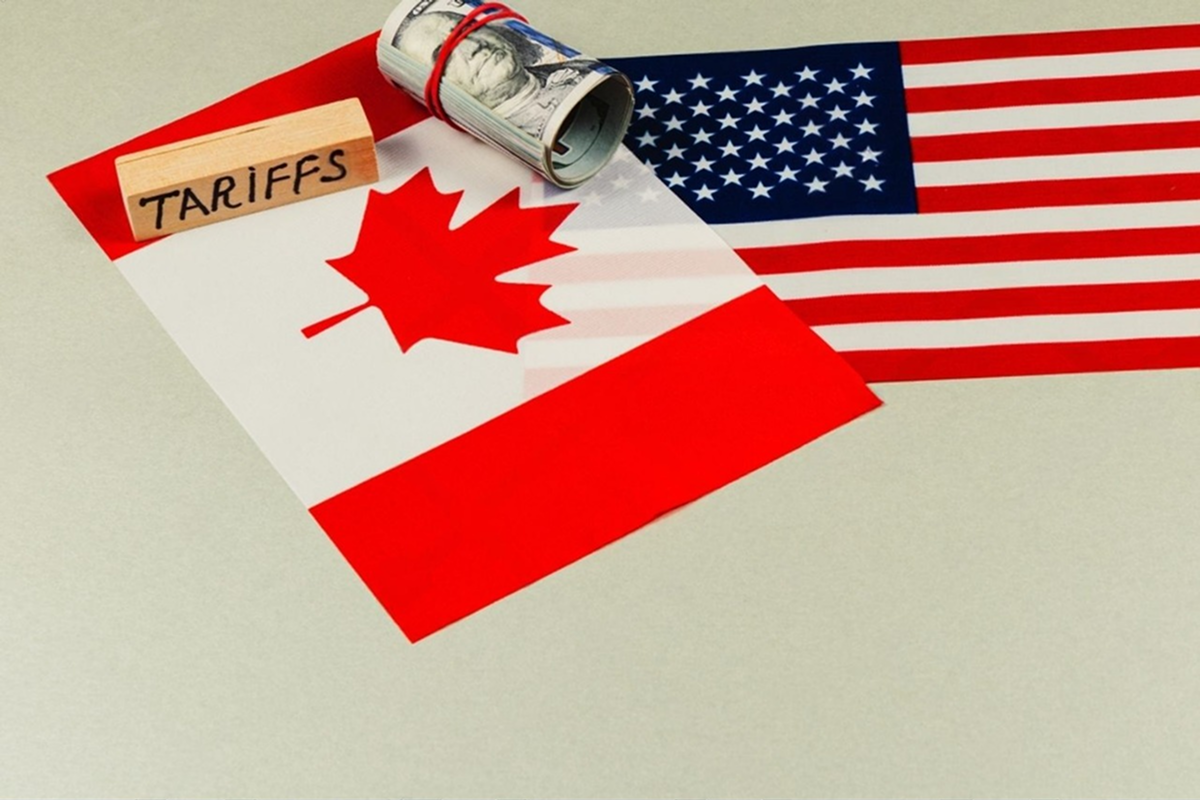
The United States and Canada are facing renewed trade tensions after Washington introduced 50% tariffs on roughly $20 billion of Canadian imports. The move represents another challenge for North American businesses already navigating elevated costs, supply-chain adjustments and uncertainty around global trade policies.
New Tariffs Increase Pressure on North American Supply Chains
The latest U.S. measures target a range of Canadian goods, including plywood, liquor and hockey equipment, expanding the scope of trade restrictions between the two neighboring economies. Canada has responded by signaling that it will match the tariffs with equivalent measures, creating the possibility of additional costs for companies operating across the border.
The United States and Canada maintain one of the world’s largest trading relationships, with hundreds of billions of dollars in goods and services exchanged annually. Any disruption to this relationship can affect manufacturers, retailers and consumers through changes in input costs, pricing strategies and inventory management.
Supply-chain exposure remains a central concern for industries dependent on cross-border trade. Companies that rely on Canadian materials or components may need to reassess sourcing strategies, while exporters could face reduced competitiveness if additional tariffs remain in place for an extended period.
Retaliation Risks Create Economic Uncertainty
Canada’s decision to pursue dollar-for-dollar retaliation reflects a broader pattern in global trade disputes, where governments attempt to protect domestic industries while using tariffs as negotiating tools. However, reciprocal measures can increase costs on both sides and create uncertainty for businesses planning long-term investments.
Industries affected by tariffs may experience margin pressure as companies decide whether to absorb higher costs or pass them on to customers. Sectors with limited alternative suppliers could face greater challenges, particularly where cross-border integration has been built over decades.
The dispute also comes at a time when policymakers are closely monitoring inflation trends. Additional tariffs could complicate efforts to maintain price stability if higher import costs contribute to increased consumer prices.
Trade Policy Becomes a Key Market Factor
For global investors, renewed U.S.-Canada trade friction highlights the growing importance of government policy in shaping market conditions. Tariffs, regulatory changes and geopolitical decisions have become significant factors influencing corporate earnings expectations and investment planning.
While the immediate impact is concentrated on specific industries and products, prolonged uncertainty could influence broader business confidence. Companies may delay expansion decisions, adjust supplier networks or increase investment in domestic production capabilities to reduce exposure to future trade disruptions.
The escalation also reflects a wider global trend toward more strategic approaches to trade, with governments increasingly prioritizing domestic manufacturing, supply security and economic resilience.
Markets will continue monitoring whether negotiations between Washington and Ottawa lead to a resolution or whether additional measures are introduced. The direction of the dispute may influence corporate planning, inflation expectations and North American economic momentum, particularly if tariffs expand beyond the initial group of targeted goods.
Comparison, examination, and analysis between investment houses
Leave your details, and an expert from our team will get back to you as soon as possible
* This article, in whole or in part, does not contain any promise of investment returns, nor does it constitute professional advice to make investments in any particular field.
To read more about the full disclaimer, click here
- omer bar
- •
- 6 Min Read
- •
- ago 21 hours
SKN | Traders Brace for a More Hawkish ECB as Inflation Risks Push Rate Expectations Higher
Financial markets are increasingly preparing for a more hawkish European Central Bank as persistent inflation risks and geopolitical tensions
- ago 21 hours
- •
- 6 Min Read

Financial markets are increasingly preparing for a more hawkish European Central Bank as persistent inflation risks and geopolitical tensions

- Lior mor
- •
- 5 Min Read
- •
- ago 2 days
SKN | UK Economy Gets a Boost as Revised Data Shows Stronger Growth in 2023 and 2024
The United Kingdom’s economy performed slightly better than previously estimated in 2023 and 2024, according to revised figures from
- ago 2 days
- •
- 5 Min Read

The United Kingdom’s economy performed slightly better than previously estimated in 2023 and 2024, according to revised figures from
- omer bar
- •
- 6 Min Read
- •
- ago 2 days
SKN | Fed Officials Maintain Policy Independence as Treasury Moves to Support Bond Market Liquidity
Federal Reserve officials are signaling caution as markets assess the implications of the U.S. Treasury Department’s decision to expand
- ago 2 days
- •
- 6 Min Read
Federal Reserve officials are signaling caution as markets assess the implications of the U.S. Treasury Department’s decision to expand
- omer bar
- •
- 7 Min Read
- •
- ago 2 days
SKN | U.S. Federal Debt Surpasses $40 Trillion: What Could It Mean for Households and Markets?
The U.S. federal debt has surpassed $40 trillion for the first time, marking a doubling in the government's debt burden
- ago 2 days
- •
- 7 Min Read
The U.S. federal debt has surpassed $40 trillion for the first time, marking a doubling in the government's debt burden
