


- orshu
- •
- 7 Min Read
- •
- 6 seconds ago
Key Points
- Tel Aviv-125 slipped 0.31 percent despite strong participation, highlighting divergence in market performance.
- Mid-cap and banking indices outperformed, signaling continued rotation into selective sectors.
- Bond markets remained stable, reflecting balanced investor sentiment amid equity uncertainty.

Israeli markets closed with mixed results on Tuesday, April 28, 2026, as divergence between large-cap weakness and mid-cap strength continued to define trading activity. While headline indices edged lower, underlying participation remained relatively strong, suggesting that investors are selectively positioning rather than exiting the market. The session reinforces the view that the market is currently in a consolidation phase.
Large Caps Weigh on Broader Index Performance
The Tel Aviv-35 index declined 0.63 percent to 4,320.73 points, with eighteen declining stocks outweighing sixteen advancing and one unchanged. This continued weakness in large-cap stocks suggests that institutional investors remain cautious, limiting upward momentum in the broader market.
The Tel Aviv-125 index fell 0.31 percent to 4,257.82 points. Despite the decline, market breadth was relatively positive, with seventy-two advancing stocks compared to forty-seven decliners. This divergence indicates that the index-level weakness was driven by a smaller number of heavyweight stocks rather than widespread selling.
Equity market turnover reached approximately 4.02 billion shekels, reflecting steady activity as investors continued to rebalance portfolios across sectors.
Mid-Caps and Banks Continue to Attract Flows
Mid-cap stocks maintained their upward momentum, with the Tel Aviv-90 index rising 0.70 percent to 4,031.36 points. The strong number of advancing stocks suggests sustained investor interest in this segment, often associated with growth opportunities.
The Tel Aviv 90 and banking index gained 0.68 percent, indicating that financial stocks are playing a supportive role in the market. Continued strength in banks may signal improving confidence in economic conditions or earnings expectations.
Value stocks also showed resilience, with the Tel Aviv-125 value index rising 0.51 percent. This marks a shift from previous sessions where value stocks lagged, suggesting that investors may be rotating back into this segment.
The sector-balance index increased 0.27 percent, confirming that gains were spread across multiple industries despite the headline decline.
Bond Markets Hold Steady Amid Equity Divergence
Fixed income markets remained relatively stable, providing a counterbalance to mixed equity performance. The general bond index was unchanged, reflecting a neutral stance among investors.
Inflation-linked bonds edged slightly higher, with the Tel Bond-Linked A index rising 0.01 percent. The Tel Bond 60 index also increased by 0.01 percent, supported by a moderate number of advancing securities.
Short-term bonds rose 0.03 percent, indicating continued demand for low-risk assets.
Bond market turnover reached approximately 6.13 billion shekels, significantly higher than equity turnover. This suggests ongoing portfolio adjustments and a balanced allocation between risk and defensive assets.
Forward-Looking Outlook: Watching Rotation and Market Leadership
The Israeli market continues to exhibit signs of sector rotation, with capital shifting between large-cap, mid-cap, and value segments. The key question for upcoming sessions is whether this rotation will translate into broader market strength or prolong the current consolidation phase.
Investors should monitor the Tel Aviv-35 index closely. Continued weakness in large-cap stocks could cap overall market performance, while stabilization or recovery would provide a stronger foundation for gains.
The sustained strength in mid-cap and banking stocks is an encouraging sign. If this trend continues, it could signal increasing risk appetite and support a broader rally.
Market breadth will remain a critical indicator. Positive participation, even during index declines, suggests underlying resilience, but it must translate into consistent index gains to confirm a stronger trend.
Bond market behavior will also be important to watch. Stability in bonds alongside equity fluctuations indicates balanced sentiment, but any significant shift could signal changing risk dynamics.
Key risks include continued divergence between sectors, global market volatility, and uncertainty in investor positioning. Opportunities may emerge in sectors showing consistent strength, particularly if broader participation improves.
The next trading sessions will be pivotal in determining whether the market transitions into a more sustained upward trend or remains in a range-bound environment driven by sector rotation.
Comparison, examination, and analysis between investment houses
Leave your details, and an expert from our team will get back to you as soon as possible
* This article, in whole or in part, does not contain any promise of investment returns, nor does it constitute professional advice to make investments in any particular field.
To read more about the full disclaimer, click here
- orshu
- •
- 6 Min Read
- •
- ago 3 hours
SKN | Rising Volatility Pressures Tech Stocks as US Markets Turn Defensive
US markets are trading under heightened pressure on April 28, as a sharp rise in volatility weighs on investor
- ago 3 hours
- •
- 6 Min Read

US markets are trading under heightened pressure on April 28, as a sharp rise in volatility weighs on investor
- orshu
- •
- 6 Min Read
- •
- ago 5 hours
SKN | Why Did Japan’s Nikkei Pull Back After the BOJ Held Rates Steady?
Japan’s equity rally showed signs of fatigue as the Nikkei 225 retreated following the Bank of Japan’s latest policy
- ago 5 hours
- •
- 6 Min Read
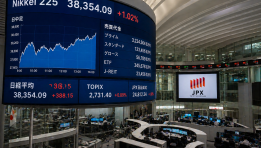
Japan’s equity rally showed signs of fatigue as the Nikkei 225 retreated following the Bank of Japan’s latest policy
- orshu
- •
- 5 Min Read
- •
- ago 6 hours
SKN | Asia Markets Pull Back on April 28, 2026 as Japan Slips Below 60,000 and Regional Weakness Broadens
Asian markets closed April 28, 2026, mostly lower, as the recent rally lost momentum and investors moved to lock in
- ago 6 hours
- •
- 5 Min Read

Asian markets closed April 28, 2026, mostly lower, as the recent rally lost momentum and investors moved to lock in
- orshu
- •
- 4 Min Read
- •
- ago 8 hours
SKN | European Markets Show Mild Gains as Broader Benchmark Slips on Weak Participation
European markets delivered a mixed performance on Tuesday, April 28, 2026, as modest gains across major indices were offset by
- ago 8 hours
- •
- 4 Min Read

European markets delivered a mixed performance on Tuesday, April 28, 2026, as modest gains across major indices were offset by

