


- orshu
- •
- 6 Min Read
- •
- 16 minutes ago
Key Points
- The S&P/TSX Composite rose 0.86% to 34,420.16, approaching its 52-week high.
- Broad intraday strength signals renewed risk appetite in Canadian equities.
- Energy, financials, and materials remain critical drivers of near-term direction.
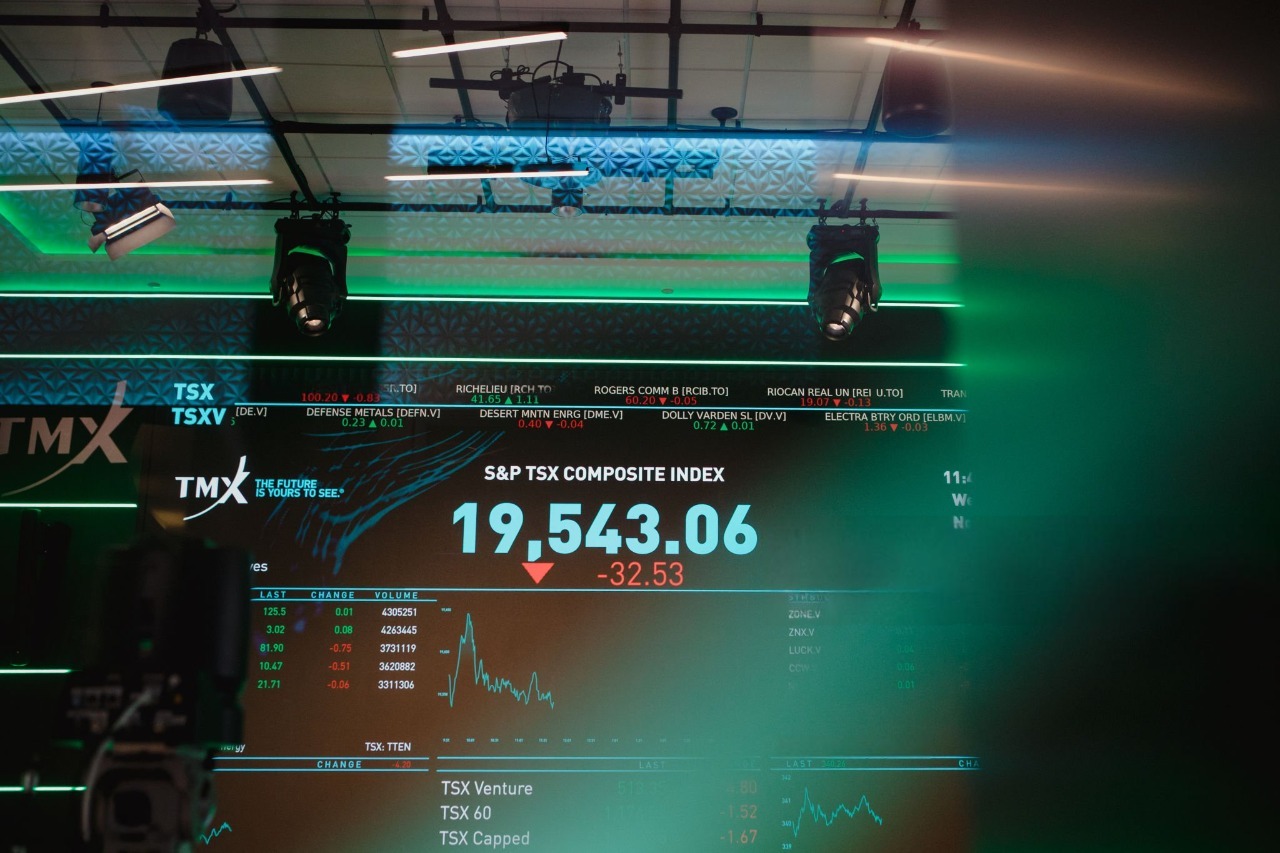
The S&P/TSX Composite Index advanced solidly on February 26, gaining 292.83 points, or 0.86%, to trade at 34,420.16 during market hours. The move places Canada’s benchmark index near the upper end of its 52-week range of 22,227.70 to 34,415.87, underscoring strong momentum as investors respond to supportive global risk sentiment and sector strength.
With North American markets showing resilience, Canada’s equity performance reflects a combination of commodity stability, financial sector durability, and improving investor confidence.
Intraday Breakout Signals Momentum Strength
The index opened near 34,124 and steadily advanced throughout the session, reaching an intraday high of 34,415.87. This sustained upward trajectory indicates consistent buying pressure rather than a volatile spike. Volume, while below the longer-term average of 289 million shares, remained substantial at over 124 million, suggesting measured institutional participation rather than speculative excess.
Technically, the TSX is testing resistance near its 52-week high. A decisive close above this threshold could trigger further momentum-driven inflows, particularly from global investors benchmarking against North American indices. However, proximity to record territory may also invite short-term profit-taking if broader risk appetite softens.
Sector Drivers: Energy and Financials in Focus
The TSX’s composition plays a crucial role in its performance. Unlike the technology-heavy Nasdaq, Canada’s benchmark is weighted toward energy, financials, and materials. Stabilizing crude oil prices and firm commodity demand provide structural support to energy producers and mining companies listed in Toronto.
Canadian banks, which represent a significant portion of the index, continue to benefit from relatively stable credit conditions and diversified earnings streams. If global bond yields remain contained, financial stocks may continue offering defensive yield appeal relative to more volatile growth segments.
Materials stocks, tied closely to global infrastructure and industrial demand, are also sensitive to economic data from the United States and China. Any improvement in global manufacturing indicators could amplify gains in this segment, reinforcing index-level strength.
Macro Backdrop and Currency Considerations
Canada’s equity trajectory remains intertwined with broader macroeconomic factors. The Bank of Canada’s policy stance, inflation trends, and housing market stability are critical domestic variables. Meanwhile, global risk sentiment—particularly U.S. market direction—often influences capital flows into Canadian assets.
The Canadian dollar’s performance also plays a role. A stable or moderately weaker currency can support exporters and commodity producers by enhancing competitiveness. Conversely, excessive currency volatility could introduce uncertainty into earnings projections for multinational firms.
From a global asset allocation perspective, the TSX’s sector composition makes it an attractive diversification vehicle for investors seeking commodity and financial exposure outside U.S. mega-cap technology.
Looking ahead, the key question is whether the TSX can sustain a breakout above its recent highs. Investors should monitor commodity price trends, particularly crude oil and industrial metals, alongside developments in global interest rate expectations. Continued stability in financials and resilient energy demand could support further upside. However, external risks—including shifts in U.S. monetary policy or global growth slowdowns—may temper momentum. As the index approaches record territory, the balance between technical strength and macro uncertainty will determine whether Canada’s rally extends into a broader structural advance or enters a consolidation phase.
Comparison, examination, and analysis between investment houses
Leave your details, and an expert from our team will get back to you as soon as possible
* This article, in whole or in part, does not contain any promise of investment returns, nor does it constitute professional advice to make investments in any particular field.
To read more about the full disclaimer, click here
- orshu
- •
- 6 Min Read
- •
- ago 3 hours
SKN | Europe Closes Mixed on February 26: Paris Outperforms as Broader Indices Slip
European markets closed mixed on February 26, reflecting a session marked by selective strength in core national indices but
- ago 3 hours
- •
- 6 Min Read

European markets closed mixed on February 26, reflecting a session marked by selective strength in core national indices but
- orshu
- •
- 6 Min Read
- •
- ago 5 hours
SKN | U.S. Markets Mixed as Dow Climbs Toward 50,000 While Nasdaq Slides – Risk Rotation Underway?
U.S. markets are trading mixed on February 26, with capital rotating across sectors as investors reassess growth exposure and
- ago 5 hours
- •
- 6 Min Read

U.S. markets are trading mixed on February 26, with capital rotating across sectors as investors reassess growth exposure and
- orshu
- •
- 6 Min Read
- •
- ago 9 hours
SKN | Asia Markets Close Mixed on February 26, 2026 as South Korea Surges 3.67% While Hong Kong Slides
Asian markets ended February 26, 2026, on a mixed note, highlighted by a powerful rally in South Korea that offset
- ago 9 hours
- •
- 6 Min Read

Asian markets ended February 26, 2026, on a mixed note, highlighted by a powerful rally in South Korea that offset
- orshu
- •
- 5 Min Read
- •
- ago 11 hours
SKN | European Markets Surge as Broad-Based Rally Lifts Major Indices
European markets delivered a powerful rally on Thursday, February 26, 2026, with major indices across the region advancing sharply. The
- ago 11 hours
- •
- 5 Min Read

European markets delivered a powerful rally on Thursday, February 26, 2026, with major indices across the region advancing sharply. The

