


- orshu
- •
- 6 Min Read
- •
- 3 months ago
Key Points
- Democrats estimate U.S. tariffs have cost the average household about $1,200 through higher consumer prices.
- Donald Trump has floated the possibility of “some” additional tariff carveouts, signaling potential policy flexibility.
- Markets and trade partners remain cautious as tariff uncertainty feeds into inflation, supply chains, and global trade flows.
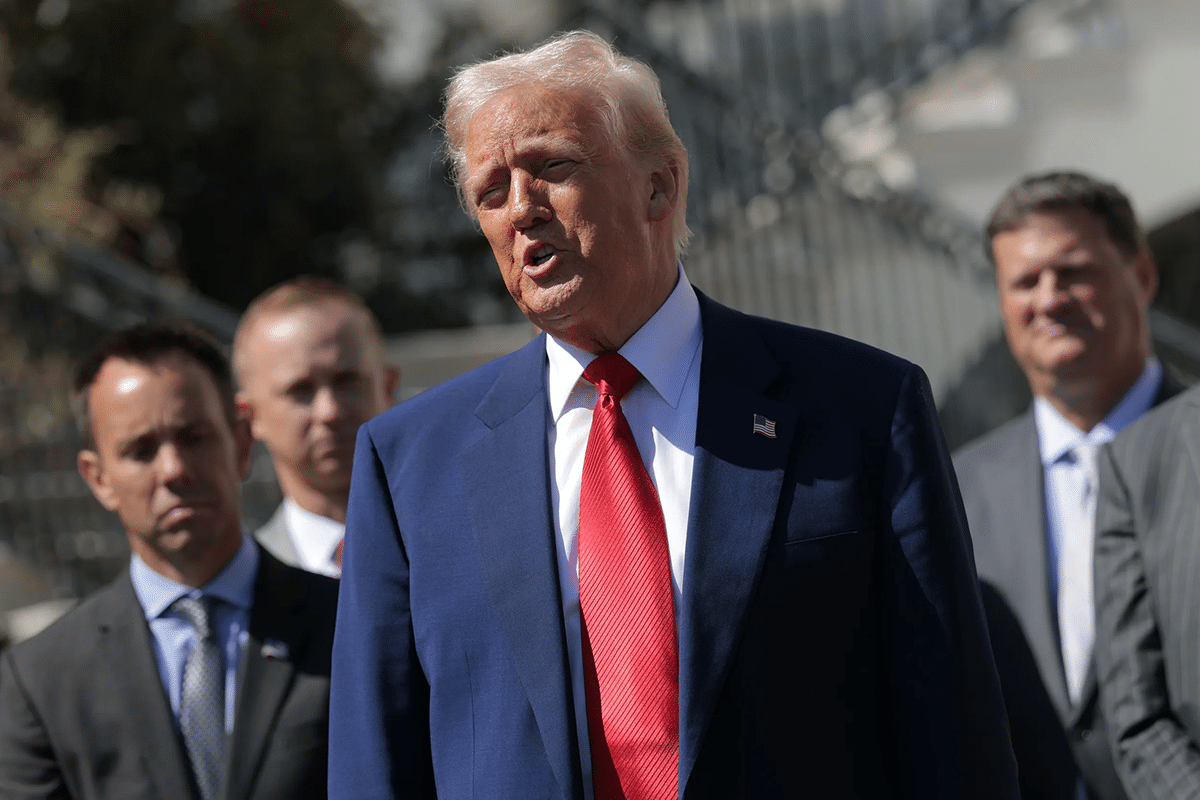
U.S. trade policy has returned to the political and market spotlight as Democrats argue that tariffs imposed during former President Donald Trump’s administration have imposed a measurable cost on American households, while Trump himself has suggested openness to limited new exemptions. The renewed debate comes at a time when inflation sensitivity, geopolitical tension, and election-year politics are converging, amplifying the economic significance of tariff policy.
Household Costs and the Inflation Debate
According to Democratic lawmakers and allied economic analyses, tariffs introduced on a wide range of imported goods have effectively functioned as a tax on consumers, adding roughly $1,200 per household over time. The estimate reflects higher prices on consumer goods, industrial inputs, and intermediate products, as importers pass along increased costs. Economists note that while tariffs are designed to protect domestic industries, their near-term impact often shows up in consumer price indices and reduced purchasing power, particularly for lower- and middle-income households.
This argument has gained traction amid ongoing concerns about inflation persistence. Even as headline inflation has moderated from recent peaks, policymakers remain wary of cost pressures that could reaccelerate price growth. Tariffs, critics argue, complicate efforts to stabilize prices by adding friction to global supply chains and limiting access to lower-cost imports.
Trump’s Carveouts and Strategic Signaling
Against this backdrop, Trump has indicated that he could consider “some” additional carveouts to existing tariff regimes if returned to office. While details remain unconfirmed, the comments suggest an attempt to balance protectionist messaging with economic pragmatism. Past carveouts have typically targeted specific industries or allies, often in response to lobbying pressure or supply constraints that risked harming domestic producers.
For markets, the signal is mixed. On one hand, selective exemptions could ease cost pressures for certain sectors. On the other, the lack of clarity reinforces uncertainty around future trade rules. Investors generally price tariffs not just by their level, but by their predictability, with shifting exemptions making long-term planning more complex for multinational firms.
Global Trade and Market Implications
The tariff debate also carries implications beyond the U.S., including for Israeli exporters and institutional investors exposed to global trade flows. Tariffs affecting U.S.–China or U.S.–EU trade can ripple through supply chains, influencing commodity prices, currency dynamics, and corporate margins worldwide. For capital markets, heightened trade tension has historically translated into periods of volatility, particularly in manufacturing, technology hardware, and consumer discretionary sectors.
Looking ahead, investors will monitor whether tariff policy becomes a central pillar of the U.S. election cycle and how concrete any proposed carveouts become. Key risks include renewed trade escalation, inflationary spillovers, and retaliatory measures from trading partners. At the same time, clearer guidance or a shift toward more targeted trade measures could reduce uncertainty and stabilize expectations across global markets as 2025 approaches.
Comparison, examination, and analysis between investment houses
Leave your details, and an expert from our team will get back to you as soon as possible
* This article, in whole or in part, does not contain any promise of investment returns, nor does it constitute professional advice to make investments in any particular field.
To read more about the full disclaimer, click here
- orshu
- •
- 6 Min Read
- •
- ago 7 minutes
SKN | Markets Extend Decline on March 13, 2026 as Dollar Surges and Volatility Stays Elevated
U.S. equity markets closed lower on Friday, March 13, 2026, extending the week’s losses as investors remained cautious amid rising
- ago 7 minutes
- •
- 6 Min Read

U.S. equity markets closed lower on Friday, March 13, 2026, extending the week’s losses as investors remained cautious amid rising
- orshu
- •
- 7 Min Read
- •
- ago 5 hours
SKN | Israel Market Close – March 12, 2026: Tel Aviv Stocks Slide Sharply as Broad Selloff Hits Mid-Caps and Value Shares
Israeli markets closed significantly lower on March 12, 2026, as widespread selling pressure pushed most major indices into negative territory.
- ago 5 hours
- •
- 7 Min Read

Israeli markets closed significantly lower on March 12, 2026, as widespread selling pressure pushed most major indices into negative territory.
- orshu
- •
- 7 Min Read
- •
- ago 14 hours
SKN | Tel Aviv Stock Market Slips as Broad Declines Weigh on Israeli Equities
The Tel Aviv Stock Exchange opened the session with broad-based declines across most major indices, signaling cautious sentiment among investors
- ago 14 hours
- •
- 7 Min Read

The Tel Aviv Stock Exchange opened the session with broad-based declines across most major indices, signaling cautious sentiment among investors
- orshu
- •
- 8 Min Read
- •
- ago 19 hours
SKN | Global Markets Wrap: March 12, 2026 Performance Highlights and What to Watch on March 13 – Tel Aviv Stocks Slide Amid Global Volatility
Global financial markets experienced a broadly negative session on March 12, 2026, with equities under pressure across the Americas, Europe,
- ago 19 hours
- •
- 8 Min Read

Global financial markets experienced a broadly negative session on March 12, 2026, with equities under pressure across the Americas, Europe,

