


- sagi habasov
- •
- 6 Min Read
- •
- 1 month ago
Key Points
- Former U.S. President Donald Trump warned of potential cuts to Raytheon’s government contracts over the company’s use of stock buybacks.
- The comments reignited debate over capital allocation versus national security priorities in the defense sector.
- Investors are reassessing political risk across major defense contractors amid heightened scrutiny of shareholder returns.
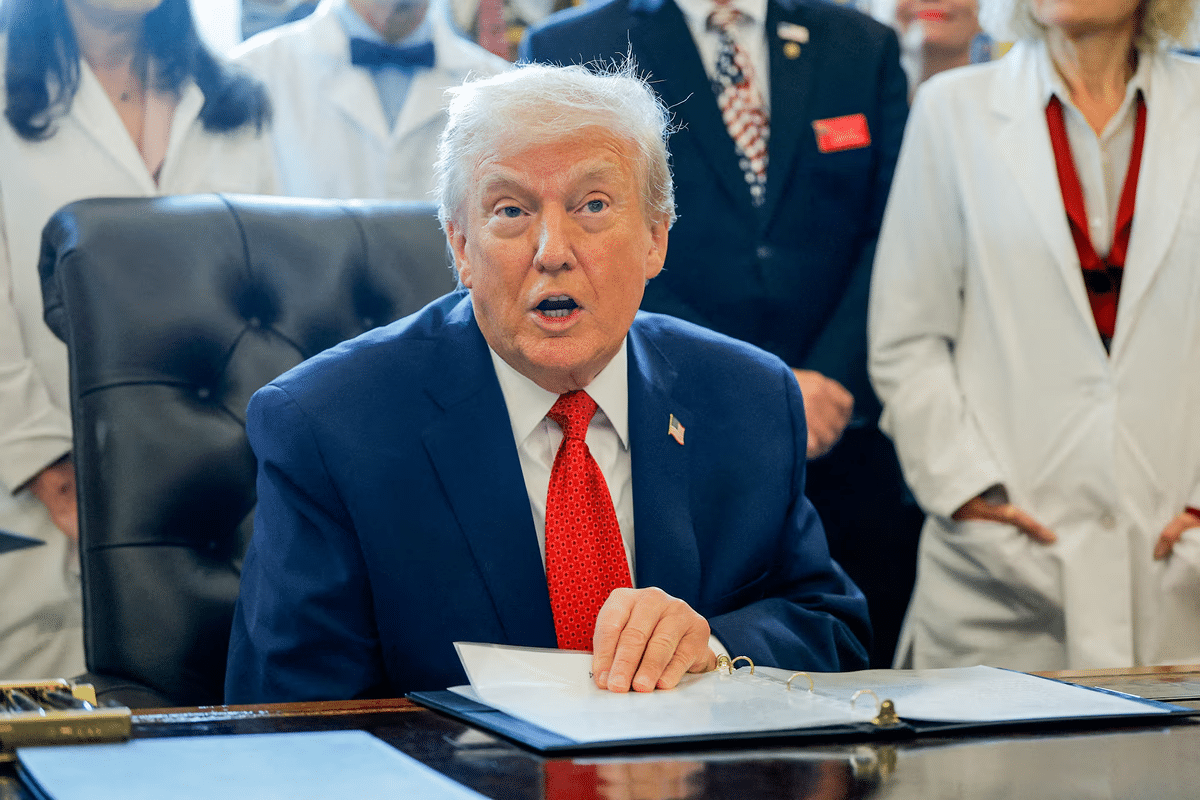
Markets are reassessing political risk in the U.S. defense sector after former President Donald Trump threatened to curtail government contracts for Raytheon, citing concerns over the company’s stock buyback activity. The remarks introduce a fresh layer of uncertainty for defense primes at a time when geopolitical tensions have otherwise underpinned demand for military hardware.
Political Pressure Meets Capital Allocation
Trump’s criticism centers on the idea that defense contractors benefiting from large government contracts should prioritize investment in production, workforce, and readiness rather than returning capital to shareholders. Stock buybacks, while legal and widely used across corporate America, have long been a political flashpoint—particularly when taxpayer-funded revenues are involved.
Raytheon, a key supplier of missile systems, radar, and aerospace technologies, has historically balanced shareholder returns with sizable reinvestment. Nonetheless, the threat—however conditional—signals that buybacks could become a bargaining chip in future defense policy debates. Even without immediate action, such rhetoric can influence expectations around how defense firms deploy excess cash.
Market Reaction and Defense Sector Sensitivity
Shares of Raytheon Technologies showed heightened volatility as investors weighed the probability that political pressure could translate into policy. While defense budgets are typically set through lengthy congressional processes, market participants recognize that headline risk can affect valuations, especially during election cycles or periods of fiscal debate.
The episode also reverberated across peers, with investors considering whether similar scrutiny could extend to other large contractors that have relied on buybacks to boost earnings per share. For the sector as a whole, the concern is not an abrupt loss of contracts, but the possibility of constraints on capital returns that could alter long-term financial strategies.
Strategic Implications for Contractors and Governments
Beyond immediate market moves, Trump’s comments underscore a broader tension between national security objectives and corporate finance practices. Governments seek reliable suppliers capable of scaling production quickly, particularly amid conflicts in Europe and the Middle East. At the same time, publicly traded defense firms are accountable to shareholders who expect disciplined capital management.
For Israeli and global investors, the issue highlights how political narratives can shape sector risk premia. Defense stocks have benefited from sustained demand visibility, but they are not immune to policy-driven shifts that could influence margins, capital allocation, or contract terms. Increased scrutiny may encourage firms to emphasize reinvestment narratives, even if buybacks remain part of their financial toolkit.
Looking ahead, markets will watch whether Trump’s remarks evolve into concrete policy proposals or remain part of broader campaign rhetoric. Key risks include heightened regulatory oversight of defense contractors’ financial practices or renewed debates over profit caps. Opportunities could arise if clearer guidelines emerge, allowing firms to align shareholder returns with government expectations more transparently. In the near term, political signaling—rather than fundamentals alone—may continue to influence sentiment across the defense sector.
Comparison, examination, and analysis between investment houses
Leave your details, and an expert from our team will get back to you as soon as possible
* This article, in whole or in part, does not contain any promise of investment returns, nor does it constitute professional advice to make investments in any particular field.
To read more about the full disclaimer, click here
- sagi habasov
- •
- 6 Min Read
- •
- ago 4 days
SKN | Is the CAC 40 Poised for New Highs? French Index Rallies 1.8% in Volatile Week
The CAC 40 demonstrated significant underlying strength this week, navigating a turbulent mid-week session to finish with a commanding
- ago 4 days
- •
- 6 Min Read

The CAC 40 demonstrated significant underlying strength this week, navigating a turbulent mid-week session to finish with a commanding

- orshu
- •
- 8 Min Read
- •
- ago 5 days
SKN | Israel Market Close Today, February 6, 2026: Selective Stabilization Emerges After Volatile Week as Investors Prepare for Next Session
Israeli financial markets closed today, February 6, 2026, with a more measured and selective tone following the sharp selloff seen
- ago 5 days
- •
- 8 Min Read

Israeli financial markets closed today, February 6, 2026, with a more measured and selective tone following the sharp selloff seen
- orshu
- •
- 7 Min Read
- •
- ago 1 week
SKN | European Markets Rebound as Eurozone Indices Recover Despite Currency Weakness
European markets opened February on a mixed but stabilizing note on Monday, February 2, 2026, as eurozone equities rebounded from
- ago 1 week
- •
- 7 Min Read

European markets opened February on a mixed but stabilizing note on Monday, February 2, 2026, as eurozone equities rebounded from
- orshu
- •
- 5 Min Read
- •
- ago 2 weeks
SKN | Capital Preservation Is the Price of Long-Term Compounding
Compounding Has a Fragile Requirement Compounding is often presented as an automatic process: stay invested long enough and returns will
- ago 2 weeks
- •
- 5 Min Read

Compounding Has a Fragile Requirement Compounding is often presented as an automatic process: stay invested long enough and returns will

