


- Ronny Mor
- •
- 8 Min Read
- •
- 5 hours ago
Key Points
- Japan pledged $36 billion for U.S. oil, gas and critical mineral projects as part of a broader $550 billion trade-linked commitment.
- A $33 billion Ohio natural gas plant and a $2.1 billion Texas export terminal anchor the energy-focused investments.
- A $600 million synthetic diamond facility in Georgia highlights growing emphasis on critical materials and supply chain security.
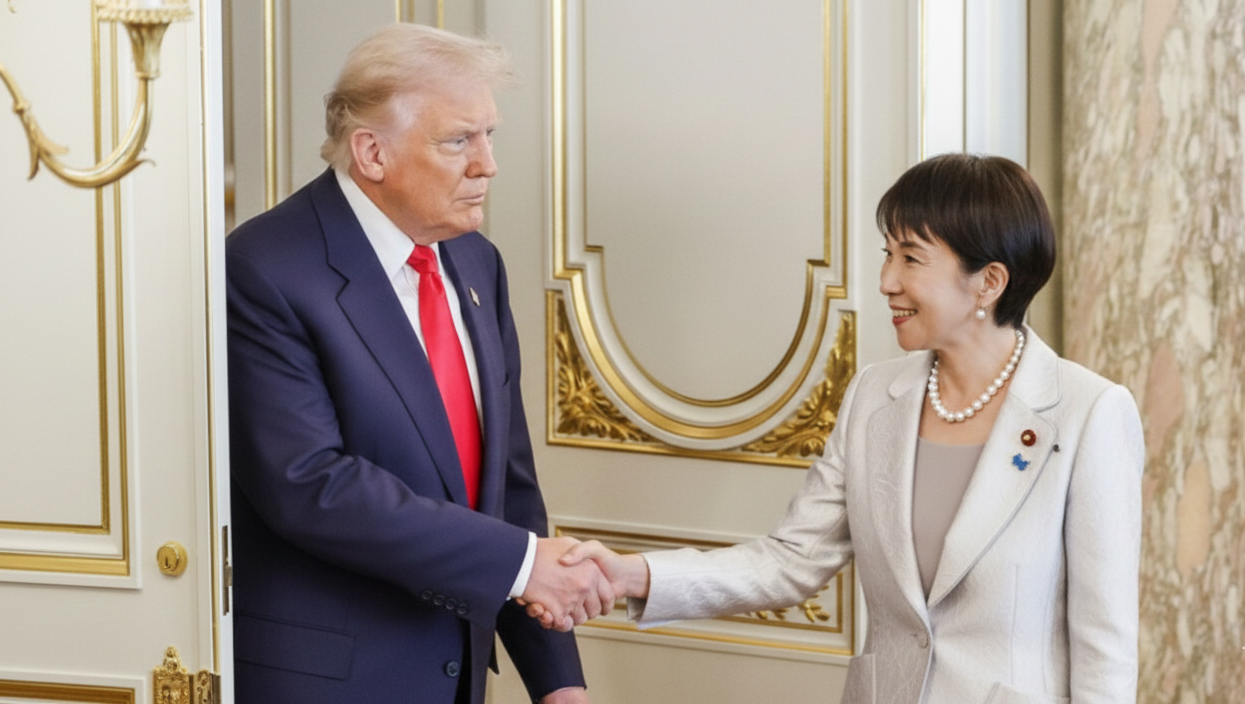
President Donald Trump has praised Japan’s pledge to invest nearly $36 billion in U.S. oil, gas and critical mineral projects, framing the move as an early dividend of a sweeping bilateral trade agreement. The announcement marks the first wave of capital from Tokyo’s broader $550 billion commitment to American-based projects, underscoring how trade diplomacy is increasingly intertwined with energy security and industrial strategy.
The investment package spans major infrastructure initiatives in Texas, Ohio and Georgia, with implications not only for U.S.-Japan relations but also for domestic energy markets, export capacity and critical supply chains.
Energy Infrastructure at Historic Scale
The largest component of Japan’s commitment is a $33 billion natural gas power facility in Ohio, known as the Portsmouth Powered Land Project. Operated by SB Energy, a subsidiary of SoftBank, the plant is expected to generate 9.2 gigawatts of power — positioning it as potentially the largest natural gas generation facility ever built.
For U.S. energy markets, this scale carries strategic significance. Natural gas remains a cornerstone of American electricity generation, particularly as policymakers balance decarbonization goals with grid reliability. A facility of this magnitude would enhance baseload capacity at a time when power demand is climbing due to electrification trends and AI-driven data center expansion.
From Japan’s perspective, the move deepens access to U.S. energy resources while strengthening bilateral economic ties under more favorable tariff terms. Under the recently concluded trade deal, tariffs on most Japanese imports were cut to 15%, a move Trump described as made possible by “one very special word, TARIFFS.”
Expanding U.S. Export Muscle
Beyond power generation, Japan has agreed to finance a $2.1 billion deepwater crude oil export facility off the Texas coast. The Texas GulfLink project, developed by Sentinel Midstream, is expected to support up to $30 billion in annual crude exports at full capacity.
This development reinforces the United States’ role as a leading global energy exporter. Expanded deepwater export infrastructure enhances logistical efficiency and provides greater flexibility for large-scale shipments to Asia and Europe. For energy traders, the project could tighten integration between U.S. crude benchmarks and global pricing mechanisms, potentially increasing Brent-WTI convergence over time.
The export facility also strengthens energy security cooperation between Washington and Tokyo, offering Japan more reliable access to U.S. crude supplies amid ongoing geopolitical uncertainty in the Middle East.
Critical Minerals and Industrial Security
The third pillar of the investment package focuses on critical materials. Japan plans to invest approximately $600 million in a synthetic diamond grit facility in Georgia, to be operated by Element Six, part of De Beers Group.
Diamond grit and related materials are essential in advanced manufacturing due to their extreme hardness and wear resistance. These materials play a critical role in sectors ranging from aerospace to semiconductor fabrication. By localizing production, the project addresses growing concerns about supply chain vulnerabilities and economic security.
In an era defined by technological competition and industrial reshoring, such investments extend beyond energy into strategic manufacturing resilience.
Strategic Implications Ahead
The broader context is a $550 billion Japanese commitment to U.S.-based projects, signaling a recalibration of trade and investment flows. For markets, the immediate impact may be sector-specific — benefiting energy infrastructure firms, export-oriented producers and advanced materials suppliers. Over time, however, the deal may reinforce the U.S. position as a global energy hub while deepening transpacific economic alignment.
Investors will now watch execution timelines, regulatory approvals and financing structures to gauge how quickly capital is deployed. At stake is not just bilateral goodwill, but a test of whether tariff-driven trade diplomacy can deliver sustained industrial growth.
Comparison, examination, and analysis between investment houses
Leave your details, and an expert from our team will get back to you as soon as possible
* This article, in whole or in part, does not contain any promise of investment returns, nor does it constitute professional advice to make investments in any particular field.
To read more about the full disclaimer, click here
- Lior mor
- •
- 7 Min Read
- •
- ago 2 minutes
SKN | Oil Climbs Above $69: Are U.S.–Iran Tensions Reigniting a Geopolitical Risk Premium?
Global oil markets are once again being driven less by inventory data and more by geopolitics. Brent crude rose back
- ago 2 minutes
- •
- 7 Min Read

Global oil markets are once again being driven less by inventory data and more by geopolitics. Brent crude rose back

- omer bar
- •
- 6 Min Read
- •
- ago 7 hours
SKN | Brent Steady After US-Iran Talks: Is the Geopolitical Risk Premium Starting to Fade?
Brent crude hovered just above $67 per barrel on Wednesday, stabilizing after recent declines as markets digested tentative progress in
- ago 7 hours
- •
- 6 Min Read

Brent crude hovered just above $67 per barrel on Wednesday, stabilizing after recent declines as markets digested tentative progress in

- orshu
- •
- 6 Min Read
- •
- ago 5 days
SKN | Transocean Surges on Merger Momentum and Backlog Strength: Is Offshore Drilling Back in Focus?
Transocean Ltd. rallied sharply in U.S. trading, climbing more than 8% to $6.53, as investors reassessed the offshore driller’s
- ago 5 days
- •
- 6 Min Read

Transocean Ltd. rallied sharply in U.S. trading, climbing more than 8% to $6.53, as investors reassessed the offshore driller’s

- sagi habasov
- •
- 7 Min Read
- •
- ago 5 days
SKN | Is Oil Entering a Cooling Phase as Iran Talks and OPEC+ Supply Plans Shift the Balance?
Oil prices are heading toward their first back-to-back weekly decline of 2026, signaling a shift in market psychology after months
- ago 5 days
- •
- 7 Min Read

Oil prices are heading toward their first back-to-back weekly decline of 2026, signaling a shift in market psychology after months

