


- omer bar
- •
- 7 Min Read
- •
- 40 minutes ago
Key Points
- Toyota is repositioning the Highlander as a three-row electric SUV, diverging from an industry trend of slowing EV commitments.
- The move highlights Toyota’s long-term electrification strategy, balancing hybrids, EVs, and regional market demand.
- Execution risk remains elevated as consumer adoption, costs, and infrastructure gaps challenge large EV rollouts.
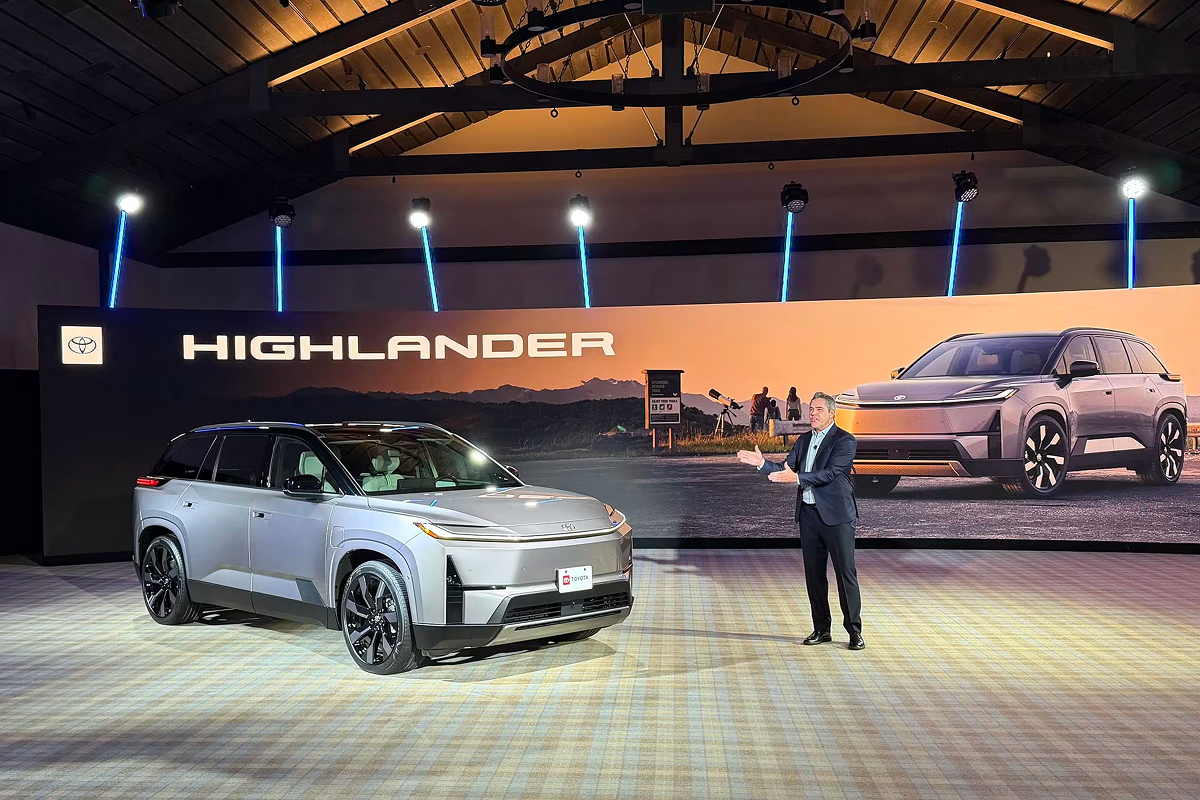
Toyota’s decision to recast the Highlander as a fully electric, three-row SUV marks a notable strategic pivot at a time when several global automakers are scaling back electric vehicle ambitions. The move underscores Toyota’s willingness to selectively double down on EVs even as the broader industry reassesses demand growth, cost pressures, and regulatory uncertainty.
Toyota’s Contrarian EV Signal
The global auto industry has entered a more cautious phase of electrification. Rising interest rates, slowing EV demand growth in the U.S. and Europe, and persistent affordability challenges have led several manufacturers to delay or resize EV investments. Against this backdrop, Toyota’s plan to electrify the Highlander stands out as a contrarian signal.
The Highlander occupies a critical position in Toyota’s lineup as a high-volume, family-oriented SUV with strong brand equity, particularly in North America. Recasting it as a three-row electric model suggests confidence that demand for larger EVs can materialize when paired with brand trust, practicality, and competitive pricing. It also reflects Toyota’s belief that the next phase of EV adoption may shift from early adopters toward mainstream family buyers.
Strategic Rationale: Scale, Flexibility, and Market Segmentation
Toyota has long differentiated itself by resisting an all-in EV strategy, instead emphasizing hybrids, plug-in hybrids, and fuel efficiency as transitional solutions. The electric Highlander does not represent a reversal of that philosophy but rather an extension of it. By electrifying a proven platform, Toyota aims to leverage scale while limiting development risk.
This approach also provides strategic flexibility. Toyota can tailor production volumes based on regional demand, regulatory mandates, and infrastructure readiness. For markets with strong charging networks and incentives, the electric Highlander offers compliance and growth potential. In regions where EV adoption remains slower, Toyota’s hybrid portfolio continues to anchor sales and profitability. For global investors, including those in Israel monitoring automotive supply chains and energy transition trends, this multi-track strategy reflects a risk-managed approach to electrification.
Risks, Costs, and Industry Implications
Despite the strategic logic, challenges are significant. Large electric SUVs face higher battery costs, weight constraints, and range sensitivity, all of which directly affect pricing and margins. The three-row segment is particularly exposed to these issues, as consumers expect long range, ample interior space, and towing capability.
There is also the question of timing. While EV adoption continues to grow globally, the pace has moderated. Infrastructure build-out remains uneven, and incentives are increasingly politicized. Toyota’s move therefore places a premium on execution discipline—from battery sourcing and cost control to software integration and charging partnerships.
Industry-wide, Toyota’s decision may pressure competitors that have paused EV programs, especially if the electric Highlander gains traction. It signals that selective EV investments tied to established nameplates may be more resilient than clean-sheet launches.
Looking ahead, attention will focus on production timelines, pricing strategy, and early demand indicators once the electric Highlander reaches the market. Key risks include cost overruns, slower-than-expected consumer uptake, and shifts in regulatory frameworks. Opportunities lie in capturing family-oriented EV buyers and reinforcing Toyota’s reputation for reliability during the industry’s transition phase. As automakers recalibrate electrification strategies, Toyota’s Highlander bet could emerge as a test case for how legacy brands navigate the next stage of the EV cycle.
Comparison, examination, and analysis between investment houses
Leave your details, and an expert from our team will get back to you as soon as possible
* This article, in whole or in part, does not contain any promise of investment returns, nor does it constitute professional advice to make investments in any particular field.
To read more about the full disclaimer, click here
- Arik Arkadi Sluzki
- •
- 6 Min Read
- •
- ago 17 minutes
SKN | Nvidia Partner Surges After Earnings Beat as AI Demand Signals Momentum Into 2026
Shares of a major Nvidia partner surged following an earnings report that exceeded market expectations, underscoring the strength of
- ago 17 minutes
- •
- 6 Min Read

Shares of a major Nvidia partner surged following an earnings report that exceeded market expectations, underscoring the strength of

- Lior mor
- •
- 6 Min Read
- •
- ago 27 minutes
SKN | Shopify Delivers Record Q4 Results as AI Strategy Takes Center Stage
Shopify closed out fiscal Q4 2025 with a record performance, underscoring the platform’s relevance as global e-commerce activity stabilizes
- ago 27 minutes
- •
- 6 Min Read

Shopify closed out fiscal Q4 2025 with a record performance, underscoring the platform’s relevance as global e-commerce activity stabilizes

- Ronny Mor
- •
- 7 Min Read
- •
- ago 1 hour
SKN | Robinhood’s Super App Ambition: Can Crypto Power the Next Phase of Fintech Growth?
Robinhood is accelerating its push to become what executives describe as a “financial super app”, aiming to consolidate trading,
- ago 1 hour
- •
- 7 Min Read

Robinhood is accelerating its push to become what executives describe as a “financial super app”, aiming to consolidate trading,

- sagi habasov
- •
- 6 Min Read
- •
- ago 8 hours
SKN | FAA Reopens El Paso Airspace — Was There Ever a Real Threat to Commercial Aviation?
The U.S. Federal Aviation Administration (FAA) on Wednesday lifted a temporary closure of airspace over El Paso, Texas, confirming that
- ago 8 hours
- •
- 6 Min Read

The U.S. Federal Aviation Administration (FAA) on Wednesday lifted a temporary closure of airspace over El Paso, Texas, confirming that

