


- Ronny Mor
- •
- 9 Min Read
- •
- 4 weeks ago
Key Points
- President Trump’s declaration of an immediate ban on institutional investors purchasing single-family homes marks the abrupt end of the financialization of the American housing market.
- Major REITs and Private Equity firms face an existential threat to their business models, with markets pricing in the risk of a forced liquidation event or a massive "fire sale."
- Timed just two weeks before Davos, this populist maneuver creates unprecedented regulatory uncertainty, forcing asset managers to radically re-price risk across the residential real estate sector.
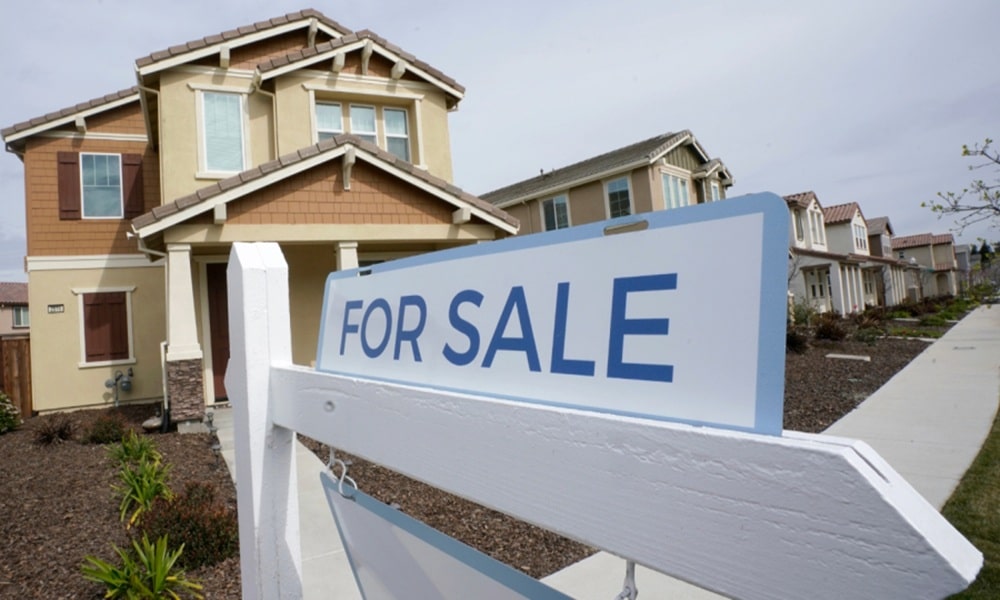
The solitary post on Truth Social, released on the evening of January 7, 2026, achieved what years of rate hikes and soft regulation could not: it destabilized the foundations of one of Wall Street’s most lucrative trades of the decade. Donald Trump’s announcement of “immediate steps” to ban large institutional investors from buying single-family homes is a classic Black Swan event. Arriving amidst an already tense market, it alters the rules of engagement violently and instantly. Until yesterday, the American home was viewed as a tradable financial asset on the balance sheets of giants like BlackRock and Invitation Homes; as of this morning, it is marked as forbidden political territory. Trump’s rhetoric, directly linking Biden-era inflation to the younger generation’s inability to access the “American Dream”, is not merely campaign sloganering but operative policy shifting global capital flows.
The Collapse of the “Rentiership” Narrative
For years, Wall Street’s thesis was simple and ruthless: in a world of variable rates and supply constraints, the best yield comes from becoming the landlord of the American middle class. Mega-funds bought entire neighborhoods, leveraging economies of scale and access to cheap capital while crowding out private buyers. Trump’s declaration shatters this thesis. The phrase “People live in homes, not corporations” is a clear signal that the new administration views institutional capital as a class enemy rather than an economic partner. The immediate implication is an aggressive de-rating of residential REIT multiples. Investors now realize that inorganic growth for these entities is completely blocked. Without the ability to acquire new inventory, and facing implied regulatory threats to existing holdings, the “growth by acquisition” model is dead, turning these firms from growth engines into defensive, stagnating entities.
Chain Reaction: Liquidity, Valuation, and Panic
The most dangerous aspect of the announcement is the uncertainty regarding existing inventory. Although the post focuses on banning “buying more” homes, the market anticipates the next logical step: pressure to divest. Market psychology is in full effect here—portfolio managers, fearing a future mandate to dump thousands of homes into a flooded market, may attempt to front-run the regulation with quiet liquidations starting now. such herd behavior would create “artificial supply,” driving housing prices down sharply. For the banks financing these funds, this is a nightmare scenario. A decline in collateral value (the homes) will trigger margin calls, exacerbating a liquidity squeeze. We are witnessing a scenario where an attempt to solve a social problem (housing affordability) risks igniting a financial credit crunch.
The Davos Paradox: Populism vs. The Elite
The timing of the announcement, exactly two weeks before Trump’s scheduled speech at the World Economic Forum in Davos, is calculated. It is a power play designed to position Trump above the global financial elite. He arrives in Switzerland not seeking the approval of bank CEOs, but dictating terms to them. The message is unequivocal: the “American Dream” takes precedence over shareholder ROE. For markets, this signals a concerning trajectory for the administration—aggressive intervention in the free market for populist ends. Foreign investors may view this as an erosion of property rights and investment security in the U.S., potentially leading to capital flight and short-term pressure on the Dollar.
Capital Allocation in the New Regime
As with any market shock, there are winners and losers. While Single-Family Rental funds bleed, Homebuilders may experience a renaissance. If institutional behemoths are removed from the equation, competition for land and assets may cool, allowing builders to acquire inventory at sane prices and sell to a housing-hungry public. Furthermore, capital exiting the institutional housing market will not evaporate; it will seek a new home. Sectors like infrastructure, energy, and even commercial real estate (unmentioned in the post) may benefit from renewed inflows. The prudent strategy now is to identify assets outside the White House’s political crosshairs and avoid any sector perceived as “exploiting” the average citizen.
January 7, 2026, will be remembered as the day the line between politics and economics was finally erased. The free market, in its purest form, has given way to “politically managed capitalism.” For Wall Street, the message is sharp: the premium on life-essential assets (housing, food, healthcare) has risen dramatically, and regulatory risk is now the primary factor in pricing models. Those who continue to bet on the financialization of daily American life do so, from this point forward, entirely at their own peril.
Comparison, examination, and analysis between investment houses
Leave your details, and an expert from our team will get back to you as soon as possible
* This article, in whole or in part, does not contain any promise of investment returns, nor does it constitute professional advice to make investments in any particular field.
To read more about the full disclaimer, click here
- Ronny Mor
- •
- 6 Min Read
- •
- ago 3 weeks
SKN | Blackstone’s $4.65 Billion Germany Data Center Bet Signals Europe’s Next Digital Infrastructure Push
Blackstone is preparing to invest approximately $4.65 billion in a large-scale data center development in Germany, according to a
- ago 3 weeks
- •
- 6 Min Read

Blackstone is preparing to invest approximately $4.65 billion in a large-scale data center development in Germany, according to a

- Lior mor
- •
- 7 Min Read
- •
- ago 3 months
SKN | Why is Walmart (WMT) Stock Rocketing Higher Today
Walmart’s latest quarterly results offer a revealing snapshot of U.S. consumer behavior at a time of mixed economic signals, with
- ago 3 months
- •
- 7 Min Read

Walmart’s latest quarterly results offer a revealing snapshot of U.S. consumer behavior at a time of mixed economic signals, with

- orshu
- •
- 15 Min Read
- •
- ago 3 months
SKN | Bitcoin Rally Pushes Crypto Into Green For September, But Alts Are Lagging: Analysis
The Impact of the Recent Bitcoin Rally on the Cryptocurrency Market: Analyzing September Trends and Performance The Recent Bitcoin Rally
- ago 3 months
- •
- 15 Min Read

The Impact of the Recent Bitcoin Rally on the Cryptocurrency Market: Analyzing September Trends and Performance The Recent Bitcoin Rally
- orshu
- •
- 17 Min Read
- •
- ago 3 months
SKN | Rick Perry-Backed Fermi Reit Raises $682 Million In U.s. Ipo Amid Ai Data-Center Boom
The Impact of AI Data-Center Boom on Real Estate Investment Trusts: A Focus on Rick Perry-Backed Fermi REIT and Its
- ago 3 months
- •
- 17 Min Read

The Impact of AI Data-Center Boom on Real Estate Investment Trusts: A Focus on Rick Perry-Backed Fermi REIT and Its

