





- omer bar
- •
- 9 Min Read
- •
- 22 hours ago
Key Points
- Second-quarter deliveries beat forecasts by 18% and serve as a critical foundation for the company's cash flow.
- Automotive operations account for approximately 70% of revenues and act as the financial anchor for AI and robotics projects.
- Investment banks clarify that future market cap remains dependent on the success of full autonomy, despite the manufacturing rebound.
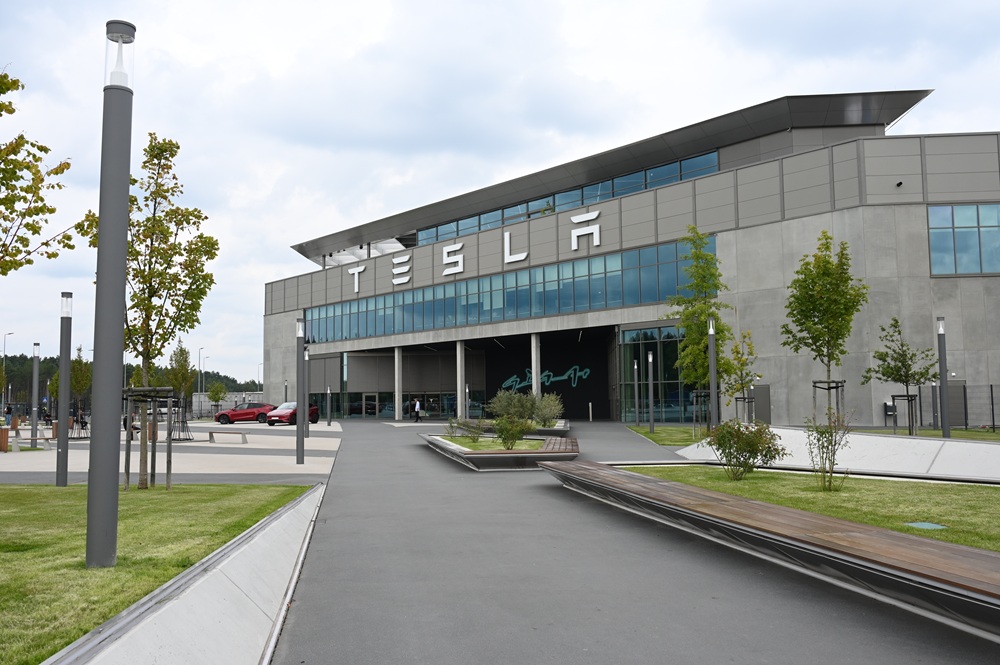
The Texas-based electric vehicle giant stands at a strategic tipping point, as second-quarter data provides the markets with a long-awaited boost. By exceeding delivery forecasts by 18%, Tesla is signaling to investors that its traditional growth engine has not yet said its final word. However, an in-depth examination of the numbers and the dynamics on Wall Street reveals a much more complex picture. This recovery is not merely a matter of market share in vehicle manufacturing; rather, it constitutes the financial lifeline designed to fund the company’s ambitious aspirations in the realm of artificial intelligence. The central question currently preoccupying top investment banks is not solely about profit margins from selling cars, but about the company’s ability to translate this cash flow into technological leadership in the worlds of Robotaxi and Full Self-Driving.
The Automaker’s Financial Performance and Profit Forecasts
Tesla delivered 480,126 vehicles in the second quarter, a figure that sharply beat the analysts’ consensus and showcased the strongest quarterly growth rate since the third quarter of 2023. This marks a milestone that could put the manufacturer’s annual delivery volume on a positive growth trajectory for the first time in a prolonged period. On Wall Street, economic models were swiftly updated, with Morgan Stanley raising its delivery forecasts for the coming years, projecting 1.67 million vehicles in 2026 and 1.86 million units in 2027. The rebound in sales volumes translates directly into higher-than-expected profitability expectations. Morgan Stanley forecasts an adjusted earnings per share of $0.69 for the second quarter, significantly above the market forecast of $0.49. According to the bank’s assessment, the gross margin of the automotive division, excluding regulatory credits, will stabilize at 18.1%, a healthy figure that aligns with expectations. Conversely, Barclays’ analysis presents a somewhat more conservative stance, projecting an adjusted EPS of $0.55 against a consensus of $0.47, while anticipating sequential margin erosion due to raw material costs and the absence of positive one-off items.
Capital Strategy and the Race Toward Artificial Intelligence
Despite the futuristic technological narrative pushed by CEO Elon Musk, traditional automotive operations still generate approximately 70% of Tesla’s total revenue. This fact makes the financial stability of the core business exceptionally vital, precisely at a time when the company is accelerating its capital expenditures on computing infrastructure and artificial intelligence. A renewed growth in car sales not only strengthens the current balance sheet and reaffirms consumer interest in FSD, but also generates the necessary cash to fund high-risk projects such as Robotaxi, Optimus, and semiconductors. The financial challenge facing the company is colossal. Morgan Stanley estimates that Tesla’s capital expenditures for 2026 will soar to $26.8 billion, a figure expected to lead to a free cash flow burn of $11.4 billion. This dynamic increases the pressure on the company’s management to provide Wall Street with conclusive evidence that these physical AI investments are capable of yielding proper returns.
The Reality Check of Robotaxi on the Ground
Regarding the expectations surrounding the Robotaxi venture, the gap between the marketing vision and the deployment on the ground remains substantial, and expansion is limited. A look at the target market reveals activity on a restricted scale. Barclays analysts estimate that Tesla currently operates a fleet of only 30 to 50 vehicles in Austin, alongside an even smaller deployment in Dallas, Houston, and Miami. A testament to the venture’s complexity is that the vast majority of these rides are still conducted with human safety supervisors in the vehicle. However, Morgan Stanley’s forecasts indicate that the fleet will reach approximately 1,500 supervised and unsupervised vehicles by the end of the current year, with expected launches in Phoenix, Orlando, Tampa, and Las Vegas. These steps reflect the effort to break into new markets, but the path to transforming the fleet into a central and profitable revenue engine is still long.
Tesla’s current stock valuation reflects the dilemma of investors, oscillating between solid industrial performance and futuristic technological promises. The decision by Morgan Stanley and Barclays to maintain an ‘Equal Weight’ rating, while raising price targets to $417 and $370 respectively, conveys a clear message to the markets. When only $47 of Morgan Stanley’s price target is attributed to the automotive business itself, the market is signaling that the ability to maintain high delivery rates is a necessary condition for cash flow stability, but it alone does not justify the company’s valuation. Tesla’s true test in the coming quarters will be its ability to present a seamless transition from a metal-and-wheels-based business to a software and artificial intelligence company, while proving that its massive investments are bearing fruit.
Comparison, examination, and analysis between investment houses
Leave your details, and an expert from our team will get back to you as soon as possible
* This article, in whole or in part, does not contain any promise of investment returns, nor does it constitute professional advice to make investments in any particular field.
To read more about the full disclaimer, click here
- Ronny Mor
- •
- 7 Min Read
- •
- ago 8 hours
SKN | Morgan Stanley Sees SpaceX Reaching $300 as AI Ambitions Expand Beyond Space Exploration
Morgan Stanley has reaffirmed its bullish outlook on SpaceX, assigning a $300 price target that implies significant upside from recent
- ago 8 hours
- •
- 7 Min Read

Morgan Stanley has reaffirmed its bullish outlook on SpaceX, assigning a $300 price target that implies significant upside from recent

- Lior mor
- •
- 7 Min Read
- •
- ago 9 hours
SKN | Should Investors Worry After an Airbnb Insider Sold $35.5 Million in Shares?
Airbnb has attracted renewed investor attention following the disclosure that company director and co-founder Joseph Gebbia sold approximately 236,600 Class
- ago 9 hours
- •
- 7 Min Read

Airbnb has attracted renewed investor attention following the disclosure that company director and co-founder Joseph Gebbia sold approximately 236,600 Class
- Ronny Mor
- •
- 6 Min Read
- •
- ago 11 hours
SKN | AbbVie’s $10.9 Billion Apogee Acquisition Raises Questions Over Future Dividend Growth Strategy
AbbVie’s $10.9 billion acquisition of Apogee Therapeutics has placed renewed attention on how large-scale pharmaceutical deals influence shareholder returns, particularly
- ago 11 hours
- •
- 6 Min Read

AbbVie’s $10.9 billion acquisition of Apogee Therapeutics has placed renewed attention on how large-scale pharmaceutical deals influence shareholder returns, particularly
- Lior mor
- •
- 8 Min Read
- •
- ago 22 hours
SKN | The SpaceX Valuation Compression Phase: From $2.6 Trillion Zenith to IPO Floor Breach
Systemic realignments across global primary registries and the strategic engineering of institutional wealth balances are validating an intense re-rating phase
- ago 22 hours
- •
- 8 Min Read
Systemic realignments across global primary registries and the strategic engineering of institutional wealth balances are validating an intense re-rating phase


