




- orshu
- •
- 7 Min Read
- •
- 1 hour ago


Key Points
- Tel Aviv equities came under broad pressure on August 17, with the TA-35 declining 0.67%, the TA-90 falling 2.68%, and the TA-125 dropping 1.19%.
- The selloff was particularly severe among mid-cap and banking shares, with 83 TA-90 securities and 88 securities in the TA-90 and Banks Index declining.
- Short-term bonds gained 0.03%, while the All-Bond General Index was unchanged, highlighting relative resilience in parts of the fixed-income market.
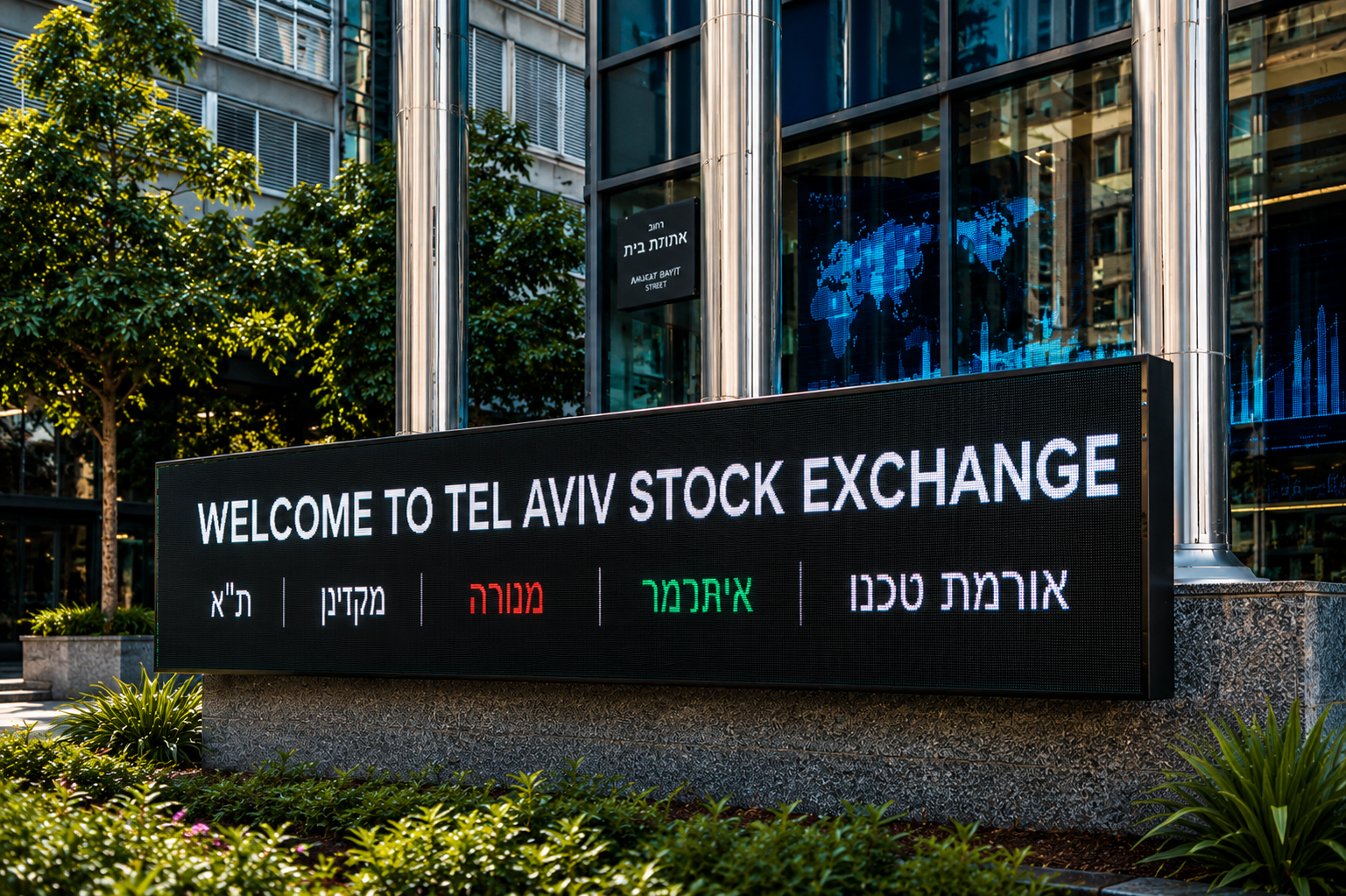
The Tel Aviv Stock Exchange opened the week with a broad equity selloff, as most major indexes moved sharply lower and market breadth deteriorated significantly. The decline was concentrated particularly heavily in mid-cap and banking-related shares, while short-term bonds provided a modest defensive counterpoint. The session marked a notable shift from the more balanced trading conditions seen in the previous session.
Broad-Based Equity Selling Hits Tel Aviv
The TA-35 Index declined 0.67% to 4,174.52 points. Only 10 securities advanced, while 26 declined and none finished unchanged. Although the decline in the benchmark was relatively moderate compared with other major indexes, the breadth showed clear selling pressure across large-cap shares.
The broader TA-125 Index fell 1.19% to 4,026.31 points. Just 17 securities gained, compared with 109 decliners, with no unchanged securities. The significant imbalance between advancing and declining shares indicates that the weakness extended across a wide portion of the Israeli equity market.
Stock-market turnover reached approximately NIS 3.55 billion, indicating substantial trading activity during the selloff.
TA-90 and Banks Lead the Decline
The sharpest weakness came from the TA-90 Index, which plunged 2.68% to 3,569.46 points. Only seven securities advanced, while 83 declined.
The TA-90 and Banks Index performed even worse, dropping 2.79% to 3,815.13 points. Seven securities gained against 88 decliners, with no unchanged securities.
The breadth of the declines suggests that the session was not simply a pullback in a handful of major companies. Instead, selling pressure was widespread across mid-cap and banking-related shares, making these segments the primary sources of weakness during the session.
The TA-125 Value Index also declined sharply, falling 2.02% to 4,000.44 points. Eight securities advanced while 48 declined. This represented a reversal from the previous session, when value-oriented shares had demonstrated relative strength.
Sector-Balance Index Also Under Pressure
The Tel Aviv Sector-Balance Index dropped 1.74% to 4,524.57 points. Thirteen securities advanced, compared with 87 decliners and no unchanged securities.
The broad deterioration across the sector-balance and value indexes reinforces the scale of the equity-market weakness. Investors appeared to reduce exposure across multiple segments rather than rotating aggressively into defensive equity categories.
The data also show that no major equity index in the session recorded positive performance, with every listed equity benchmark declining.
Fixed Income Provides Relative Stability
The bond market displayed considerably more resilience than equities.
The Short-Term Bond Index rose 0.03% to 477.82 points, with 66 advancing securities compared with 16 decliners and 53 unchanged securities.
The All-Bond General Index finished unchanged at 432.40 points. Market breadth was relatively balanced, with 274 advancing securities, 258 declining and 83 unchanged.
However, longer-duration or corporate-oriented bond segments remained somewhat weaker. The Tel Bond-Adjoined A Index declined 0.07% to 438.62 points, while the Tel Bond 60 Adjacent Index slipped 0.02% to 428.21 points.
Bond-market turnover totaled approximately NIS 3.91 billion, exceeding stock-market turnover during the session.
Market Outlook
The August 17 session highlights a meaningful deterioration in Israeli equity-market breadth, particularly across mid-cap, banking and value-oriented shares. Investors will likely monitor whether the TA-90 and TA-125 can stabilize after the sharp decline and whether market breadth begins to improve in subsequent sessions. The relative resilience of short-term bonds and the unchanged All-Bond General Index could provide a defensive signal, but renewed selling across equities remains a key risk. Trading volume, the recovery of advancing securities and the performance of banking shares will be important indicators of whether the latest decline represents a temporary correction or the beginning of a deeper period of market weakness.
Comparison, examination, and analysis between investment houses
Leave your details, and an expert from our team will get back to you as soon as possible
* This article, in whole or in part, does not contain any promise of investment returns, nor does it constitute professional advice to make investments in any particular field.
To read more about the full disclaimer, click here
- orshu
- •
- 6 Min Read
- •
- ago 1 hour
SKN | European Markets Close Lower as Investors Reassess Risk Across Major Economies
European equity markets closed broadly lower on August 17 as investors reassessed risk across the region, with major benchmarks
- ago 1 hour
- •
- 6 Min Read
European equity markets closed broadly lower on August 17 as investors reassessed risk across the region, with major benchmarks
- orshu
- •
- 6 Min Read
- •
- ago 4 hours
SKN | Wall Street Holds Near Record Levels as Investors Reassess Risk Across Major Markets
U.S. financial markets began the August 17 session with a cautious tone after major equity indexes remained close to
- ago 4 hours
- •
- 6 Min Read

U.S. financial markets began the August 17 session with a cautious tone after major equity indexes remained close to
- orshu
- •
- 6 Min Read
- •
- ago 7 hours
SKN | Asia Markets Advance on August 17, 2026 as South Korea Leads Gains and China Moves Toward 4,000
Asian markets closed mostly higher on August 17, 2026, as investors returned to equities across Northeast Asia and Greater China.
- ago 7 hours
- •
- 6 Min Read

Asian markets closed mostly higher on August 17, 2026, as investors returned to equities across Northeast Asia and Greater China.
- orshu
- •
- 7 Min Read
- •
- ago 9 hours
SKN | Israeli Stock Market Shows Mixed Performance as TA-35 Advances While Banking Shares Decline
The Israeli stock market is showing a mixed performance, with gains among the leading blue-chip benchmark offset by weakness across
- ago 9 hours
- •
- 7 Min Read
The Israeli stock market is showing a mixed performance, with gains among the leading blue-chip benchmark offset by weakness across


