





- orshu
- •
- 8 Min Read
- •
- 54 minutes ago
Key Points
- The TA-125 Index fell 0.75% on July 16 as declining stocks outpaced gainers across most sectors of the Israeli market.
- The TA-35 dropped 0.95%, while the TA-90 slipped 0.18%, reflecting continued pressure on both large-cap and mid-cap equities.
- Israel's bond market experienced only modest declines, with the All-Bond General Index easing 0.08% despite continued institutional trading activity.
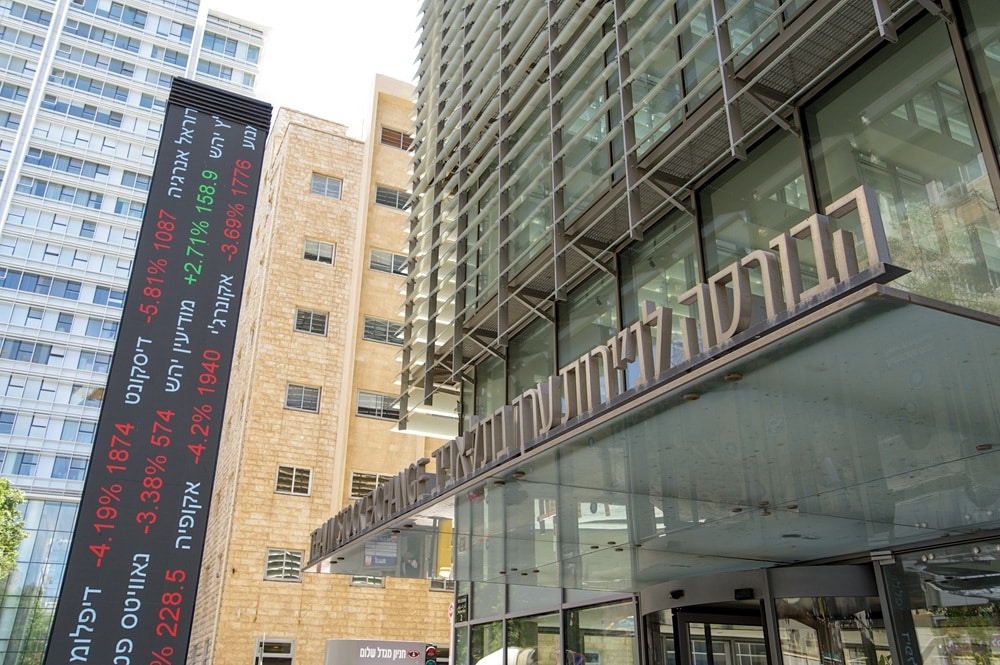
Israeli equities closed lower on Thursday, July 16, as investors adopted a more cautious stance following recent market fluctuations. Selling pressure weighed on most major benchmarks, with large-cap stocks leading the decline while mid-cap shares also remained under pressure. Although losses were moderate compared with earlier pullbacks this month, market breadth continued to favor decliners, suggesting investor sentiment remains cautious.
The fixed-income market also softened, though losses were considerably smaller than those recorded in equities. The relatively resilient bond market indicates that investors continue rotating selectively rather than making broad withdrawals from Israeli financial assets.
TA-125 Declines as Large-Cap Stocks Lead Market Lower
The benchmark TA-125 Index fell 0.75% to close at 4,096.58 points. Market breadth remained negative, with 45 advancing securities compared with 76 decliners, while four issues finished unchanged. The figures highlight continued selling pressure across a broad range of listed companies.
The blue-chip TA-35 Index declined 0.95% to finish at 4,156.43 points. Only 12 constituents advanced while 22 declined, reflecting renewed weakness among Israel’s largest publicly traded companies. The performance of heavyweight stocks accounted for much of the benchmark’s decline.
Stock market turnover reached approximately NIS 4.29 billion, indicating active investor participation despite the negative session. Trading activity remained healthy enough to suggest that institutional investors continued repositioning portfolios rather than simply reducing exposure.
Although the TA-125 remains comfortably above the 4,000-point level, the recent inability to sustain upward momentum suggests investors continue balancing attractive valuations against lingering economic and geopolitical uncertainties.
Mid-Cap Shares Remain Under Pressure Despite Selective Buying
The TA-90 Index declined 0.18% to close at 3,898.75 points. While losses were more limited than those recorded by the TA-35, declining stocks still outnumbered advancing issues by 54 to 33, indicating that weakness remained widespread across medium-sized companies.
The combined TA-90 and Banks Index fell 0.49% to 3,997.36 points as banking shares also faced renewed selling pressure. Financial stocks continued to underperform despite relatively stable broader economic conditions.
The TA-125 Value Index declined 0.62% to finish at 4,033.57 points, while the Tel Aviv Sector-Balance Index slipped 0.42% to 4,682.90 points. Across the sector balance benchmark, 37 stocks advanced while 60 declined, illustrating that selling pressure remained broad rather than concentrated within a handful of industries.
Despite the negative session, the smaller decline in the TA-90 compared with the TA-35 suggests investors were somewhat more selective, with weakness concentrated among larger capitalization names rather than affecting every market segment equally.
Bond Market Shows Relative Stability as Fixed Income Outperforms Equities
Israel’s bond market remained comparatively resilient despite another weak day for equities.
The All-Bond General Index edged down 0.08% to close at 432.04 points. Although declining bond issues outnumbered advancing securities by 368 to 179, overall price movements remained limited, reflecting continued stability across the fixed-income market.
Corporate bond benchmarks also posted only marginal declines. The Tel Bond-Adjoined A Index slipped just 0.01% to 439.55 points, while the Tel Bond 60 Adjacent Index also eased 0.01% to 428.33 points. Meanwhile, the short-term bond index rose 0.01% to 476.54 points, continuing its gradual upward trend and demonstrating investor preference for shorter-duration fixed-income assets.
Bond market turnover totaled approximately NIS 4.68 billion, exceeding equity trading volume for the session. The elevated activity reflects continued institutional participation and suggests investors remain actively managing fixed-income allocations even during periods of softer equity performance.
The relatively limited declines across bond markets reinforce the view that investors remain cautious rather than defensive, with capital continuing to circulate across different asset classes instead of moving decisively toward risk-off positioning.
Looking ahead, investors will monitor whether the TA-125 can maintain support above the 4,000-point level as earnings season, macroeconomic developments, and global market trends shape investor sentiment. Particular attention will be paid to whether large-cap stocks regain leadership after several uneven sessions and whether broader market participation begins to improve. Monetary policy expectations, corporate earnings announcements, and geopolitical developments will remain key drivers of market direction. If buying activity broadens across both blue-chip and mid-cap shares while trading volumes remain healthy, Israeli equities could regain upward momentum. However, continued weak market breadth may keep volatility elevated in the near term.
Comparison, examination, and analysis between investment houses
Leave your details, and an expert from our team will get back to you as soon as possible
* This article, in whole or in part, does not contain any promise of investment returns, nor does it constitute professional advice to make investments in any particular field.
To read more about the full disclaimer, click here
- orshu
- •
- 6 Min Read
- •
- ago 33 minutes
SKN | European Markets End Mixed as Investors Balance Economic Signals and Currency Moves
European equity markets closed the July 16 session with a mixed performance as investors evaluated economic conditions, corporate developments,
- ago 33 minutes
- •
- 6 Min Read
European equity markets closed the July 16 session with a mixed performance as investors evaluated economic conditions, corporate developments,
- orshu
- •
- 6 Min Read
- •
- ago 4 hours
SKN | U.S. Markets Show Mixed Performance as Investors Balance Technology Pressure and Economic Resilience
U.S. equity markets traded with mixed momentum on July 16 as investors balanced strength in economically sensitive sectors against
- ago 4 hours
- •
- 6 Min Read

U.S. equity markets traded with mixed momentum on July 16 as investors balanced strength in economically sensitive sectors against
- orshu
- •
- 7 Min Read
- •
- ago 7 hours
SKN | Asia Markets Split on July 16, 2026 as Hong Kong Tops 25,000 While South Korea Slides More Than 6%
Asian markets closed mixed on July 16, 2026, as gains in Hong Kong and modest strength in India contrasted with
- ago 7 hours
- •
- 7 Min Read

Asian markets closed mixed on July 16, 2026, as gains in Hong Kong and modest strength in India contrasted with
- orshu
- •
- 6 Min Read
- •
- ago 8 hours
SKN | European Markets Drift Lower as Currency Strength Fails to Lift Regional Equities
European markets closed slightly lower on July 16, 2026, as modest declines across the region's major equity benchmarks outweighed a
- ago 8 hours
- •
- 6 Min Read

European markets closed slightly lower on July 16, 2026, as modest declines across the region's major equity benchmarks outweighed a


