





- orshu
- •
- 8 Min Read
- •
- 6 hours ago
Key Points
- The TA-125 Index slipped just 0.07% on July 13, holding above the 4,000-point level despite broad market weakness.
- The TA-35 edged 0.07% higher, while the TA-90 fell 0.47%, highlighting continued pressure on mid-cap stocks.
- Israel's bond market weakened modestly, with the All-Bond General Index declining 0.13% as investors remained cautious across fixed-income markets.
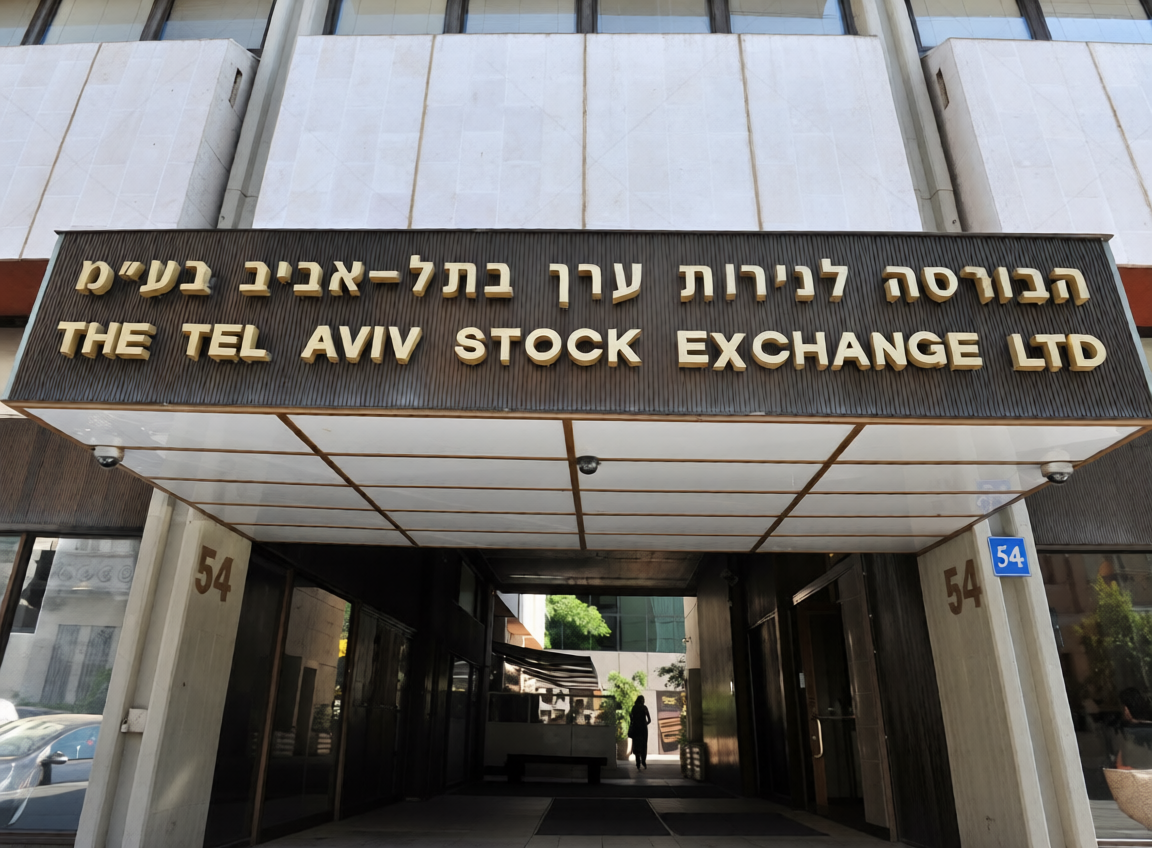
Israeli equities began the trading week with mixed performance on Monday, July 13, as investors balanced resilience in large-cap stocks against ongoing weakness across mid-cap shares. The benchmark TA-125 Index finished nearly unchanged, demonstrating that buyers continued defending the psychologically important 4,000-point threshold despite another session of negative market breadth.
Trading activity remained moderate throughout the session, while the fixed-income market also softened modestly. The combination of muted equity performance and weaker bond prices suggests investors continue to adopt a selective approach as they assess domestic and global market conditions.
TA-125 Holds Critical Support as Large-Cap Stocks Stabilize
The benchmark TA-125 Index eased 0.07% to close at 4,004.34 points, remaining just above the key 4,000-point level that has emerged as an important technical support area in recent sessions. Although the index posted only a modest decline, market breadth remained negative, with 38 advancing securities compared with 86 decliners and two unchanged stocks.
The TA-35 Index managed to finish slightly higher, gaining 0.07% to close at 4,058.08 points. Despite only 13 advancing constituents against 22 decliners, strength among several heavyweight companies was sufficient to keep Israel’s blue-chip benchmark in positive territory.
Stock market turnover totaled approximately NIS 3.60 billion, reflecting relatively moderate investor participation. Trading volumes were lower than many recent sessions, indicating investors remained cautious while waiting for stronger market catalysts.
The ability of the TA-35 to remain stable even as broader market breadth weakened suggests institutional investors continue favoring larger, more established companies during periods of market uncertainty.
Mid-Cap Shares Continue to Lag Broader Market
Mid-cap stocks remained the weakest segment of the Israeli market. The TA-90 Index declined 0.47% to close at 3,831.77 points after only 25 stocks advanced while 64 declined, extending the sector’s recent period of underperformance.
The combined TA-90 and Banks Index fell 0.45% to 3,914.46 points, reflecting continued pressure across financial and medium-sized companies. Banking stocks provided limited support as investors maintained a cautious stance toward economically sensitive sectors.
One area of relative strength was value-oriented shares. The TA-125 Value Index rose 0.40% to close at 3,977.79 points, outperforming the broader market and suggesting selective buying opportunities remained available despite the overall cautious environment.
Meanwhile, the Tel Aviv Sector-Balance Index edged down just 0.03% to 4,579.70 points. While the decline was modest, only 33 stocks advanced compared with 66 decliners, reinforcing the view that selling pressure continued to outweigh buying across most sectors.
The divergence between resilient value stocks and weaker growth-oriented mid-cap shares illustrates the increasingly selective nature of investor positioning.
Bond Market Weakens as Investors Maintain Defensive Positioning
Israel’s fixed-income market posted modest declines, extending the cautious tone seen across financial markets.
The All-Bond General Index fell 0.13% to close at 431.91 points. Declining bond issues significantly outnumbered advancing securities, with 431 decliners versus 124 gainers, indicating broad weakness across the bond market.
Corporate bond benchmarks also edged lower. The Tel Bond-Adjoined A Index slipped 0.03% to 439.18 points, while the Tel Bond 60 Adjacent Index declined 0.09% to finish at 427.63 points. The short-term bond index was one of the few bright spots, rising 0.01% to 476.40 points, reflecting continued stability in short-duration fixed-income securities.
Bond market turnover totaled approximately NIS 3.52 billion, nearly matching equity trading volumes and highlighting continued institutional participation across asset classes despite limited price movement.
The relatively modest declines in bonds compared with equities suggest investors remain cautious but are not displaying signs of widespread risk aversion.
Looking ahead, investors will focus on whether the TA-125 can continue holding above the important 4,000-point level after several sessions of consolidation. Sustained stability in blue-chip shares could help offset ongoing weakness in mid-cap stocks, but broader participation will likely be needed to generate a stronger market recovery. Market participants will also monitor corporate earnings, macroeconomic indicators, monetary policy expectations, and geopolitical developments that may influence investor confidence. If market breadth begins to improve while trading volumes strengthen, Israeli equities could regain upward momentum during the second half of July. However, continued weakness in mid-cap sectors may keep overall market performance restrained in the near term.
Comparison, examination, and analysis between investment houses
Leave your details, and an expert from our team will get back to you as soon as possible
* This article, in whole or in part, does not contain any promise of investment returns, nor does it constitute professional advice to make investments in any particular field.
To read more about the full disclaimer, click here
- orshu
- •
- 7 Min Read
- •
- ago 39 minutes
SKN | Technology Stocks Weigh on U.S. Markets as Nasdaq Leads July 13 Pullback
U.S. equity markets began the week on a weaker footing Monday, July 13, 2026, as investors reduced exposure to risk
- ago 39 minutes
- •
- 7 Min Read

U.S. equity markets began the week on a weaker footing Monday, July 13, 2026, as investors reduced exposure to risk
- orshu
- •
- 7 Min Read
- •
- ago 5 hours
SKN | European Markets Close Mixed on July 13 as French and German Equities Advance While Regional Benchmarks Ease
European equity markets finished trading on Monday, July 13 with a mixed performance as investors weighed improving sentiment in
- ago 5 hours
- •
- 7 Min Read

European equity markets finished trading on Monday, July 13 with a mixed performance as investors weighed improving sentiment in
- orshu
- •
- 6 Min Read
- •
- ago 9 hours
SKN | U.S. Markets Open Mixed on July 13 as Dow Holds Gains While Technology Shares Weigh on Sentiment
U.S. equities traded with a mixed performance on Monday, July 13, as investors balanced strength in industrial and defensive
- ago 9 hours
- •
- 6 Min Read

U.S. equities traded with a mixed performance on Monday, July 13, as investors balanced strength in industrial and defensive
- orshu
- •
- 6 Min Read
- •
- ago 11 hours
SKN | Asia Markets Open the Week Lower as South Korea Plunges 8.61% on July 13, 2026
Asian markets opened the new trading week with a mixed but generally weaker performance on July 13, 2026. A sharp
- ago 11 hours
- •
- 6 Min Read

Asian markets opened the new trading week with a mixed but generally weaker performance on July 13, 2026. A sharp


