





- orshu
- •
- 8 Min Read
- •
- 2 hours ago
Key Points
- Tel Aviv equities remain under pressure, with the TA-35, TA-90, and TA-125 all trading lower.
- Market breadth is decisively negative as declining stocks significantly outnumber advancing shares across major indices.
- Bond markets remain broadly stable despite slight declines, signaling limited stress in fixed-income markets.
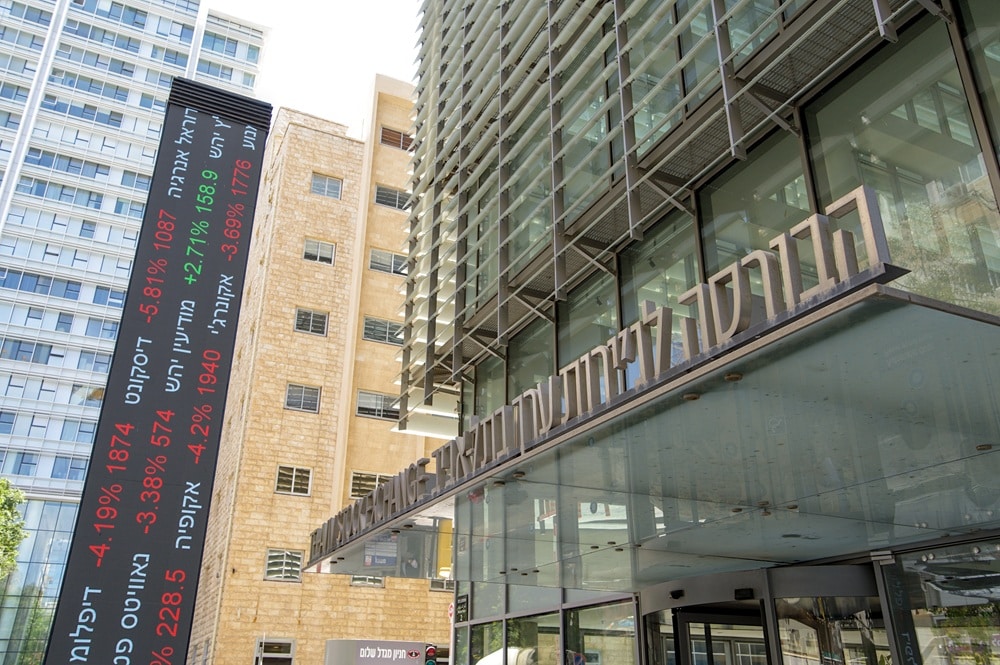
Tel Aviv financial markets are trading lower as selling pressure continues across the equity market, extending the cautious tone seen in recent sessions. The TA-35, TA-90, and TA-125 are all in negative territory, reflecting weaker investor sentiment and widespread declines across multiple sectors. While fixed-income markets are also modestly lower, bond price movements remain limited, suggesting that the weakness is primarily concentrated in equities rather than representing broader financial stress.
Broad Selling Pressure Weighs on Major Equity Indices
Large-cap stocks continue to face pressure, with the TA-35 edging lower by 0.08%. Although the decline is relatively modest, the index composition tells a weaker story, with only 11 advancing constituents compared with 24 declining stocks. This indicates that losses are spread across many of Tel Aviv’s largest listed companies rather than being driven by only a handful of heavyweight names.
The broader TA-125 is down 0.33%, confirming that weakness extends beyond blue-chip shares into the wider market. Market participation also remains unfavorable, with just 33 advancing stocks compared with 92 decliners, highlighting broad-based selling across sectors.
Mid-cap equities are under heavier pressure than large caps. The TA-90 has fallen 0.96%, making it the weakest major equity benchmark of the session. The combined TA-90 and Banks Index is also lower by 0.21%, suggesting that banking shares are providing only limited support as investors continue reducing exposure to domestic equities.
The TA-125 Value Index is outperforming the broader market despite declining 0.15%. Its smaller decline compared with the TA-90 and TA-125 suggests that investors continue to favor relatively defensive, fundamentally supported companies during periods of market weakness.
Negative Market Breadth Reflects Widespread Risk Reduction
Market breadth remains one of the clearest indicators of today’s cautious trading environment. Across the TA-125, declining stocks outnumber advancing shares by nearly three to one, reflecting broad participation in the sell-off rather than weakness concentrated in a few sectors.
The TA-90 presents a similarly negative picture, with 68 declining stocks compared with only 22 advancing. This marks another session in which mid-cap companies are experiencing heavier selling pressure than large-cap stocks, suggesting investors remain cautious toward higher-risk segments of the market.
The TA Sector-Balance Index is also lower by 0.66%, reinforcing that weakness extends across multiple industries rather than being isolated within a single sector. Overall equity turnover has reached approximately ₪637 million, indicating that trading activity remains active as investors continue adjusting portfolios rather than stepping away from the market.
Despite the declines, orderly trading volumes suggest institutional participation remains steady, with no indication of disorderly liquidation or severe liquidity constraints.
Bond Markets Remain Relatively Stable Despite Mild Weakness
Unlike equities, fixed-income markets continue to display relative stability. The All-Bond Index is down only 0.04%, while the Tel Bond A Inflation-Linked Index has eased 0.04% and the Tel Bond 60 Inflation-Linked Index has slipped just 0.01%.
The Short-Term Bond Index remains unchanged, indicating that investors are not significantly altering expectations for near-term interest rates or macroeconomic conditions. Bond market turnover of approximately ₪356 million further supports the view that activity remains orderly despite cautious sentiment.
The limited movement in fixed income contrasts with the broader weakness in equities, suggesting investors are reassessing equity valuations without signaling heightened concern about financial stability or liquidity conditions.
Outlook: Investors Monitor Breadth, Sentiment, and Signs of Stabilization
Looking ahead, Tel Aviv markets will likely remain sensitive to both domestic developments and broader global market sentiment. Investors will closely monitor whether selling pressure begins to moderate or whether negative market breadth continues to expand across large-cap and mid-cap segments.
Key factors to watch include institutional trading flows, changes in global risk appetite, interest rate expectations, and corporate developments that could influence sector performance. Continued weakness in the TA-90 and deteriorating market breadth could signal additional downside risk, while stabilization in large-cap stocks and improving participation would provide early indications that market sentiment is beginning to recover.
For now, Tel Aviv equities remain in a corrective phase characterized by broad-based selling, defensive positioning, and continued portfolio rebalancing, while relatively stable bond markets continue to provide an important anchor for overall financial conditions.
Comparison, examination, and analysis between investment houses
Leave your details, and an expert from our team will get back to you as soon as possible
* This article, in whole or in part, does not contain any promise of investment returns, nor does it constitute professional advice to make investments in any particular field.
To read more about the full disclaimer, click here
- orshu
- •
- 6 Min Read
- •
- ago 2 hours
SKN | European Markets Retreat as Broad-Based Selling Ends Early July Rally
European markets moved sharply lower on July 8, 2026, as investors pulled back from regional equities following a strong start
- ago 2 hours
- •
- 6 Min Read

European markets moved sharply lower on July 8, 2026, as investors pulled back from regional equities following a strong start
- orshu
- •
- 7 Min Read
- •
- ago 6 hours
SKN | Global Markets Wrap: July 7, 2026 Performance Review as Global Equities Retreat Across Major Regions While Investors Look Ahead to July 8, 2026
Global markets ended July 7, 2026 on a weaker footing as selling pressure spread across most major regions. U.S.
- ago 6 hours
- •
- 7 Min Read

Global markets ended July 7, 2026 on a weaker footing as selling pressure spread across most major regions. U.S.
- orshu
- •
- 8 Min Read
- •
- ago 8 hours
SKN | Asian Markets Open Mixed as South Korea Leads Gains While China and Australia Face Selling Pressure
Asian equity markets traded with mixed momentum during Wednesday's morning session on July 8, highlighting diverging investor sentiment across
- ago 8 hours
- •
- 8 Min Read

Asian equity markets traded with mixed momentum during Wednesday's morning session on July 8, highlighting diverging investor sentiment across
- orshu
- •
- 7 Min Read
- •
- ago 12 hours
SKN | U.S. Stocks Pull Back on July 7, 2026 as Technology Shares Lead Declines
U.S. equity markets ended Tuesday, July 7, 2026, on a weaker note as investors took profits after a strong run
- ago 12 hours
- •
- 7 Min Read

U.S. equity markets ended Tuesday, July 7, 2026, on a weaker note as investors took profits after a strong run


