


- orshu
- •
- 6 Min Read
- •
- 1 hour ago
Key Points
- Tel Aviv 35 index opened lower, reflecting ongoing market uncertainty despite pockets of sector strength.
- Israeli bond indices remain largely flat, highlighting cautious sentiment among fixed-income investors.
- Currency and macroeconomic factors are likely to shape near-term market performance, requiring strategic monitoring for local and global investors.

Tel Aviv’s equity market opened today with mixed trends, as investors assessed domestic and global developments amid a quiet trading session. The TA-35 index opened at 4,025.85 points, showing a theoretical decline of 1.85%, with only six stocks rising compared to 12 declining and 17 remaining unchanged. Bond markets remained largely stable, with short-term and general bond indices showing minimal movement, reflecting persistent caution among fixed-income participants.
Equity Market Opening and Sector Performance
The TA-35 opened lower, signaling hesitancy among institutional and retail investors at the start of the trading day. Broader indices such as TA-90 showed a marginal theoretical increase of 0.34%, while sub-indices including TA-90 Banks and TA-125 registered declines of 1.70% and 1.30% respectively. Activity remains concentrated, with only a small number of securities leading gains and the majority of stocks experiencing little or no change in early trading. This pattern underscores selective risk-taking, particularly within sectors sensitive to macroeconomic developments. Investors are carefully watching bank performance and high-weight technology and industrial components, where volatility can quickly translate into market-wide movements.
Fixed-Income Markets and Duration Sensitivity
Bond indices opened with muted activity, as both short-duration and long-duration instruments showed minimal price shifts. The All-Bond General Index and indices tracking inflation-linked bonds remained unchanged, reflecting market caution and limited trading volume. With Israeli Treasury yields remaining near recent levels, long-duration bond ETFs and indices are positioned as hedges against volatility but are exposed to shifts in interest rate expectations. Currency dynamics also play a significant role, with fluctuations in the shekel-dollar exchange rate influencing the dollar-denominated returns of global investors. For domestic institutional investors, this environment reinforces the importance of strategic allocation across duration, sector, and currency exposure.
Market Drivers and Macroeconomic Context
Global developments, including U.S. Treasury yield trends and Federal Reserve guidance, continue to influence Israeli market sentiment. Domestic factors such as CPI data, employment reports, and fiscal policy discussions also contribute to early trading patterns. Investors appear to be digesting these inputs carefully, adopting a cautious stance ahead of further macroeconomic signals. In fixed-income markets, longer-term Israeli government bonds and inflation-linked securities are being monitored as potential safe-haven instruments, while equities display selective interest based on sector-specific fundamentals. The muted trading volume in both equities and bonds indicates a waiting period for clearer direction, particularly ahead of potential central bank commentary or geopolitical updates.
Outlook: Risks and Opportunities Ahead
As the trading day progresses, market participants will closely monitor the TA-35 and related indices for signs of momentum or further pullback. Key factors include interest rate expectations, corporate earnings announcements, and international market trends, particularly in U.S. equities and bonds. Currency movements, inflation data, and liquidity conditions will also impact the relative performance of Israeli securities. For global and domestic investors, the combination of selective equity gains, stable bond indices, and macro uncertainty underscores the need for strategic positioning, risk management, and ongoing monitoring of short- and long-duration exposures. Volatility in the broader fixed-income environment may provide opportunities for tactical adjustments, while equity movements are likely to remain concentrated in high-performing sectors with resilient fundamentals.
Comparison, examination, and analysis between investment houses
Leave your details, and an expert from our team will get back to you as soon as possible
* This article, in whole or in part, does not contain any promise of investment returns, nor does it constitute professional advice to make investments in any particular field.
To read more about the full disclaimer, click here
- sagi habasov
- •
- 5 Min Read
- •
- ago 2 minutes
SKN | Dow, S&P 500, Nasdaq Futures Slip as Nvidia’s 5.5% Drop Rekindles AI Spending Doubts
US stock futures edged lower after a sharp reversal in artificial intelligence leadership sentiment, triggered by a 5.5% decline in
- ago 2 minutes
- •
- 5 Min Read

US stock futures edged lower after a sharp reversal in artificial intelligence leadership sentiment, triggered by a 5.5% decline in

- Ronny Mor
- •
- 5 Min Read
- •
- ago 2 hours
SKN | Nintendo Eyes $1.9 Billion Share Sale as Banks Unwind Cross-Shareholdings
Nintendo is preparing for a potential ¥300 billion ($1.9 billion) share sale as key banking partners unwind longstanding cross-shareholdings, marking
- ago 2 hours
- •
- 5 Min Read

Nintendo is preparing for a potential ¥300 billion ($1.9 billion) share sale as key banking partners unwind longstanding cross-shareholdings, marking

- orshu
- •
- 6 Min Read
- •
- ago 6 hours
SKN | Global Market Wrap: February 26, 2026 Performance and Outlook for February 27 – Americas, Europe, Asia, and Tel Aviv Insights
Global markets on February 26, 2026, reflected a cautious investor sentiment, balancing gains in some sectors with losses in technology
- ago 6 hours
- •
- 6 Min Read

Global markets on February 26, 2026, reflected a cautious investor sentiment, balancing gains in some sectors with losses in technology
- orshu
- •
- 8 Min Read
- •
- ago 8 hours
SKN | Asian Markets Trade Mixed on February 27 as KOSPI Slides and Yen Firms in Morning Session
Asian markets opened Friday’s session on a cautious note, reflecting diverging regional dynamics and currency movements. While Australian equities are
- ago 8 hours
- •
- 8 Min Read
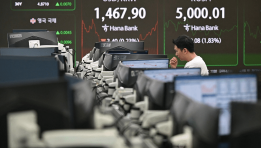
Asian markets opened Friday’s session on a cautious note, reflecting diverging regional dynamics and currency movements. While Australian equities are

