


- orshu
- •
- 6 Min Read
- •
- 1 hour ago
Key Points
- The TA-SME60 Index experienced a volatile trading week, peaking sharply near the 1,355 level before facing persistent downward pressure.
- Initial bullish momentum on February 18th was completely erased by the week's end, with the index closing at 1,337.52.
- Market sentiment remains cautious, as investors weigh domestic economic resilience against complex geopolitical realities and elevated financing costs for mid-tier companies.
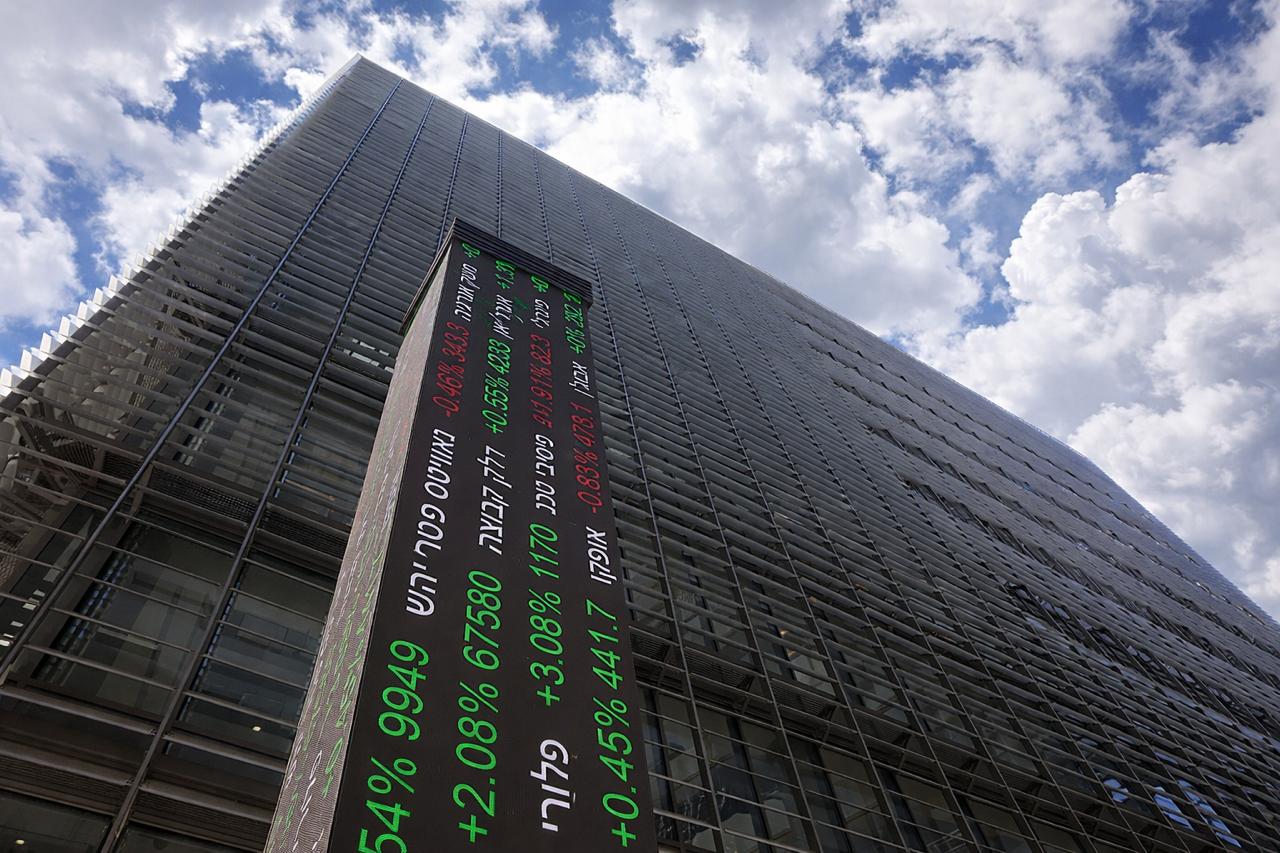
The Tel Aviv SME60 Index (TA-SME60) demonstrated a classic pattern of mid-cap volatility this week, reflecting broader uncertainties within the Israeli capital market. As global exchanges balance shifting interest rate expectations and incoming macro data, local mid-cap equities have struggled to maintain positive momentum against a complex domestic backdrop. The index’s failure to sustain its robust mid-week rally underscores a hesitant environment where domestic and international investors are carefully evaluating their exposure to regional risk.
Technical Resistance and Intra-Week Reversals
A closer examination of the week’s trading data reveals a market struggling for definitive direction. The index initiated a sharp, aggressive rally on February 18th, pushing through overhead resistance to reach an intra-week high of 1,353.37. This upward movement initially signaled potential market recovery and renewed appetite for risk assets. However, this peak proved fleeting. The subsequent trading sessions on February 19th and into February 20th were characterized by a steady, methodical sell-off. The inability of bulls to hold the 1,350 level triggered a retracement, driving the index down to close the week near its lows at 1,337.52. This complete erasure of mid-week gains suggests that while there is underlying interest in these valuations, conviction remains too low to support a prolonged breakout.
Macroeconomic Headwinds and Mid-Cap Sensitivity
The performance of the TA-SME60 is particularly indicative of internal economic health, as small and medium enterprises typically rely more heavily on domestic consumption and local financing than their large-cap, multinational counterparts in the TA-35. The current interest rate environment, dictated by the Bank of Israel’s efforts to anchor inflation, continues to exert pressure on the balance sheets of mid-sized firms. Elevated borrowing costs can compress profit margins, making investors highly sensitive to any signs of economic deceleration. Furthermore, the persistent geopolitical situation introduces a localized risk premium that frequently prompts short-term traders to take profits rapidly rather than holding positions through uncertain weekend news cycles.
Strategic Implications for Portfolio Allocation
The swift reversal observed this week highlights the challenges of navigating the current Israeli equity landscape. Institutional flow appears to be prioritizing liquidity and safety, occasionally rotating into mid-caps during perceived dips but quickly retreating at resistance levels. For sophisticated investors, this environment necessitates a highly selective approach. Broad-based index accumulation is currently carrying higher short-term risk, whereas identifying individual companies with strong balance sheets, pricing power, and defensive characteristics may present compelling investment opportunities within the TA-SME60 universe.
Looking ahead, the near-term outlook for the TA-SME60 remains highly dependent on the stabilization of both domestic macroeconomic indicators and broader risk sentiment. Market participants will be closely monitoring upcoming corporate earnings reports to gauge the fundamental health and operational resilience of mid-tier companies under current conditions. The primary risk remains sudden, localized volatility driven by exogenous geopolitical events, which could further test the 1,330 support level. However, for investors with a longer time horizon, the current localized weakness may eventually uncover attractive entry points in fundamentally sound, growth-oriented enterprises that have been disproportionately discounted by the broader market pullback.
Comparison, examination, and analysis between investment houses
Leave your details, and an expert from our team will get back to you as soon as possible
* This article, in whole or in part, does not contain any promise of investment returns, nor does it constitute professional advice to make investments in any particular field.
To read more about the full disclaimer, click here
- sagi habasov
- •
- 6 Min Read
- •
- ago 2 minutes
SKN | What Drove the TA Banks-5 Index Lower Despite Strong Mid-Week Gains?
The Israeli banking sector experienced notable volatility this week, reflecting the broader uncertainties currently navigating the regional macroeconomic landscape.
- ago 2 minutes
- •
- 6 Min Read

The Israeli banking sector experienced notable volatility this week, reflecting the broader uncertainties currently navigating the regional macroeconomic landscape.

- Ronny Mor
- •
- 6 Min Read
- •
- ago 2 hours
SKN | Hang Seng Index Pulls Back: Evaluating the -2.83% Weekly Consolidation and Future Market Outlook
The Hang Seng Index (^HSI) concluded a challenging week of trading, settling at 26,413.35 on February 20 following a
- ago 2 hours
- •
- 6 Min Read

The Hang Seng Index (^HSI) concluded a challenging week of trading, settling at 26,413.35 on February 20 following a

- omer bar
- •
- 6 Min Read
- •
- ago 2 hours
SKN | Nikkei 225 Experiences Mid-Week Surge Before Consolidating at 56,825: What Are the Implications for Global Equities?
Japan’s premier equity benchmark, the Nikkei 225, navigated a week of notable intra-week volatility, ultimately closing on February 20 at
- ago 2 hours
- •
- 6 Min Read

Japan’s premier equity benchmark, the Nikkei 225, navigated a week of notable intra-week volatility, ultimately closing on February 20 at

- Lior mor
- •
- 6 Min Read
- •
- ago 3 hours
SKN | What Drove the KOSPI’s 8.5% Weekly Surge to Record Highs?
The South Korean equity market demonstrated exceptional bullish momentum this week, with the KOSPI Composite Index delivering an impressive
- ago 3 hours
- •
- 6 Min Read
The South Korean equity market demonstrated exceptional bullish momentum this week, with the KOSPI Composite Index delivering an impressive

