





- orshu
- •
- 7 Min Read
- •
- 27 seconds ago


Key Points
- The TA Banks 5 Index settled at 8,850.24, logging a fractional 1-week net contraction of 0.20% following early-week volatility across Tel Aviv financial equities.
- A late-week surge added 103.87 points (1.19%), lifting the index from a weekly low near 8,550 toward a daily peak of 8,861.74 on volume of 6.52 million shares.
- For Israeli and global allocators, this structural resilience underscores the banking sector's role as a core market anchor, balancing strong capital cushions against persistent shekel volatility and elevated regional risk premiums.
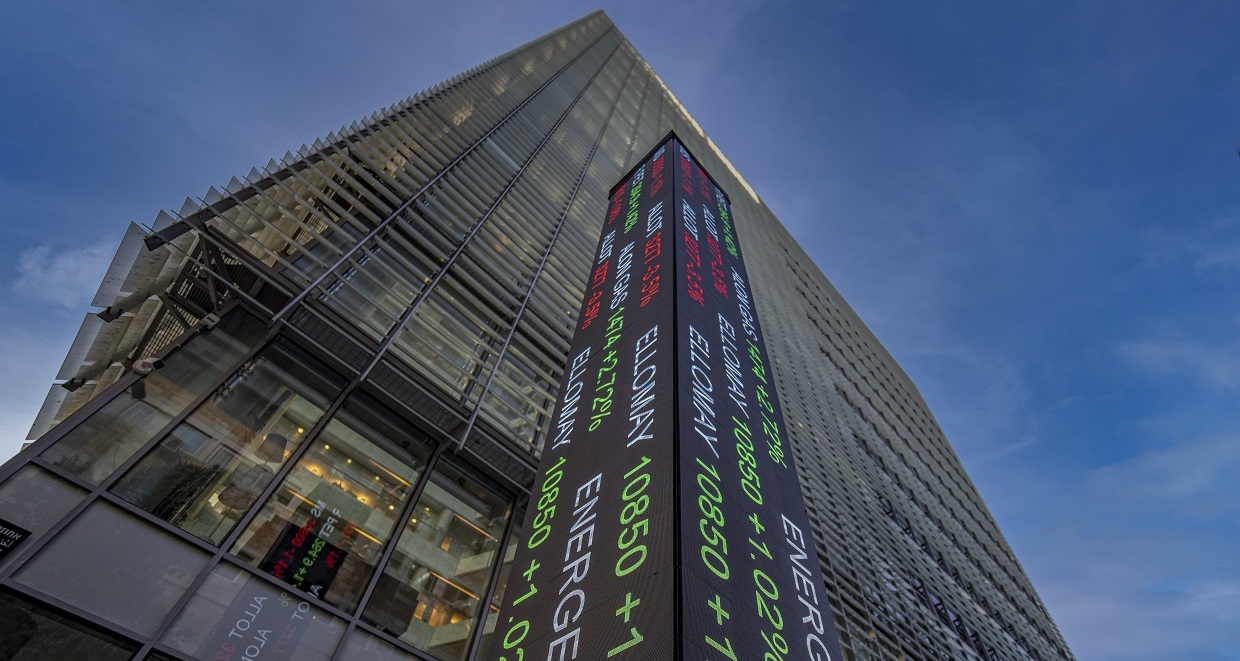
The TA Banks 5 Index navigated a volatile trading week on the Tel Aviv Stock Exchange (TASE), ultimately settling at 8,850.24 to record a fractional 1-week net contraction of 0.20%. This localized consolidation across Israel’s flagship banking benchmark reflects a probability-based recalibration among institutional allocators, who continue to weigh solid bank balance sheets and elevated net interest margins against lingering geopolitical risk premiums, domestic debt-servicing constraints, and shifting monetary policy expectations.
Technical Compression and Late-Week Buying Acceleration
Trading activity across the five major domestic lenders was defined by an early-week sell-off around August 18th that pushed the index down to test support near the 8,550 level before a strong multi-session recovery materialized. The final trading session delivered a rebound of 103.87 points (+1.19%), opening at 8,774.65 and advancing to touch a daily high of 8,861.74 before closing near the top of its session range. Operating in the upper-middle decile of its 52-week trading bounds of 6,947.79 to 9,632.01—and retaining an impressive 1-year expansion of 22.88%—Friday’s volume reached 6.52 million shares compared to its 3-month average of 13.49 million. This lighter trading volume indicates that while local allocators stepped in to absorb localized weakness near support floors, overall market commitment remains cautious pending broader domestic macroeconomic signals.
Macroeconomic Drivers, Interest Rate Paths, and Net Interest Margins
As the primary financial engine of the Israeli economy, the operational trajectory of the TA Banks 5 Index is deeply tied to Bank of Israel monetary policy, local credit demand, and non-performing loan provision parameters. The fractional 0.20% weekly dip, set against a solid 1-month gain of 6.30%, highlights an environment where institutional allocators are evaluating whether high interest rate regimes will continue supporting bank profitability or if rising credit risk will necessitate increased loan-loss provisions. While Israeli commercial banks maintain elevated capital adequacy ratios and robust interest income, this macro picture carries clear downside risks; bank earnings remain vulnerable to margin compression if local economic activity decelerates or if the central bank pivots toward interest rate cuts to ease borrower friction.
Strategic Portfolio Implications for the Israeli Ecosystem
For domestic institutional pension funds and globally active asset managers tracking TASE financial assets, the banking sector serves as a fundamental gauge of systemic risk appetite and domestic liquidity. Because major Israeli banks hold significant exposure to local real estate mortgages, corporate credit lines, and government debt instruments, their equity performance directly influences broad market sentiment across the Tel Aviv capital matrix. Israeli institutional allocators must systematically cross-examine this banking sector resilience against persistent shekel volatility and cross-border yield curves. Implementing disciplined portfolio risk frameworks remains vital, as unexpected shifts in foreign exchange rates or sudden escalations in regional security premiums can introduce friction into multi-asset investment models.
Looking forward, the immediate structural trajectory centers on whether the TA Banks 5 Index can firmly establish a technical support floor above the 8,800 level or if a failure to hold will spark a mean-reversion toward lower quarterly baselines near 8,500. Market participants must remain highly attentive to upcoming Bank of Israel interest rate decisions, quarterly bank earnings reports, and domestic credit quality indicators, which are poised to act as primary directional catalysts. The broader macroeconomic landscape presents a highly conditional outlook; while a 22.88% 1-year advance demonstrates core structural strength, asset allocators must maintain a rigorous, probability-based framework, actively managing downside risks and monitoring domestic fiscal dynamics to safeguard portfolio performance over the coming financial quarters.
Comparison, examination, and analysis between investment houses
Leave your details, and an expert from our team will get back to you as soon as possible
* This article, in whole or in part, does not contain any promise of investment returns, nor does it constitute professional advice to make investments in any particular field.
To read more about the full disclaimer, click here
- Ronny Mor
- •
- 6 Min Read
- •
- ago 44 minutes
SKN | TA-SME60 Retracts 1.19% Weekly to 1,292.38: Are Israeli Small- and Mid-Caps Facing Local Macro Resistance?
The TA-SME60 Index experienced a defensive trading week on the Tel Aviv Stock Exchange (TASE), ultimately settling at 1,292.38
- ago 44 minutes
- •
- 6 Min Read

The TA-SME60 Index experienced a defensive trading week on the Tel Aviv Stock Exchange (TASE), ultimately settling at 1,292.38

- omer bar
- •
- 6 Min Read
- •
- ago 1 hour
SKN | Nikkei 225 Pulls Back 4.63% Weekly to 66,016.36: Is Japanese Equity Outperformance Derailed by Yen Dynamics and Rate Hike Fears?
The Nikkei 225 Index navigated a defensive trading week, ultimately settling at 66,016.36 to record a 5-day net contraction
- ago 1 hour
- •
- 6 Min Read

The Nikkei 225 Index navigated a defensive trading week, ultimately settling at 66,016.36 to record a 5-day net contraction

- Lior mor
- •
- 6 Min Read
- •
- ago 2 hours
SKN | SSE Composite Retracts 0.56% Weekly to 3,905.20: Are Chinese Equities Consolidating Near Key Support Floor?
The SSE Composite Index navigated a narrow and defensive trading week, ultimately settling at 3,905.20 to record a 5-day
- ago 2 hours
- •
- 6 Min Read

The SSE Composite Index navigated a narrow and defensive trading week, ultimately settling at 3,905.20 to record a 5-day

- Arik Arkadi Sluzki
- •
- 6 Min Read
- •
- ago 3 hours
SKN | Japanese Yen Currency Index (^XDN) Edges Up 0.21% Weekly to 62.90: Is the Yen Preparing for a Trend Reversal Amid Shifting Rate Differentials?
The Japanese Yen Currency Index (^XDN) demonstrated localized stabilization over the trading week, ultimately settling at 62.90 to register
- ago 3 hours
- •
- 6 Min Read

The Japanese Yen Currency Index (^XDN) demonstrated localized stabilization over the trading week, ultimately settling at 62.90 to register

