





- sagi habasov
- •
- 7 Min Read
- •
- 3 months ago


Key Points
- SpaceX's highly anticipated IPO is reshaping the composition of several major exchange-traded funds, increasing investor exposure to the commercial space sector.
- The company's market debut highlights the growing influence of private technology firms as they transition into public markets and attract institutional capital.
- Portfolio diversification and ETF allocations are expected to evolve as fund managers adjust holdings to reflect SpaceX's market capitalization and industry significance.

The long-awaited SpaceX initial public offering (IPO) is poised to become one of the most significant events in recent equity market history, extending its impact well beyond the aerospace industry. As one of the world’s most valuable private companies enters public markets, major exchange-traded funds are expected to rebalance their holdings, creating new dynamics for investors seeking diversified exposure to technology and innovation.
For investors in Israel and globally, the listing represents more than a high-profile IPO. It demonstrates how emerging industries such as commercial space, satellite communications, and launch services are becoming increasingly integrated into mainstream investment portfolios through passive investment vehicles.
ETF Rebalancing Could Drive Significant Capital Flows
The addition of SpaceX to major equity benchmarks would likely require index-tracking ETFs to purchase substantial amounts of the company’s shares. Passive investment products that replicate indexes such as the S&P 500 or technology-focused benchmarks routinely adjust holdings whenever large companies are added or removed.
Because ETFs collectively manage trillions of dollars in assets, these portfolio adjustments can generate meaningful buying activity immediately following an IPO. The magnitude of these inflows generally depends on the company’s market capitalization, free-float shares, and eventual index eligibility.
For investors already holding diversified ETFs, SpaceX’s inclusion could provide indirect exposure without requiring the purchase of individual shares. At the same time, it may slightly alter sector weightings, particularly within technology, industrial, aerospace, and defense allocations.
Commercial Space Industry Moves Into the Mainstream
The SpaceX listing also reflects the continued commercialization of the global space economy. The company has established leadership in reusable launch vehicles, satellite deployment, and broadband internet through its Starlink network, helping transform space infrastructure into an increasingly important commercial market.
Institutional investors have closely followed SpaceX’s private-market growth for years, but access has largely been limited to venture capital firms and select institutional funds. A public listing would significantly broaden ownership opportunities while increasing transparency through regular financial reporting and public disclosures.
The IPO may also encourage greater investor interest in companies operating across satellite technology, launch services, semiconductor manufacturing, communications infrastructure, and defense technology. As commercial space becomes more integrated into global economic activity, the sector’s representation within public markets is expected to expand.
Portfolio Implications Extend Beyond One Company
Although much of the attention centers on SpaceX itself, the broader significance lies in how major IPOs influence overall portfolio construction. Large public listings often change benchmark composition, sector allocations, and index concentration, particularly when the newly listed company carries a substantial valuation.
For diversified investors, increased exposure to innovative industries can enhance participation in long-term structural growth trends. However, greater concentration in a handful of mega-cap companies may also increase sensitivity to sector-specific risks, valuation shifts, and changes in investor sentiment.
Israeli investors monitoring global markets may find the SpaceX listing particularly relevant given Israel’s strong presence in aerospace technologies, cybersecurity, satellite communications, and advanced engineering. The IPO reinforces the growing convergence between private innovation and public capital markets.
What Investors Should Monitor Going Forward
As SpaceX moves through the IPO process, investors will closely monitor its valuation, public financial disclosures, index eligibility, and subsequent ETF rebalancing activity. Market participants will also watch whether the listing encourages additional high-profile private technology companies to pursue public offerings. Beyond the initial excitement, the long-term impact will likely depend on execution, earnings growth, competitive positioning, and how institutional capital continues flowing into the expanding commercial space economy.
Comparison, examination, and analysis between investment houses
Leave your details, and an expert from our team will get back to you as soon as possible
* This article, in whole or in part, does not contain any promise of investment returns, nor does it constitute professional advice to make investments in any particular field.
To read more about the full disclaimer, click here
- omer bar
- •
- 6 Min Read
- •
- ago 3 hours
SKN | Telecom Stocks Slide as SpaceX Spectrum Deal Raises New Competitive Threat
U.S. and European telecommunications stocks came under pressure on Friday after SpaceX’s acquisition of low-band spectrum intensified concerns that
- ago 3 hours
- •
- 6 Min Read
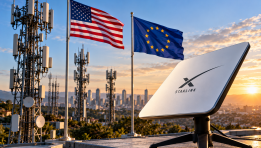
U.S. and European telecommunications stocks came under pressure on Friday after SpaceX’s acquisition of low-band spectrum intensified concerns that

- sagi habasov
- •
- 6 Min Read
- •
- ago 3 hours
SKN | Venezuela Authorizes Starlink to Operate as SpaceX Expands Satellite Internet Reach
Venezuela has authorized Starlink, the satellite internet service operated by Elon Musk’s SpaceX, to begin operating in the country,
- ago 3 hours
- •
- 6 Min Read

Venezuela has authorized Starlink, the satellite internet service operated by Elon Musk’s SpaceX, to begin operating in the country,
- sagi habasov
- •
- 6 Min Read
- •
- ago 8 hours
SKN | SSE Composite Index Slides 1.92% Over the Week as Chinese Equities Struggle to Recover
The Shanghai Composite Index ended the latest session at 3,813.79, up 1.89 points, or 0.05%, while its five-day chart
- ago 8 hours
- •
- 6 Min Read

The Shanghai Composite Index ended the latest session at 3,813.79, up 1.89 points, or 0.05%, while its five-day chart

- orshu
- •
- 7 Min Read
- •
- ago 8 hours
SKN | Australian Dollar Currency Index Gains 0.43% as Late-Week Recovery Improves Momentum
The Australian Dollar Currency Index finished the week with a modest gain, recovering from a pronounced midweek decline and
- ago 8 hours
- •
- 7 Min Read

The Australian Dollar Currency Index finished the week with a modest gain, recovering from a pronounced midweek decline and

