


- Ronny Mor
- •
- 6 Min Read
- •
- 45 minutes ago
Key Points
- The U.S. Dollar Index (DXY) surged to 97.15 by the week's close, successfully rebounding from four-month lows and breaching a critical psychological barrier.
- Heightened geopolitical tensions and domestic fiscal uncertainty acted as primary catalysts, driving "safe-haven" demand despite ongoing debates over Fed policy.
- Market focus shifted toward the Federal Reserve's January meeting and a heavy slate of tech earnings, stabilizing U.S. Treasury yields and supporting greenback demand.
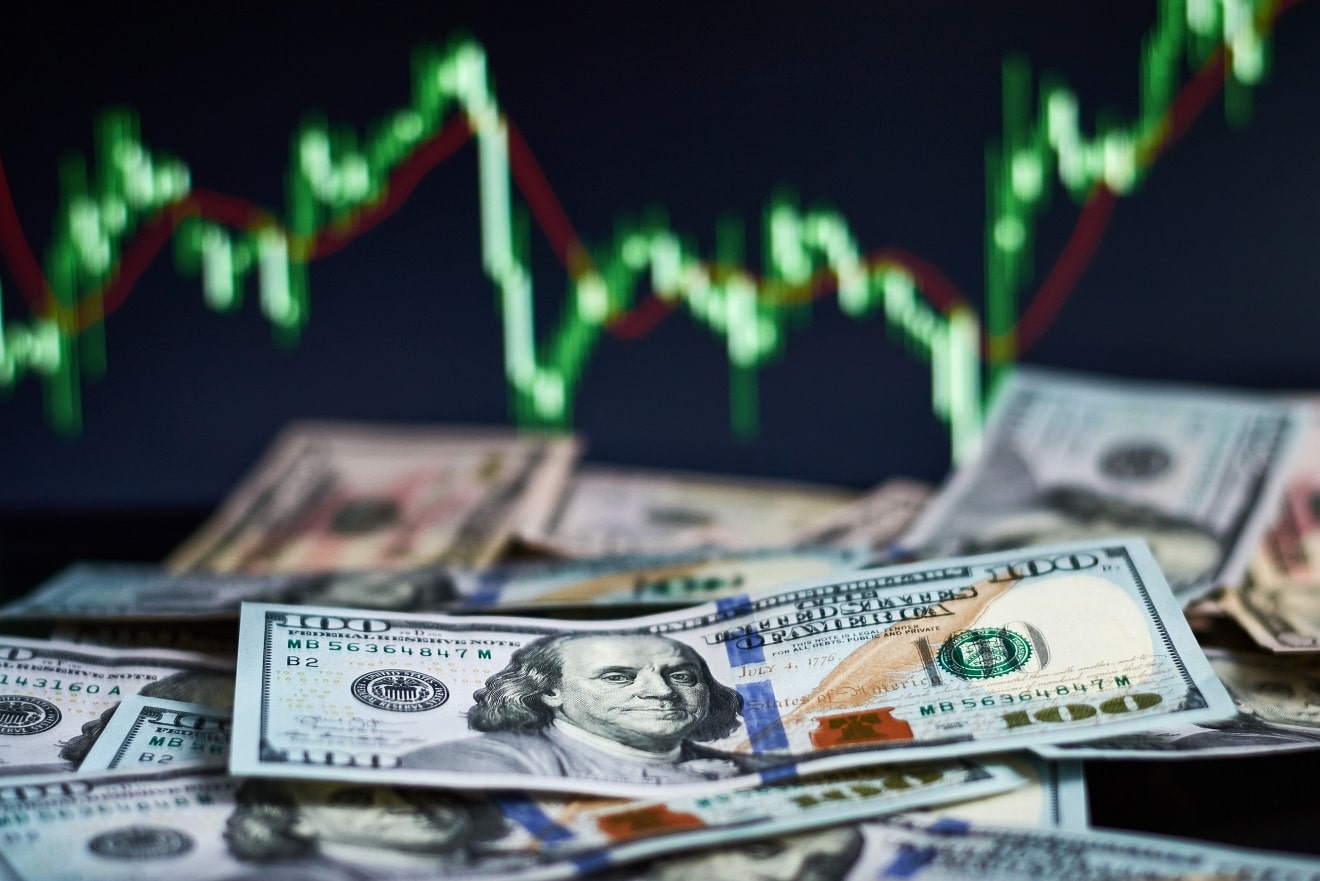
The U.S. Dollar Index (DXY) staged a notable recovery during the final week of January 2026, closing at 97.15 and marking a 0.16% daily gain as of Friday’s market wrap. This move represents a significant technical bounce-back from the week’s earlier lows near the 96.00 handle, a level that has increasingly served as a battleground for currency traders. While the broader trend for 2026 has leaned toward a softer dollar, this week’s price action highlights the greenback’s enduring role as a primary stabilizer during periods of global uncertainty.
Technical Rebound and the 97.00 Threshold
From a technical perspective, the DXY had been under sustained pressure throughout January, recently slipping below the 97.00 mark to hit its lowest levels in nearly four years. However, the bounce observed between January 28 and January 30 suggests that buyers are stepping back in at these levels. The index managed to hold its long-term support at 96.00, a breach of which would have signaled a deeper structural decline. The recovery back to 97.15 indicates that while the “U.S. exceptionalism” narrative is being challenged, the market is not yet ready to abandon the dollar, especially as it approaches oversold territory on shorter-term momentum indicators like the RSI.
Geopolitical Risk and Safe-Haven Inflows
The primary fundamental driver for this week’s resilience was a spike in geopolitical risk. Threats of fresh tariffs on EU nations and continued tensions in the Middle East—specifically regarding Iran—prompted a flight to safety. Although gold grabbed headlines by surpassing the $5,000 mark for the first time, the dollar benefited from similar defensive positioning. Interestingly, this occurred despite comments from the White House expressing comfort with a softer currency, which usually acts as a headwind. Instead, the liquidity of the U.S. Treasury market remains a magnet for capital when global equity markets exhibit volatility.
Monetary Policy and the Yield Narrative
Market participants also spent the week recalibrating expectations for the Federal Reserve. While the consensus remains focused on a cautious easing cycle, the January FOMC meeting and recent labor market indicators—such as the ADP employment change and weekly jobless claims—provided enough evidence of economic resilience to stabilize yields. The 10-year Treasury yield hovered near 4.22%, maintaining a yield advantage over many G10 peers. This interest rate differential, though narrower than in previous years, continues to underpin the dollar’s value against the Euro and Yen, the latter of which saw increased volatility due to intervention threats from Japanese authorities.
Looking ahead, the sustainability of this dollar rally will face a stern test in early February. Investors should closely monitor the Non-Farm Payrolls (NFP) report and upcoming inflation data, which will dictate whether the Fed maintains a “neutral” stance or accelerates its rate-cutting path. While the DXY has reclaimed 97.00, it faces immediate resistance at the 98.00 mark. Any signs of cooling in the U.S. service sector or a resolution to current trade frictions could quickly resume the downward pressure. Conversely, if geopolitical instability persists, the dollar’s status as the world’s premier reserve currency may lead to a more prolonged “mean-reversion” toward the 100.00 level.
Comparison, examination, and analysis between investment houses
Leave your details, and an expert from our team will get back to you as soon as possible
* This article, in whole or in part, does not contain any promise of investment returns, nor does it constitute professional advice to make investments in any particular field.
To read more about the full disclaimer, click here
- orshu
- •
- 6 Min Read
- •
- ago 1 minute
SKN | Can the Dow Sustain Its Momentum After a Volatile January Close?
The Dow Jones Industrial Average (^DJI) wrapped up a complex trading week ending January 30, 2026, closing at 48,892.47.
- ago 1 minute
- •
- 6 Min Read
The Dow Jones Industrial Average (^DJI) wrapped up a complex trading week ending January 30, 2026, closing at 48,892.47.

- omer bar
- •
- 6 Min Read
- •
- ago 1 hour
SKN | Is the Fear Gauge Waking Up? Assessing the VIX’s Mid-Week Surge
Global markets navigated a turbulent final week of January, characterized by a sharp divergence between early-week optimism and late-week anxiety.
- ago 1 hour
- •
- 6 Min Read

Global markets navigated a turbulent final week of January, characterized by a sharp divergence between early-week optimism and late-week anxiety.
- orshu
- •
- 8 Min Read
- •
- ago 23 hours
SKN | Asian Markets Close Lower as Hong Kong Slides and Risk Appetite Cools at Month-End
Asian markets closed Friday, January 30, 2026, on a softer note as investors scaled back risk exposure following a powerful
- ago 23 hours
- •
- 8 Min Read

Asian markets closed Friday, January 30, 2026, on a softer note as investors scaled back risk exposure following a powerful
- orshu
- •
- 6 Min Read
- •
- ago 1 day
SKN | Tel Aviv Market Update: Mixed Performance Across Indices as Trading Momentum Evolves
Tel Aviv equities are trading with mixed momentum as the market reacts to ongoing domestic and global macroeconomic signals. The
- ago 1 day
- •
- 6 Min Read

Tel Aviv equities are trading with mixed momentum as the market reacts to ongoing domestic and global macroeconomic signals. The

