





- Lior mor
- •
- 8 Min Read
- •
- 2 hours ago
Key Points
- Semiconductor giant Qualcomm launches a breakthrough modular software platform, enabling developers to run AI models across diverse processors, directly threatening Nvidia’s proprietary CUDA architecture.
- The company leverages its dominant footprint in smartphones and personal computers to shift intensive artificial intelligence processing away from cloud data centers directly onto end-user devices.
- Wall Street analysts evaluate that this open-source paradigm could drastically lower development expenditures for tech enterprises, reshaping the financial equilibrium of the global chip sector.
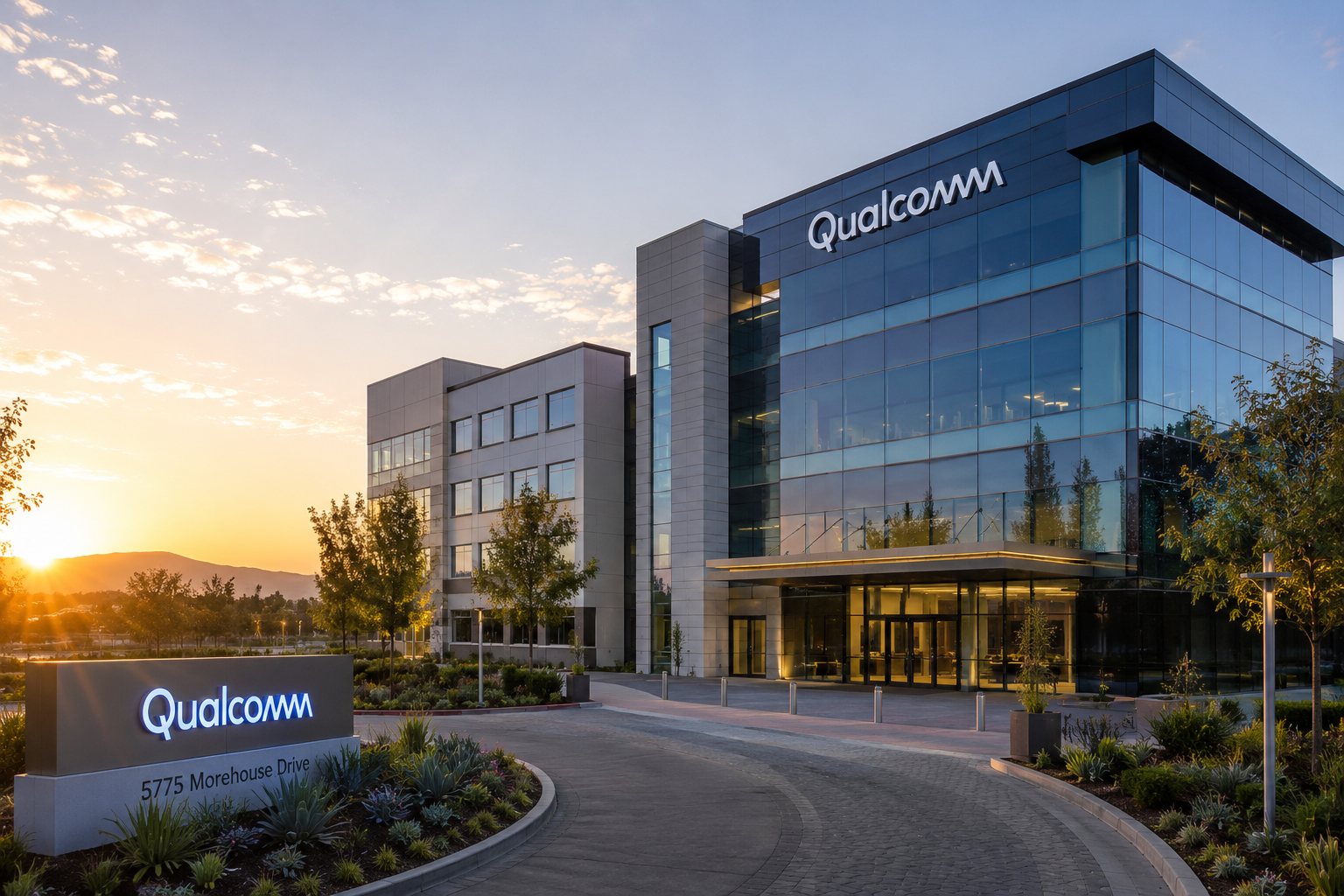
The global semiconductor complex is navigating a titanic clash in the second half of 2026, redefining the technological and financial power dynamics across Wall Street. For an extended duration, market heavyweight Nvidia enjoyed a near-absolute monopoly within the artificial intelligence landscape, sustained not only by its high-performance silicon but primarily by its closed ecosystem software, CUDA, which effectively locked developers into its hardware pipeline. However, Qualcomm’s dramatic announcement regarding an open, modular software architecture completely disrupts this established narrative. This operational deployment is far more than a marginal product release; it represents a direct, structural challenge to corporate profitability models, signaling a new era where the war for AI dominance moves from hardware to software layers.
The Economic Mechanism: Eradicating Capital Expenditure Bottlenecks and Cost Rollover
The economic matrix at the heart of Qualcomm’s strategy directly resolves one of the most painful operational pain points confronting technology conglomerates in 2026: the staggering capital expenditures (Capex) associated with cloud data centers and their volatile energy consumption. By utilizing this newly engineered modular software, Qualcomm empowers developers to segment vast large language models and deploy core operational tasks directly onto localized hardware (Edge AI)—such as smartphones, laptops, and automotive platforms powered by Snapdragon chipsets. This structural pivot initiates an inverted “cost rollover” mechanism: instead of continually funneling multi-billion-dollar outlays to cloud utility networks, computing expenses disperse seamlessly across millions of private devices, boosting software enterprise margins and lowering market entry barriers.
Market Psychology: Shaking Monopoly Complacency and Unleashing New Optimism
On a psychological level, Qualcomm’s strategic timing aligns perfectly with global markets undergoing a cold phase of expectation calibration and disillusionment regarding overextended hardware valuations. Previously, market participants operated under a severe case of positive confirmation bias—assuming that Nvidia was the solitary entity capable of sustaining the computational requirements of the AI era. However, mounting structural anxieties over grid constraints, data center emissions, and the slowing monetization of expensive cloud services created an underlying tension. Qualcomm’s open-architecture narrative, which promises absolute flexibility and vendor independence, is capturing immediate institutional optimism. Asset managers increasingly recognize that the era of complete reliance on a single hardware vendor has concluded, shifting sentiment toward decentralized frameworks.
Global Asset Allocation Shifts and Macro Implications
For institutional investment managers, this structural technological pivot necessitates swift adjustments and strategic asset allocation shifts within the global technology landscape. Qualcomm’s equity framework is capturing renewed interest from prominent hedge funds, which perceive the stock as an attractive value play relative to the historically stretched multiples of current sector frontrunners. Furthermore, Qualcomm’s open-source strategy is fundamentally backed by a consortium of major tech enterprises eager to decouple their growth paths from restricted GPU supply chains. This organic competitive dynamic is poised to drive down component pricing across digital networks, accelerating the seamless integration of advanced AI workflows into consumer applications without requiring persistent, high-latency connectivity to remote servers.
Conclusion: The Democratic Equilibrium of the Digital Era
In conclusion, the deployment of Qualcomm’s modular software architecture in June 2026 marks a structural watershed in the evolution of the digital macroeconomy. The definitive transition toward distributed edge computing and the collective effort to eliminate closed-ecosystem constraints prove that market frameworks organically gravitate toward operational efficiency and healthy competition. While Nvidia preserves a significant technological moat within hyperscale data center operations, Qualcomm’s unique ability to monetize its presence across billions of interconnected commercial devices provides it with an exceptional competitive launchpad. For professional investors, the overarching lesson remains that in secular technology cycles, the ultimate winners are not always those who forge the most powerful hardware, but those who democratize its application in the most cost-effective and agile manner.
Comparison, examination, and analysis between investment houses
Leave your details, and an expert from our team will get back to you as soon as possible
* This article, in whole or in part, does not contain any promise of investment returns, nor does it constitute professional advice to make investments in any particular field.
To read more about the full disclaimer, click here
- omer bar
- •
- 8 Min Read
- •
- ago 12 minutes
SKN | The Behavioral Monetization Paradigm: Meta Architects “Arena” Prediction Platform to Combat Systemic User Saturation
Systemic realignments across the international digital ecosystem and the continuous optimization of engagement-driven monetization vectors are compelling Meta Platforms to
- ago 12 minutes
- •
- 8 Min Read

Systemic realignments across the international digital ecosystem and the continuous optimization of engagement-driven monetization vectors are compelling Meta Platforms to

- Lior mor
- •
- 8 Min Read
- •
- ago 31 minutes
SKN | The Comeback of the Decade: How BlackBerry Doubled Its Stock and Won Over Wall Street
Global capital markets in 2026 embrace corporate turnaround narratives, but few are as structurally dramatic or unexpected as BlackBerry’s ongoing
- ago 31 minutes
- •
- 8 Min Read

Global capital markets in 2026 embrace corporate turnaround narratives, but few are as structurally dramatic or unexpected as BlackBerry’s ongoing
- omer bar
- •
- 6 Min Read
- •
- ago 8 hours
SKN | Cerebras Stock Drops After Earnings as CEO Says Margin Outlook Was Misinterpreted
Cerebras shares declined sharply after the company’s latest earnings release, as market participants reacted negatively to concerns surrounding the firm’s
- ago 8 hours
- •
- 6 Min Read

Cerebras shares declined sharply after the company’s latest earnings release, as market participants reacted negatively to concerns surrounding the firm’s
- Lior mor
- •
- 7 Min Read
- •
- ago 9 hours
SKN | The AI Talent War Intensifies as Google Researchers Continue Moving to Rival Firms
The global artificial intelligence industry is witnessing an increasingly competitive battle for elite talent, with Google facing continued departures of
- ago 9 hours
- •
- 7 Min Read

The global artificial intelligence industry is witnessing an increasingly competitive battle for elite talent, with Google facing continued departures of


