Key Points

  • Qualcomm reported fiscal third-quarter results that largely met expectations, but issued weaker-than-expected earnings guidance as rising memory and semiconductor component costs pressure margins.
  • The company plans to raise chip prices beginning September 1 to offset higher manufacturing, packaging, and memory costs while maintaining profitability.
  • Despite weakness in smartphone chip sales, Qualcomm continues expanding into automotive, AI data centers, and Internet of Things markets as part of its diversification strategy.
hero
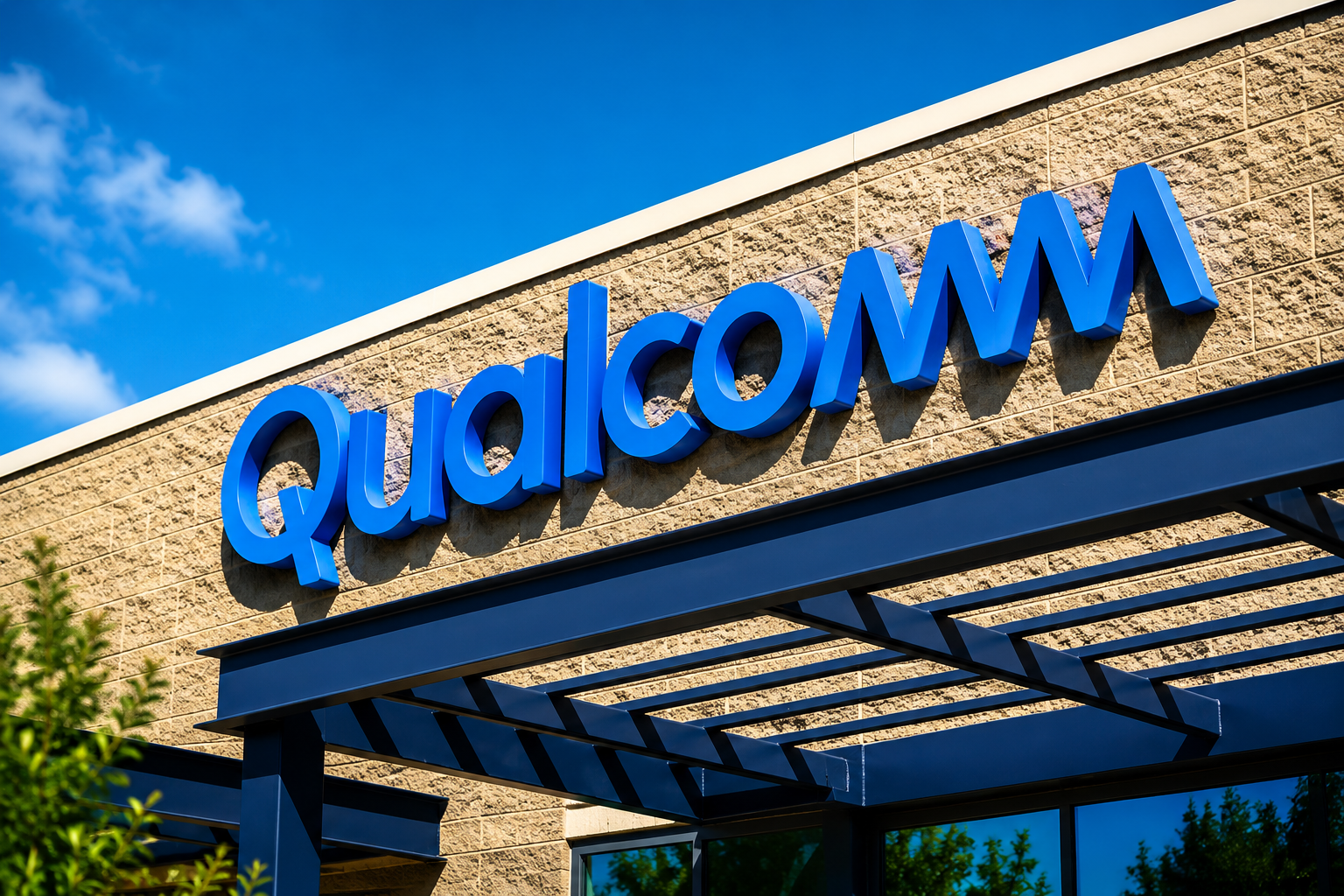
Qualcomm reported fiscal third-quarter results that reflected resilient demand across several business segments, but the semiconductor company issued softer-than-expected earnings guidance as rising component costs continue affecting profitability.

Management said the ongoing global shortage of memory and other semiconductor inputs has increased manufacturing expenses, prompting Qualcomm to implement broad price increases across its chip portfolio beginning September 1.

Earnings Meet Expectations but Outlook Disappoints

For the fiscal third quarter, Qualcomm reported adjusted earnings per share of $2.21 on revenue of $9.95 billion.

Revenue exceeded analyst expectations, while adjusted earnings came in slightly below consensus estimates.

For the current quarter, Qualcomm projected adjusted earnings between $2.05 and $2.25 per share on revenue ranging from $9.7 billion to $10.5 billion. The earnings forecast fell short of Wall Street expectations, while revenue guidance remained broadly in line with analyst estimates.

Management attributed the weaker earnings outlook primarily to higher production costs rather than slowing customer demand.

Memory Shortage Drives Price Increases

Chief Executive Officer Cristiano Amon said Qualcomm will increase chip prices across its product portfolio beginning September 1 as higher manufacturing expenses continue affecting the semiconductor industry.

According to the company, costs have increased across wafer fabrication, advanced packaging, testing, assembly, memory components, and raw materials.

Amon emphasized that the pricing changes are intended to preserve margins while supply chain conditions remain constrained.

“Cost went up, prices are going to go up,” Amon said, describing the current environment as a temporary challenge affecting the broader semiconductor sector.

Smartphone Market Faces Pricing Pressure

Qualcomm’s handset business remained its largest revenue contributor, generating $5.1 billion in sales during the quarter.

However, handset revenue declined 20% year over year, reflecting continued softness across the global smartphone market.

Management noted that rising memory prices have affected consumer purchasing behavior, particularly within premium Android devices, where buyers are increasingly choosing lower-priced flagship models or previous-generation smartphones.

The company also indicated that demand in China’s smartphone market appears to be stabilizing after an extended slowdown.

Automotive Business Continues Expanding

While smartphone sales weakened, Qualcomm’s automotive segment continued delivering strong growth.

Automotive revenue reached $1.59 billion during the quarter as the company continued supplying chips for digital cockpit systems and advanced vehicle technologies.

Qualcomm also announced a new chip supply agreement with BMW, further strengthening its position in the connected vehicle market.

Management reiterated its long-term objective of generating $10 billion in annual automotive revenue by 2029.

AI and IoT Become Larger Growth Drivers

Beyond automotive, Qualcomm continues expanding into artificial intelligence infrastructure and Internet of Things applications.

The company said it remains on track to generate $5 billion in AI data center revenue next year as it develops products targeting enterprise AI workloads.

Qualcomm also completed its acquisition of AI software developer Modular and plans to introduce its new AI software platform during an upcoming conference in August.

Meanwhile, Internet of Things revenue, which includes industrial chips and smart glasses, increased 9% year over year to $1.83 billion.

Licensing Business Remains Stable

Qualcomm’s high-margin technology licensing division continued providing steady earnings support.

QTL revenue reached $1.28 billion, slightly exceeding analyst expectations, demonstrating continued demand for the company’s extensive portfolio of wireless communications patents.

Although overall net income declined 25% year over year to $2 billion, licensing remains an important source of profitability alongside the company’s semiconductor operations.

Outlook

Qualcomm is navigating a challenging cost environment by implementing pricing actions while accelerating diversification beyond smartphones. Although memory shortages and higher semiconductor production costs are expected to pressure near-term margins, expanding opportunities in automotive technology, artificial intelligence infrastructure, industrial Internet of Things, and software position the company for broader long-term growth. Investors will closely monitor whether planned price increases successfully offset rising costs without weakening customer demand.


Comparison, examination, and analysis between investment houses

Leave your details, and an expert from our team will get back to you as soon as possible

    * This article, in whole or in part, does not contain any promise of investment returns, nor does it constitute professional advice to make investments in any particular field.

    To read more about the full disclaimer, click here
    SKN | AI Financing Boom Drives Tech Bond Issuance Higher as Investors Demand Bigger Returns
    • sagi habasov
    • 7 Min Read
    • ago 53 minutes

    SKN | AI Financing Boom Drives Tech Bond Issuance Higher as Investors Demand Bigger Returns SKN | AI Financing Boom Drives Tech Bond Issuance Higher as Investors Demand Bigger Returns

      The race to dominate artificial intelligence is reshaping not only the technology industry but also global debt markets. As

    • ago 53 minutes
    • 7 Min Read

      The race to dominate artificial intelligence is reshaping not only the technology industry but also global debt markets. As

    SKN | Qualcomm Warns of Softer Profit as Apple Revenue Declines Accelerate
    • Arik Arkadi Sluzki
    • 7 Min Read
    • ago 1 hour

    SKN | Qualcomm Warns of Softer Profit as Apple Revenue Declines Accelerate SKN | Qualcomm Warns of Softer Profit as Apple Revenue Declines Accelerate

      Qualcomm delivered a cautious outlook for its fiscal fourth quarter, forecasting earnings below analysts' expectations and signaling that revenue

    • ago 1 hour
    • 7 Min Read

      Qualcomm delivered a cautious outlook for its fiscal fourth quarter, forecasting earnings below analysts' expectations and signaling that revenue

    SKN | Meta’s Free Cash Flow Plunges as AI Investment Surge Tests Investor Patience
    • Lior mor
    • 7 Min Read
    • ago 1 hour

    SKN | Meta’s Free Cash Flow Plunges as AI Investment Surge Tests Investor Patience SKN | Meta’s Free Cash Flow Plunges as AI Investment Surge Tests Investor Patience

      Meta Platforms has become one of the largest corporate investors in artificial intelligence, committing tens of billions of dollars

    • ago 1 hour
    • 7 Min Read

      Meta Platforms has become one of the largest corporate investors in artificial intelligence, committing tens of billions of dollars

    SKN | SpaceX Secures $1.6 Billion U.S. Space Force Contract, Strengthening Its Leadership in National Security Launches
    • omer bar
    • 6 Min Read
    • ago 1 hour

    SKN | SpaceX Secures $1.6 Billion U.S. Space Force Contract, Strengthening Its Leadership in National Security Launches SKN | SpaceX Secures $1.6 Billion U.S. Space Force Contract, Strengthening Its Leadership in National Security Launches

      SpaceX has secured another major government contract, receiving $1.6 billion from the U.S. Space Force to conduct 18 Falcon

    • ago 1 hour
    • 6 Min Read

      SpaceX has secured another major government contract, receiving $1.6 billion from the U.S. Space Force to conduct 18 Falcon