


- sagi habasov
- •
- 7 Min Read
- •
- 1 hour ago
Key Points
- Qualcomm’s CFO says the company holds a “significant advantage” in edge artificial intelligence compared with Nvidia.
- The competition highlights a growing shift from data-center AI processing toward edge computing across devices and infrastructure.
- Semiconductor firms are positioning themselves to capture demand from AI-enabled smartphones, vehicles, and IoT devices.

The competition to dominate the next phase of artificial intelligence computing is intensifying as Qualcomm asserts it holds a “significant advantage” over Nvidia in the rapidly expanding edge AI market. According to the company’s finance chief, Qualcomm’s long-standing presence in mobile processors and connected devices provides a strategic foundation for deploying AI capabilities directly on hardware. The remarks highlight a broader industry shift as semiconductor companies compete to define how AI workloads are distributed between cloud infrastructure and edge devices.
The Strategic Importance of Edge AI
Edge AI refers to artificial intelligence processing performed directly on devices rather than in centralized data centers. This approach allows AI-powered applications to operate with lower latency, improved privacy protection, and reduced reliance on cloud connectivity.
Qualcomm has positioned itself as a major player in this segment through its portfolio of mobile processors and AI acceleration technologies integrated into smartphones, laptops, automotive platforms, and Internet of Things devices. By embedding AI capabilities directly into hardware, devices can perform complex tasks such as image recognition, voice processing, and predictive analytics without sending data to remote servers.
Industry analysts expect edge AI adoption to grow rapidly as connected devices become more intelligent and autonomous. From smart factories to autonomous vehicles and AI-enabled consumer electronics, the number of devices capable of processing AI workloads locally is expected to increase significantly over the coming decade.
Qualcomm’s Position Versus Nvidia
While Nvidia has become synonymous with high-performance AI computing in data centers, Qualcomm’s strategy focuses on distributing AI capabilities across billions of connected devices. Nvidia’s graphics processing units (GPUs) power many of the world’s largest AI training systems used by technology companies and research organizations.
However, Qualcomm argues that edge devices represent a different computing environment that requires specialized chips designed for power efficiency and real-time processing. Smartphones, wearable devices, and automotive systems must perform AI tasks while consuming minimal energy, a challenge that differs from large-scale data-center workloads.
Qualcomm’s mobile chipsets already power a substantial share of global smartphone devices, giving the company a large installed base capable of supporting AI-enabled applications. This distribution advantage could allow Qualcomm to deploy AI features directly to millions of devices without relying on centralized infrastructure.
For Nvidia, the rapid expansion of AI infrastructure in cloud environments remains its primary growth engine. The company’s GPUs have become essential components in large AI training clusters used by companies developing generative AI models.
Global AI Demand Reshaping the Semiconductor Industry
The rivalry between Qualcomm and Nvidia reflects a broader transformation in the global semiconductor industry. Artificial intelligence is becoming a central driver of chip demand, influencing everything from data-center hardware to consumer electronics and industrial automation.
Companies across the technology sector are investing heavily in AI capabilities, creating opportunities for chip manufacturers that can deliver high-performance computing solutions. The distinction between cloud AI infrastructure and edge AI deployment has become a defining factor in how semiconductor companies structure their strategies.
For investors, the rapid expansion of AI markets has reshaped valuations across the semiconductor sector. Companies capable of supplying specialized processors for AI workloads are attracting significant capital investment and research spending.
Looking ahead, the evolution of edge computing, AI-enabled devices, and next-generation connectivity networks will likely influence the competitive landscape among semiconductor companies. Qualcomm’s ability to integrate AI capabilities into billions of connected devices may support its position in edge computing markets, while Nvidia’s leadership in high-performance AI infrastructure continues to drive growth in data-center environments. As artificial intelligence applications expand across industries, the balance between cloud-based processing and edge-based intelligence will remain a key factor shaping the future of the global technology ecosystem.
Comparison, examination, and analysis between investment houses
Leave your details, and an expert from our team will get back to you as soon as possible
* This article, in whole or in part, does not contain any promise of investment returns, nor does it constitute professional advice to make investments in any particular field.
To read more about the full disclaimer, click here
- Lior mor
- •
- 7 Min Read
- •
- ago 10 minutes
SKN | Where Could Eli Lilly Stock Be in 10 Years? Growth Drivers, Risks, and the Future of the Pharma Giant
The long-term outlook for Eli Lilly and Company has become a focal point for investors as the pharmaceutical industry
- ago 10 minutes
- •
- 7 Min Read

The long-term outlook for Eli Lilly and Company has become a focal point for investors as the pharmaceutical industry

- omer bar
- •
- 8 Min Read
- •
- ago 47 minutes
SKN | Is Oracle’s $500 Billion Stargate AI Project Facing Headwinds as Infrastructure Demands Grow?
The technology sector is closely watching developments surrounding Oracle’s proposed $500 billion Stargate project, an ambitious initiative designed to
- ago 47 minutes
- •
- 8 Min Read

The technology sector is closely watching developments surrounding Oracle’s proposed $500 billion Stargate project, an ambitious initiative designed to

- Ronny Mor
- •
- 7 Min Read
- •
- ago 20 hours
SKN | Why Is Nvidia Awarding CEO Jensen Huang a $4 Million Bonus as AI Spending Accelerates?
Nvidia has introduced a new executive compensation framework that underscores both its confidence in the artificial intelligence boom and the
- ago 20 hours
- •
- 7 Min Read
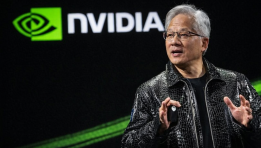
Nvidia has introduced a new executive compensation framework that underscores both its confidence in the artificial intelligence boom and the
- Lior mor
- •
- 7 Min Read
- •
- ago 21 hours
SKN | Ziff Davis to Sell Ookla and Downdetector to Accenture in $1.2 Billion Deal: What It Means for Digital Infrastructure and Data Services
Technology and media company Ziff Davis announced plans to sell two of its well-known digital infrastructure platforms, Ookla and
- ago 21 hours
- •
- 7 Min Read

Technology and media company Ziff Davis announced plans to sell two of its well-known digital infrastructure platforms, Ookla and

