


- sagi habasov
- •
- 7 Min Read
- •
- 1 hour ago
Key Points
- Nvidia and Meta Platforms are expanding AI infrastructure with millions of additional GPUs to accelerate large language models and generative AI systems.
- The surge in AI chip deployment reinforces Nvidia’s dominance in data center acceleration and deepens hyperscaler dependence on advanced silicon.
- Massive capital expenditure commitments signal a long-term structural investment cycle rather than a short-lived AI trend.

Nvidia and Meta are intensifying the global AI race by significantly expanding their GPU footprint, deploying millions of additional high-performance chips across data centers. The move underscores a broader transformation underway in global compute infrastructure, as artificial intelligence shifts from experimental deployment to enterprise-scale integration.
The AI Infrastructure Build-Out Accelerates
Meta has previously indicated plans to operate hundreds of thousands of Nvidia GPUs to train and deploy large-scale AI models, including Llama and generative AI systems embedded across its platforms. Industry disclosures suggest that hyperscalers collectively are scaling toward multi-million GPU clusters, signaling an unprecedented acceleration in data center expansion.
Nvidia, whose data center revenue has surged sharply over the past year amid AI demand, remains the primary beneficiary of this compute expansion. The company’s high-performance GPUs—such as its advanced AI accelerators—have become the backbone of generative AI training and inference workloads. Data center sales have become Nvidia’s dominant growth engine, outpacing its gaming segment and redefining its revenue mix.
This structural shift highlights a broader transformation: AI compute is increasingly viewed as critical infrastructure. Cloud providers, social media platforms, and enterprise software companies are investing aggressively to secure processing capacity amid tight supply conditions.
Capital Expenditure and Strategic Implications
The deployment of millions of GPUs implies capital expenditures running into tens of billions of dollars industry-wide. Hyperscalers have signaled sustained investment cycles tied to AI model training, inference deployment, and custom silicon development. For Meta, scaling GPU clusters enhances its ability to embed AI tools into advertising systems, content moderation, and recommendation engines—areas directly tied to monetization efficiency.
For Nvidia, continued large-scale GPU adoption reinforces its ecosystem lock-in. Its CUDA software platform, networking architecture, and AI optimization stack deepen customer dependence beyond hardware alone. This ecosystem dynamic strengthens pricing power, although it also invites regulatory scrutiny and competitive responses from alternative chipmakers and custom silicon efforts.
The ripple effects extend beyond the United States. Israel’s vibrant semiconductor design and AI ecosystem may indirectly benefit from global AI investment trends, particularly in areas such as chip architecture, cybersecurity, and data optimization technologies. As AI infrastructure scales, global supply chains—from advanced lithography to data center cooling—face structural realignment.
Risks: Overcapacity, Margins, and Geopolitics
Despite the optimism, risks remain embedded in the rapid AI build-out. One key question is whether GPU deployment may eventually overshoot near-term monetization potential. If enterprise AI adoption lags infrastructure investment, returns on capital could compress.
Supply constraints also remain a critical factor. Advanced chip production depends heavily on leading-edge semiconductor fabrication capacity. Export restrictions, geopolitical tensions, and trade controls can influence global chip flows, particularly in advanced AI hardware.
Competition is another evolving variable. While Nvidia retains a dominant position in AI accelerators, alternative solutions—including custom AI chips and rival semiconductor designs—continue to advance. Large cloud providers are investing in proprietary silicon to reduce reliance on external suppliers, potentially reshaping margin dynamics over time.
Looking ahead, investors will monitor whether the expansion of AI infrastructure translates into durable revenue growth across cloud, advertising, and enterprise applications. Key metrics to watch include data center revenue trends, capital expenditure guidance from hyperscalers, and AI-driven productivity gains. If adoption scales in parallel with infrastructure investment, the current GPU build-out may represent the foundation of a multi-year technology supercycle. However, shifts in regulation, supply constraints, or macroeconomic tightening could recalibrate expectations in what is rapidly becoming one of the most capital-intensive transformations in modern technology.
Comparison, examination, and analysis between investment houses
Leave your details, and an expert from our team will get back to you as soon as possible
* This article, in whole or in part, does not contain any promise of investment returns, nor does it constitute professional advice to make investments in any particular field.
To read more about the full disclaimer, click here
- Lior mor
- •
- 7 Min Read
- •
- ago 1 minute
SKN | Can Fei-Fei Li’s $1 Billion Bet on Spatial Intelligence Redefine the Next Era of AI?
Fei-Fei Li’s startup World Labs has raised $1 billion in a landmark funding round, signaling that investor appetite for next-generation
- ago 1 minute
- •
- 7 Min Read

Fei-Fei Li’s startup World Labs has raised $1 billion in a landmark funding round, signaling that investor appetite for next-generation

- sagi habasov
- •
- 7 Min Read
- •
- ago 2 hours
SKN | Can Microsoft Sustain 100% Renewable Power as AI Data Center Demand Surges?
Microsoft has reached a symbolic and strategic milestone in its energy transition, announcing that it matched all of its global
- ago 2 hours
- •
- 7 Min Read

Microsoft has reached a symbolic and strategic milestone in its energy transition, announcing that it matched all of its global
- sagi habasov
- •
- 7 Min Read
- •
- ago 6 hours
SKN | Is Uber’s $100 Million Charging Bet the Missing Link in Its Robotaxi Ambitions?
Uber Technologies is doubling down on autonomous mobility with a commitment of more than $100 million to build dedicated charging
- ago 6 hours
- •
- 7 Min Read

Uber Technologies is doubling down on autonomous mobility with a commitment of more than $100 million to build dedicated charging

- Ronny Mor
- •
- 7 Min Read
- •
- ago 21 hours
SKN | Nvidia and Meta Deepen AI Alliance: Will Millions of New GPUs Reinforce Nvidia’s Lead in the AI Arms Race?
Nvidia and Meta have unveiled an expanded multiyear, multi-generational partnership that will see the social media giant deploy millions of
- ago 21 hours
- •
- 7 Min Read
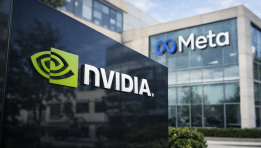
Nvidia and Meta have unveiled an expanded multiyear, multi-generational partnership that will see the social media giant deploy millions of

