


- orshu
- •
- 6 Min Read
- •
- 2 hours ago
Key Points
- Nikkei 225 hit a fresh record above 58,000, up 51% year over year.
- AI integration optimism and Nvidia earnings anticipation fueled tech gains.
- Yen weakness provided additional support amid cautious BOJ rate outlook.
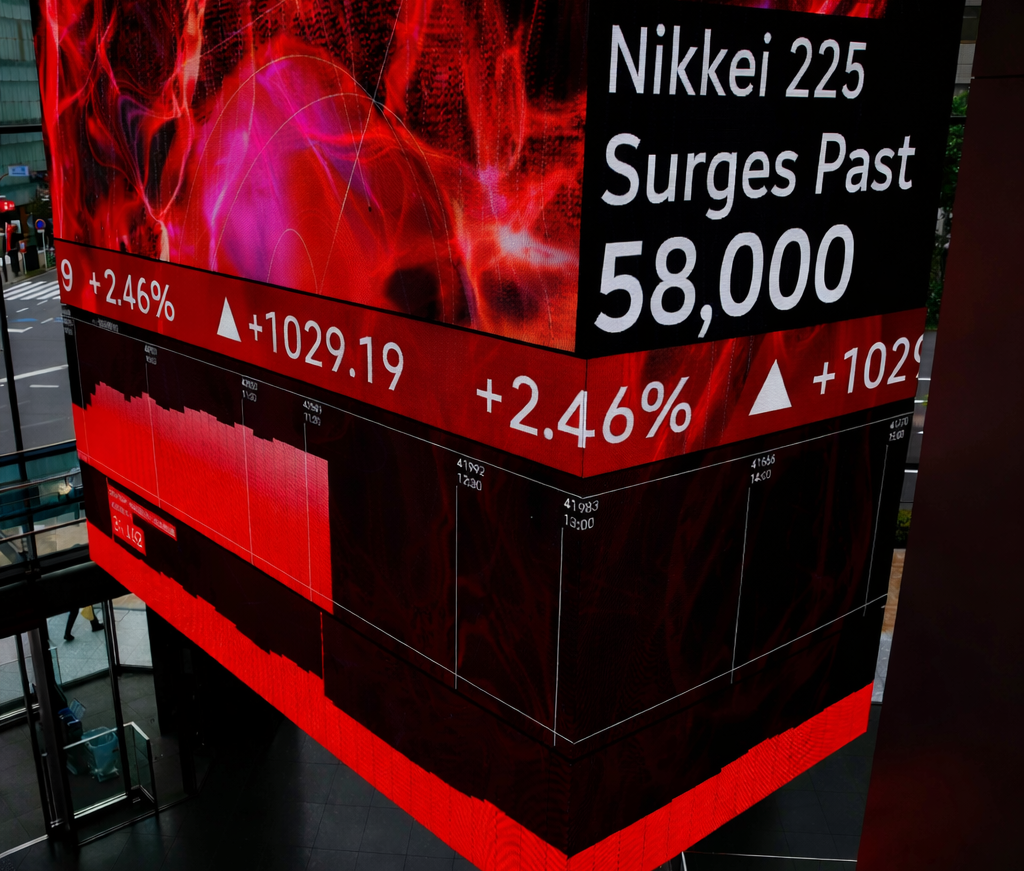
Japan’s Nikkei 225 climbed above the 58,000 mark on Wednesday, reaching a fresh all-time high as global technology optimism and currency weakness combined to propel equities higher. The rally reflects renewed investor confidence in artificial intelligence-related demand and growing expectations that Japan’s policy environment will remain supportive. With the index up more than 51% year over year, markets are increasingly debating whether this marks the beginning of a sustained structural re-rating for Japanese equities.
AI Optimism Revives Technology Momentum
The Nikkei 225 rose 1.3% intraday and closed near 57,860 points on February 25, 2026, gaining 0.94% from the prior session. The move tracked a technology-led rebound on Wall Street after easing fears that AI advancements would abruptly disrupt established business models.
Investor sentiment improved following indications from Anthropic that its Claude chatbot technology would pursue partnerships rather than outright displacement of corporate systems. This tempered earlier “AI scare trade” concerns and reinforced the narrative that integration, not elimination, may define the next phase of enterprise AI deployment.
Technology shares led the Japanese advance. Advantest gained 1.9%, Disco Corp rose 4.3%, and Tokyo Electron added 2.4%, underscoring Japan’s leverage to semiconductor capital expenditure cycles. With Nvidia earnings looming, global investors are seeking confirmation that AI infrastructure spending remains intact — a critical driver for chip equipment suppliers.
Over the past month, the Nikkei has climbed 9.41%, demonstrating how quickly risk appetite can return once disruption fears stabilize.
Yen Weakness Amplifies Equity Gains
The rally received additional fuel from a sharp depreciation in the yen. Reports suggested Prime Minister Sanae Takaichi expressed concern about further rate hikes during discussions with Bank of Japan Governor Kazuo Ueda. Markets interpreted this as a signal that monetary tightening could proceed cautiously.
A weaker yen enhances earnings translation for export-oriented companies, particularly technology and industrial manufacturers. Historically, currency depreciation has served as a powerful tailwind for Japanese equities, amplifying foreign investor inflows and boosting profit margins.
The alignment of AI optimism and accommodative monetary expectations has created a supportive macro backdrop, driving renewed momentum across cyclical sectors.
Broad Participation Signals Structural Shift
Beyond semiconductor names, broader participation strengthened the rally. Furukawa Electric gained 1.6%, JX Advanced Metals surged 6.6%, and Nitto Boseki advanced 5.2%. This breadth suggests the rally is extending beyond pure tech exposure into materials and advanced manufacturing — sectors integral to global electrification and AI infrastructure expansion.
Historically, the Nikkei reached its previous all-time high of 58,047 earlier this month, reinforcing that Japan is now operating in uncharted territory. The index has surged 51.69% compared to the same period last year, reflecting both domestic reform momentum and global capital reallocation.
Looking ahead, sustainability will depend on three variables: confirmation of continued AI-driven capital spending, stabilization in global trade conditions, and the trajectory of Bank of Japan policy normalization. While valuation expansion has been substantial, earnings leverage from currency effects and semiconductor demand could continue supporting upside momentum.
For now, the Nikkei’s breakout above 58,000 signals renewed global confidence in Japan’s growth narrative — but volatility tied to AI headlines and monetary policy shifts remains a key risk factor.
Comparison, examination, and analysis between investment houses
Leave your details, and an expert from our team will get back to you as soon as possible
* This article, in whole or in part, does not contain any promise of investment returns, nor does it constitute professional advice to make investments in any particular field.
To read more about the full disclaimer, click here
- orshu
- •
- 5 Min Read
- •
- ago 2 minutes
SKN | European Markets Stabilize as Regional Benchmark Advances Despite Flat Core Indices
European markets showed signs of stabilization on Wednesday, February 25, 2026, as the broader regional benchmark moved higher while most
- ago 2 minutes
- •
- 5 Min Read

European markets showed signs of stabilization on Wednesday, February 25, 2026, as the broader regional benchmark moved higher while most
- orshu
- •
- 6 Min Read
- •
- ago 12 hours
SKN | Dow Jones Rebounds 350 Points on February 24 — Can Blue Chips Sustain the Momentum?
The Dow Jones Industrial Average advanced on February 24, climbing 350.73 points to 49,154.79 as of late afternoon trading.
- ago 12 hours
- •
- 6 Min Read

The Dow Jones Industrial Average advanced on February 24, climbing 350.73 points to 49,154.79 as of late afternoon trading.
- orshu
- •
- 6 Min Read
- •
- ago 16 hours
SKN | European Markets Edge Higher as CAC 40 Leads Gains While Sterling Strengthens
European equity markets closed slightly higher on February 24, reflecting steady but restrained investor sentiment. Gains across France, Germany,
- ago 16 hours
- •
- 6 Min Read

European equity markets closed slightly higher on February 24, reflecting steady but restrained investor sentiment. Gains across France, Germany,
- orshu
- •
- 6 Min Read
- •
- ago 18 hours
SKN | Wall Street Slides Sharply as Dow Drops 1.66% and Small Caps Lead Losses
U.S. equity markets opened February 24 on a defensive footing, with broad-based declines across major indices as investors reassess
- ago 18 hours
- •
- 6 Min Read

U.S. equity markets opened February 24 on a defensive footing, with broad-based declines across major indices as investors reassess

