


- Ronny Mor
- •
- 6 Min Read
- •
- 2 hours ago
Key Points
- The flagship banking index experienced a -3.98% weekly contraction, closing at 8,649.98 amidst heightened intra-week market fluctuations.
- Despite immediate downward pressures, the sector maintains a robust +46.30% one-year return, highlighting enduring long-term foundational strength.
- Trading volume remained constrained significantly below the three-month average, suggesting a cautious, wait-and-see approach from institutional capital.

The Tel Aviv Stock Exchange’s banking sector faced noticeable headwinds this week, with the TA Banks 5 Index retracing from recent peaks amid shifting global and domestic market sentiment. While the broader Israeli equity market continues to digest evolving monetary policies, the primary financial index exhibited sharp intra-week swings before settling nearly flat on its final trading session.
Short-Term Contraction Versus Long-Term Resilience
The trading week ending mid-March saw the TA Banks 5 Index enter a distinct pullback phase, recording a -3.98% decline over the trailing five days. This recent downward trajectory extends a broader monthly contraction of -8.32%, indicating an interim phase of profit-taking following aggressive capital market rallies earlier in the year. However, contextualizing this short-term performance against long-term metrics reveals persistent structural stability. Israeli banks have historically capitalized on elevated interest rate environments to expand their net interest income, a fundamental driver of their sustained profitability. Consequently, the index boasts a formidable +46.30% gain over the past year and a staggering +272.09% return over a five-year horizon. This divergence suggests that while current valuations are adjusting to immediate macroeconomic realities, the underlying profitability of Israel’s major financial institutions remains a compelling anchor for long-term investment portfolios.
Volume Dynamics and Institutional Restraint
A closer examination of the week’s trading activity reveals pronounced volatility, with the index oscillating significantly before closing exactly at 8,649.98. During the week, the index tested upper resistance levels near the 8,900 mark before yielding to downward pressure that pushed it toward a support base near 8,600. Notably, this price action occurred on relatively subdued participation, with the current trading volume of roughly 7.67 million lagging considerably behind the three-month average of 10.54 million. This contraction in liquidity often characterizes a transitional market consolidation phase, where institutional investors temporarily sideline capital while reassessing domestic fiscal policies and inflation trajectories. The lack of heavy, panic-driven selling volume during the drawdown implies that the recent dip is driven more by an absence of immediate bullish catalysts rather than a fundamental erosion of sector confidence.
Looking ahead, market participants will closely monitor the TA Banks 5 Index for signs of stabilization around the critical 8,600 support threshold. The forward-looking outlook hinges heavily on forthcoming domestic inflation data and the Bank of Israel’s corresponding rate decisions, which directly dictate net interest margin sustainability for the financial sector. Strategic asset allocation will likely favor institutions demonstrating superior asset quality and stringent risk management. If the macroeconomic environment avoids unexpected shocks, this current phase of valuation cooling may present an attractive entry point for strategic accumulation. Conversely, persistent geopolitical frictions or tighter-than-expected liquidity conditions remain key downside risks. Investors should maintain a balanced posture, weighing the enduring capital robustness of Israeli banks against the tactical uncertainties currently permeating the global financial landscape.
Comparison, examination, and analysis between investment houses
Leave your details, and an expert from our team will get back to you as soon as possible
* This article, in whole or in part, does not contain any promise of investment returns, nor does it constitute professional advice to make investments in any particular field.
To read more about the full disclaimer, click here
- sagi habasov
- •
- 6 Min Read
- •
- ago 1 minute
SKN | TA-RealEstate Index Pulls Back 7.7% This Week: Is Profit-Taking Creating New Entry Points?
The TA-RealEstate index experienced a notable contraction this week, shedding 7.77% to settle at 1,549.20 as investors seemingly paused
- ago 1 minute
- •
- 6 Min Read

The TA-RealEstate index experienced a notable contraction this week, shedding 7.77% to settle at 1,549.20 as investors seemingly paused

- omer bar
- •
- 6 Min Read
- •
- ago 3 hours
SKN | Assessing the TA-SME60 Equal Weight Index: Will the Mid-Week Rebound Drive Sustainable Momentum?
The Israeli equity market witnessed a week of concentrated price discovery, particularly within the mid-cap and small-cap segments tracked by
- ago 3 hours
- •
- 6 Min Read
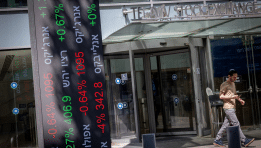
The Israeli equity market witnessed a week of concentrated price discovery, particularly within the mid-cap and small-cap segments tracked by

- Lior mor
- •
- 6 Min Read
- •
- ago 4 hours
SKN | Has the Australian Dollar Reached a Near-Term Peak? Analyzing the Recent 1.35% Pullback
The Australian Dollar Currency Index (^XDA) registered a noticeable retracement this week, shedding 0.96 points to close at 69.82
- ago 4 hours
- •
- 6 Min Read
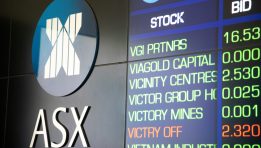
The Australian Dollar Currency Index (^XDA) registered a noticeable retracement this week, shedding 0.96 points to close at 69.82

- Arik Arkadi Sluzki
- •
- 6 Min Read
- •
- ago 4 hours
SKN | KOSPI Secures Solid Weekly Gains Despite Friday Profit-Taking: Will the Momentum Hold?
South Korean equities demonstrated remarkable resilience this week, navigating global macroeconomic headwinds to secure a robust net positive performance.
- ago 4 hours
- •
- 6 Min Read
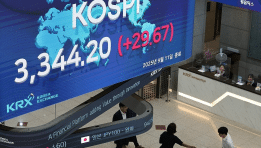
South Korean equities demonstrated remarkable resilience this week, navigating global macroeconomic headwinds to secure a robust net positive performance.

