


- omer bar
- •
- 6 Min Read
- •
- 3 hours ago
Key Points
- MAGS offers equal-weight exposure to the Magnificent Seven technology companies.
- Concentrated portfolios can outperform in strong markets but amplify downside risk during volatility.
- Cybersecurity ETFs highlight how strong industry growth does not always translate into stock market gains.
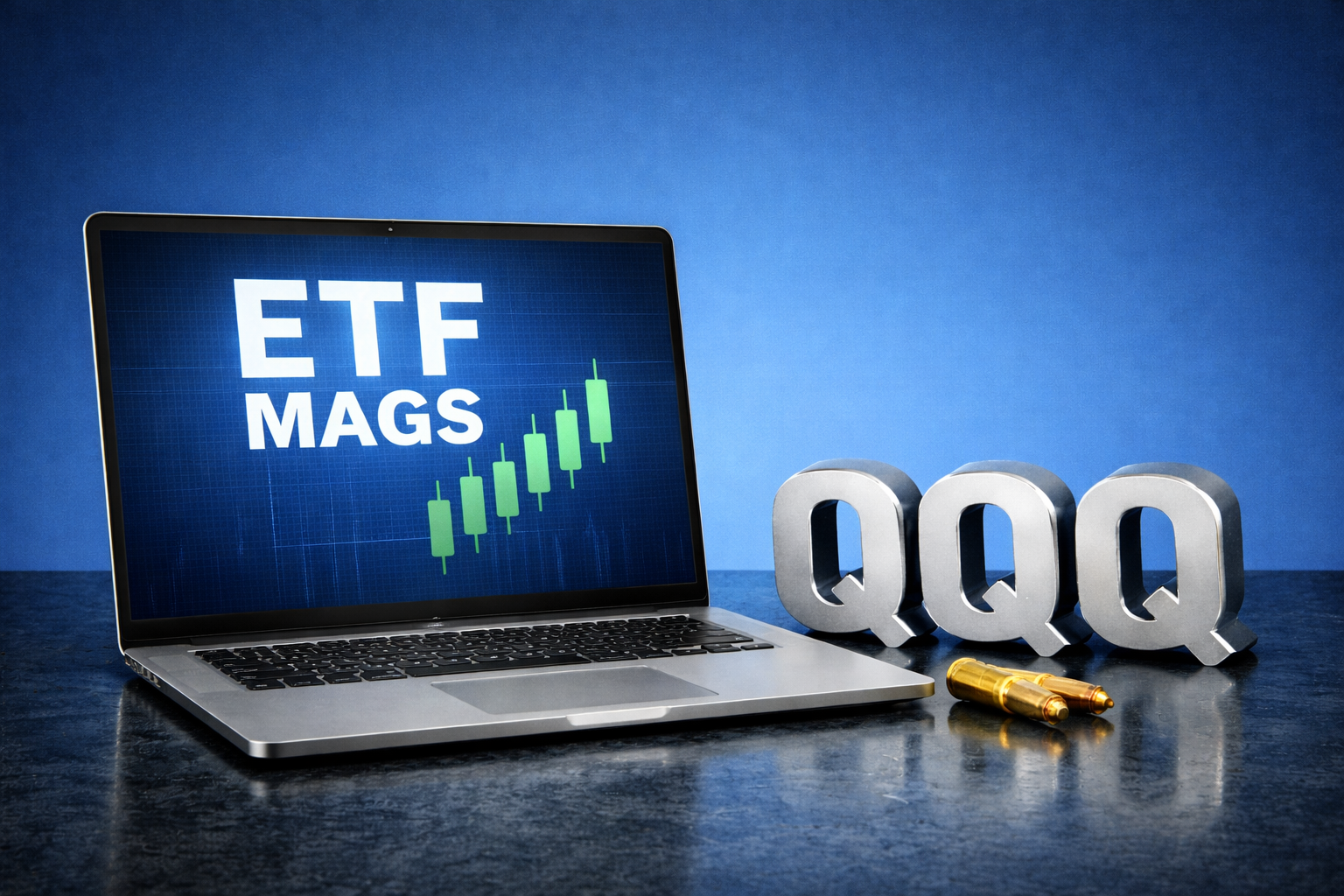
Investors seeking exposure to the technology sector often turn to popular index funds such as the Nasdaq-100 ETF, but some newer funds are offering far more concentrated bets on a small group of dominant companies. The Roundhill Magnificent Seven ETF (MAGS) represents one of the most focused strategies available, giving investors equal-weight exposure to the largest U.S. technology giants. By contrast, broader funds such as the Nasdaq-tracking QQQ provide diversified exposure across a wider range of technology and growth stocks. The comparison highlights a key investment question: whether concentration in market-leading companies can deliver superior returns without exposing investors to excessive volatility.
Different Strategies for Targeting Technology Growth
The Roundhill Magnificent Seven ETF was designed to give investors direct exposure to seven of the most influential technology companies in the global market: Apple, Nvidia, Microsoft, Amazon, Alphabet, Meta, and Tesla. Unlike diversified index funds, the strategy focuses entirely on these companies and allocates equal weight to each position. The fund charges an expense ratio of approximately 0.29% and relies partly on derivative instruments, including swap positions, to maintain its equal-weight structure. This design allows the fund to concentrate its exposure more aggressively than traditional ETFs that simply replicate broader market indexes.
Performance Reflects the Power of Concentration
Over the past year, MAGS has delivered strong performance as mega-cap technology companies continued to dominate market returns. The fund generated gains of about 35.6%, outperforming the Nasdaq-100 ETF, which returned roughly 28.9% over the same period. However, the same concentration that boosted returns during strong market conditions has also amplified downside risk. In 2026, MAGS has fallen approximately 5.8% year-to-date, while the Nasdaq-100 has declined only about 1.1% and the broader S&P 500 has remained largely unchanged. The divergence illustrates how concentrated portfolios can magnify both gains and losses.
Cybersecurity Funds Tell a Different Story
While MAGS concentrates on a handful of dominant technology firms, other thematic ETFs attempt to capture long-term industry trends. The WisdomTree Cybersecurity Fund (WCBR), for example, focuses on companies providing digital security infrastructure such as endpoint protection, identity management, and cloud defense systems. Despite the rapid growth in global cybersecurity spending, the fund has struggled to translate that demand into strong equity returns. Since its launch in 2021, WCBR has significantly underperformed the S&P 500, reflecting valuation pressures on high-growth technology stocks during periods of rising interest rates.
Investment Outlook
The comparison between concentrated and diversified technology ETFs highlights the trade-offs investors must consider when building portfolios. Funds like MAGS offer powerful exposure to dominant technology leaders but provide little protection during periods of sector rotation or market volatility. Broader funds such as QQQ provide diversification but may dilute the impact of top-performing stocks. Meanwhile, thematic funds like WCBR illustrate that strong industry fundamentals do not always translate into strong stock performance. As artificial intelligence and digital infrastructure continue reshaping global markets, investors will likely balance concentrated bets with diversified exposure to manage both growth potential and risk.
Comparison, examination, and analysis between investment houses
Leave your details, and an expert from our team will get back to you as soon as possible
* This article, in whole or in part, does not contain any promise of investment returns, nor does it constitute professional advice to make investments in any particular field.
To read more about the full disclaimer, click here
- sagi habasov
- •
- 7 Min Read
- •
- ago 10 hours
SKN | Institutional Bitcoin Access Expands as the iShares Bitcoin Trust ETF Gains Market Influence
The rapid expansion of spot Bitcoin exchange-traded funds is reshaping how institutional investors access cryptocurrency markets. Among the leading vehicles
- ago 10 hours
- •
- 7 Min Read

The rapid expansion of spot Bitcoin exchange-traded funds is reshaping how institutional investors access cryptocurrency markets. Among the leading vehicles
- sagi habasov
- •
- 6 Min Read
- •
- ago 24 hours
SKN | Are Nuclear Energy ETFs Emerging as Safe-Haven Plays Amid the Global Energy Crisis?
The intensifying conflict involving Iran has triggered renewed turbulence in global energy markets, pushing oil prices sharply higher and exposing
- ago 24 hours
- •
- 6 Min Read

The intensifying conflict involving Iran has triggered renewed turbulence in global energy markets, pushing oil prices sharply higher and exposing

- orshu
- •
- 7 Min Read
- •
- ago 1 day
SKN | Oil Surge Lifts United States Oil Fund (USO): ETF Jumps Over 8% as Energy Markets Rally
The United States Oil Fund, LP (NYSEArca: USO) posted a strong rally during the March 12 trading session, rising
- ago 1 day
- •
- 7 Min Read

The United States Oil Fund, LP (NYSEArca: USO) posted a strong rally during the March 12 trading session, rising

- omer bar
- •
- 5 Min Read
- •
- ago 1 day
SKN | Crude Price Swings Highlight Volatility in Global Energy Markets: Insights from USO
Global energy markets have experienced significant turbulence as crude prices continue to fluctuate. The United States Oil Fund, LP (USO),
- ago 1 day
- •
- 5 Min Read

Global energy markets have experienced significant turbulence as crude prices continue to fluctuate. The United States Oil Fund, LP (USO),

