


- Arik Arkadi Sluzki
- •
- 6 Min Read
- •
- 49 minutes ago
Key Points
- The KOSPI Composite Index posted a strong 4.48% gain over the five-day trading period, driven by robust mid-week momentum.
- A Friday sell-off saw the index shed 1.72%, closing at 5,487.24 on higher-than-average volume.
- Investors remain focused on forward-looking macroeconomic data as market volatility persists within the 5,392.52 to 5,537.59 daily range.
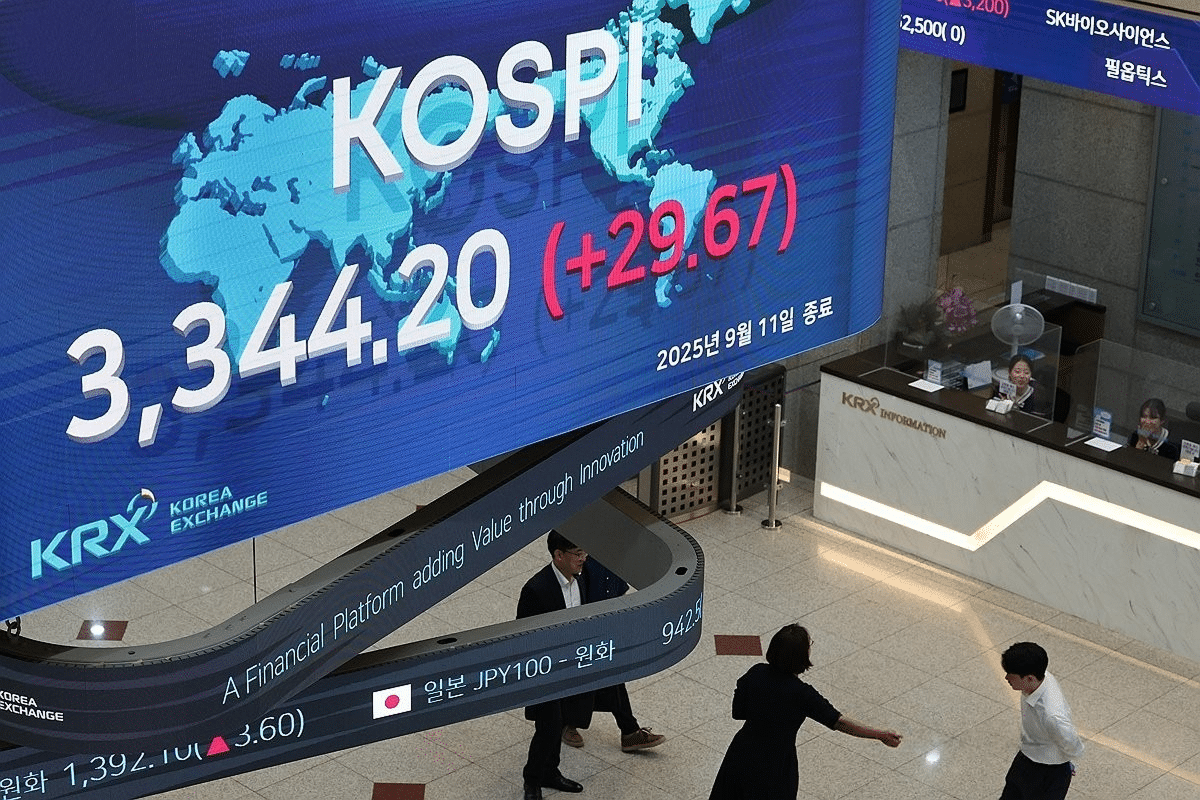
South Korean equities demonstrated remarkable resilience this week, navigating global macroeconomic headwinds to secure a robust net positive performance. The KOSPI Composite Index captured the attention of international investors, balancing early-week bullish sentiment against end-of-week profit-taking as market participants reassessed regional tech and export data within the broader global economic landscape.
Mid-Week Surge Drives Overall Weekly Growth
Throughout the trading week, the KOSPI exhibited significant intraday volatility, ultimately yielding a 4.48% positive return over the five-day period. The index experienced a notable upward trajectory peaking around Wednesday, largely buoyed by institutional buying and renewed appetite for growth assets across emerging Asian markets. This sustained upward pressure reflects underlying confidence in the region’s core industrial sectors, which continue to attract capital despite broader global inflationary concerns. The overarching trend indicates that while traders are quick to lock in gains, the baseline demand for South Korean equities remains structurally sound.
End-of-Week Profit-Taking and Volume Spikes
The bullish momentum encountered resistance by the week’s end, with the KOSPI retreating 96.01 points, or 1.72%, to close at 5,487.24 on Friday, March 13. This contraction was accompanied by elevated trading activity, with daily volume reaching 907,656, surpassing the average volume of 773,275. The surge in volume during a down session suggests targeted profit-taking by larger institutional funds ahead of the weekend, rather than a fundamental shift in market sentiment. Opening at 5,412.39 and trading within a daily range of 5,392.52 to 5,537.59, the index tested immediate support levels but avoided a steeper structural breakdown.
Macro Implications for Global Investors
For sophisticated investors, including those monitoring from the Israeli market, the KOSPI’s financial performance serves as a vital barometer for global manufacturing health and technology supply chains. The index currently operates well above its 52-week low of 2,284.72, hovering closer to the upper bounds of its 6,347.41 annual peak. This elevated consolidation phase indicates that international capital is still uncovering strategic investment opportunities in export-heavy markets. As global central banks continue to signal varied interest rate trajectories, the relative stability and mid-week rallies observed in South Korea provide a constructive counter-narrative to Western market anxieties.
Looking ahead, market participants will closely monitor whether the KOSPI can reclaim its mid-week highs and establish a new support baseline above the 5,500 threshold. The near-term outlook hinges heavily on upcoming regional trade data and potential shifts in global semiconductor demand, which remain critical catalysts for sustained market growth. While downside risks are tied to sudden liquidity contractions or unexpected geopolitical headwinds, the prevailing trend suggests viable opportunities for strategic capital allocation. Investors should remain highly attentive to daily volume trends and cross-border capital flows, as these metrics will likely dictate the durability of the current market structure in the upcoming trading sessions.
Comparison, examination, and analysis between investment houses
Leave your details, and an expert from our team will get back to you as soon as possible
* This article, in whole or in part, does not contain any promise of investment returns, nor does it constitute professional advice to make investments in any particular field.
To read more about the full disclaimer, click here
- Lior mor
- •
- 6 Min Read
- •
- ago 1 minute
SKN | Has the Australian Dollar Reached a Near-Term Peak? Analyzing the Recent 1.35% Pullback
The Australian Dollar Currency Index (^XDA) registered a noticeable retracement this week, shedding 0.96 points to close at 69.82
- ago 1 minute
- •
- 6 Min Read
The Australian Dollar Currency Index (^XDA) registered a noticeable retracement this week, shedding 0.96 points to close at 69.82

- sagi habasov
- •
- 6 Min Read
- •
- ago 2 hours
SKN | Navigating Volatility: What Drove the Nikkei 225’s Mid-Week Consolidation?
The Nikkei 225 concluded the trading week with a notable pullback, closing down 633.35 points at 53,819.61 on Friday,
- ago 2 hours
- •
- 6 Min Read

The Nikkei 225 concluded the trading week with a notable pullback, closing down 633.35 points at 53,819.61 on Friday,

- orshu
- •
- 6 Min Read
- •
- ago 3 hours
SKN | Assessing the Hang Seng Index: Is the Recent Consolidation a Sign of Asian Market Resilience?
The Hang Seng Index (^HSI) concluded the trading week ending March 13 at 25,465.60, reflecting a contained contraction amid
- ago 3 hours
- •
- 6 Min Read

The Hang Seng Index (^HSI) concluded the trading week ending March 13 at 25,465.60, reflecting a contained contraction amid
- Lior mor
- •
- 6 Min Read
- •
- ago 15 hours
SKN | Shanghai Composite Retreats from Mid-Week Highs: A Healthy Correction or Approaching Headwinds?
The Shanghai Composite Index experienced a volatile trading week, ultimately paring mid-week gains to close lower amidst shifting macroeconomic
- ago 15 hours
- •
- 6 Min Read
The Shanghai Composite Index experienced a volatile trading week, ultimately paring mid-week gains to close lower amidst shifting macroeconomic

