


- orshu
- •
- 8 Min Read
- •
- 1 hour ago
Key Points
- Israeli equities closed mixed on February 6, 2026, with large caps stabilizing while mid-caps and value stocks remained under pressure.
- Bond markets strengthened across the curve, signaling a shift toward balance rather than outright risk aversion.
- Trading volumes moderated, reflecting cautious positioning as investors look ahead to the next trading day.
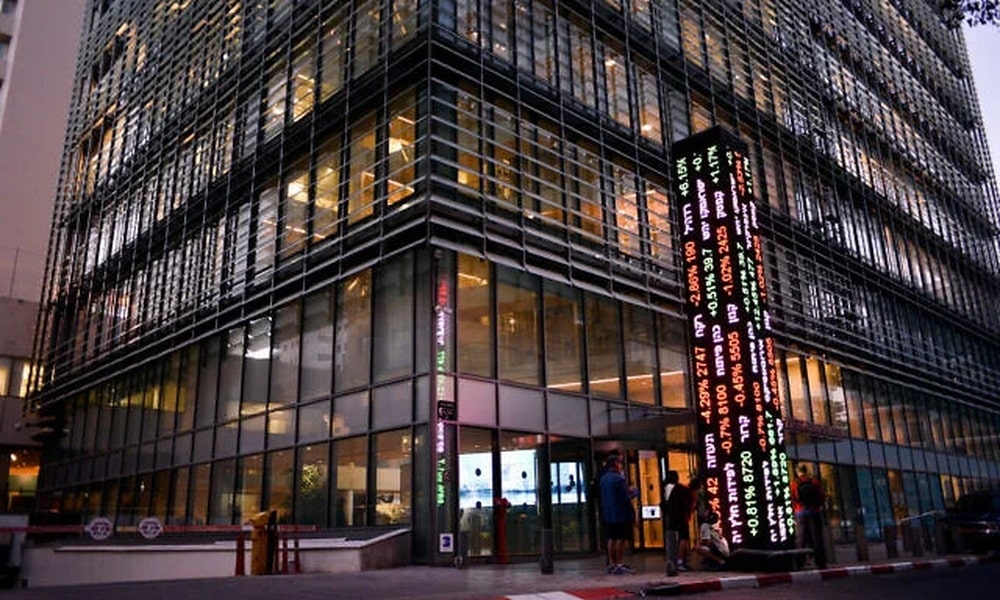
Israeli financial markets closed today, February 6, 2026, with a more measured and selective tone following the sharp selloff seen earlier in the week. After Thursday’s broad decline, today’s session suggested an attempt at stabilization, as investors reassessed risk exposure and looked for signs that the recent volatility may be easing.
Large Caps Find Footing While Broader Market Remains Mixed
The large-cap segment showed relative resilience during today’s session. The Tel Aviv-35 index rose 0.32 percent, signaling that selling pressure in leading stocks has moderated. Although declines still outnumbered advances within the index, the modest gain suggests that buyers are beginning to re-enter selectively after Thursday’s pullback.
In contrast, the broader market painted a more cautious picture. The Tel Aviv-125 index ended nearly flat, edging up just 0.04 percent, as weakness in several sectors offset strength in a handful of large names. Market breadth remained negative, indicating that confidence has not fully returned and that investors are still discriminating between stocks rather than buying the market broadly.
Trading activity declined compared with earlier in the week, with stock market turnover at approximately 3.0 billion shekels. This moderation in volume reflects a wait-and-see approach, typical of sessions that follow sharp directional moves.
Mid-Caps and Value Stocks Lag as Caution Persists
Mid-cap stocks continued to face pressure, extending the recent pattern of underperformance. The Tel Aviv-90 index declined 0.83 percent, while the combined mid-cap and banking index fell 0.64 percent. Declining stocks significantly outnumbered advancers, highlighting that risk appetite remains subdued in segments that are more sensitive to sentiment shifts.
Value stocks also failed to recover, with the value index slipping 0.57 percent. This is notable, as value shares had been leaders earlier in the month. Their continued weakness suggests that investors are still trimming exposure and prioritizing capital preservation over aggressive positioning.
The sector balance index declined 0.29 percent, reinforcing the theme of uneven performance across industries. Rather than a clear rotation into defensive sectors, today’s action reflects selective selling and cautious positioning across much of the market.
Bond Markets Strengthen as Portfolios Rebalance
Fixed income markets delivered a more constructive performance, offering a counterbalance to mixed equity results. Short-term bonds rose 0.03 percent, while the broad bond index advanced 0.13 percent. Inflation-linked bonds posted even stronger gains, with several indices rising between 0.18 and 0.21 percent.
Bond market turnover reached approximately 2.6 billion shekels, indicating steady participation. The strength across bond segments suggests that investors are reallocating capital toward lower-risk assets, but in a controlled manner rather than through aggressive defensive flows.
This behavior supports the view that today’s market activity reflects portfolio rebalancing rather than panic. Investors appear to be managing risk carefully after recent volatility, maintaining exposure while seeking stability through fixed income.
Looking Ahead: What to Watch in the Next Trading Session
As markets look toward the next trading day, attention will focus on whether today’s tentative stabilization can develop into a more sustained recovery. Investors will watch large-cap stocks closely to see if they can continue to hold recent levels, as further strength here could help restore broader confidence.
Mid-cap and value stocks remain key risk indicators. A slowdown in selling pressure or an improvement in market breadth would suggest that the correction phase may be nearing completion. Conversely, renewed weakness in these segments could indicate that volatility has not yet fully played out.
Bond market behavior will also be important. Continued strength in fixed income could signal ongoing caution, while a plateau in bond gains may indicate that risk appetite is beginning to normalize. Opportunities may emerge if volatility subsides and valuations reset to more attractive levels, particularly in stocks that have seen indiscriminate selling. At the same time, risks remain elevated if confidence fails to rebuild, making tomorrow’s session critical in determining whether the market is stabilizing or preparing for another leg of consolidation.
Comparison, examination, and analysis between investment houses
Leave your details, and an expert from our team will get back to you as soon as possible
* This article, in whole or in part, does not contain any promise of investment returns, nor does it constitute professional advice to make investments in any particular field.
To read more about the full disclaimer, click here
- orshu
- •
- 7 Min Read
- •
- ago 4 days
SKN | European Markets Rebound as Eurozone Indices Recover Despite Currency Weakness
European markets opened February on a mixed but stabilizing note on Monday, February 2, 2026, as eurozone equities rebounded from
- ago 4 days
- •
- 7 Min Read

European markets opened February on a mixed but stabilizing note on Monday, February 2, 2026, as eurozone equities rebounded from
- orshu
- •
- 5 Min Read
- •
- ago 1 week
SKN | Capital Preservation Is the Price of Long-Term Compounding
Compounding Has a Fragile Requirement Compounding is often presented as an automatic process: stay invested long enough and returns will
- ago 1 week
- •
- 5 Min Read

Compounding Has a Fragile Requirement Compounding is often presented as an automatic process: stay invested long enough and returns will

- Ronny Mor
- •
- 7 Min Read
- •
- ago 2 weeks
SKN | Which Energy Stocks Could Benefit as a Major Winter Storm Grips the U.S.?
A powerful winter storm sweeping across large parts of the United States is once again testing the resilience of the
- ago 2 weeks
- •
- 7 Min Read

A powerful winter storm sweeping across large parts of the United States is once again testing the resilience of the

- sagi habasov
- •
- 6 Min Read
- •
- ago 3 weeks
SKN | China’s $1.2 Trillion Windfall Quietly Filters Into Global Markets — What It Means for Capital Flows
China’s growing $1.2 trillion financial windfall is quietly seeping into global markets, influencing asset prices far beyond its borders.
- ago 3 weeks
- •
- 6 Min Read

China’s growing $1.2 trillion financial windfall is quietly seeping into global markets, influencing asset prices far beyond its borders.

