


- orshu
- •
- 7 Min Read
- •
- 47 minutes ago
Key Points
- Israeli equities retreated across most major indices following two strong sessions of gains.
- Large caps and value stocks led the pullback, while mid-caps showed relative resilience.
- Bond markets remained broadly stable, suggesting profit-taking rather than renewed market stress.
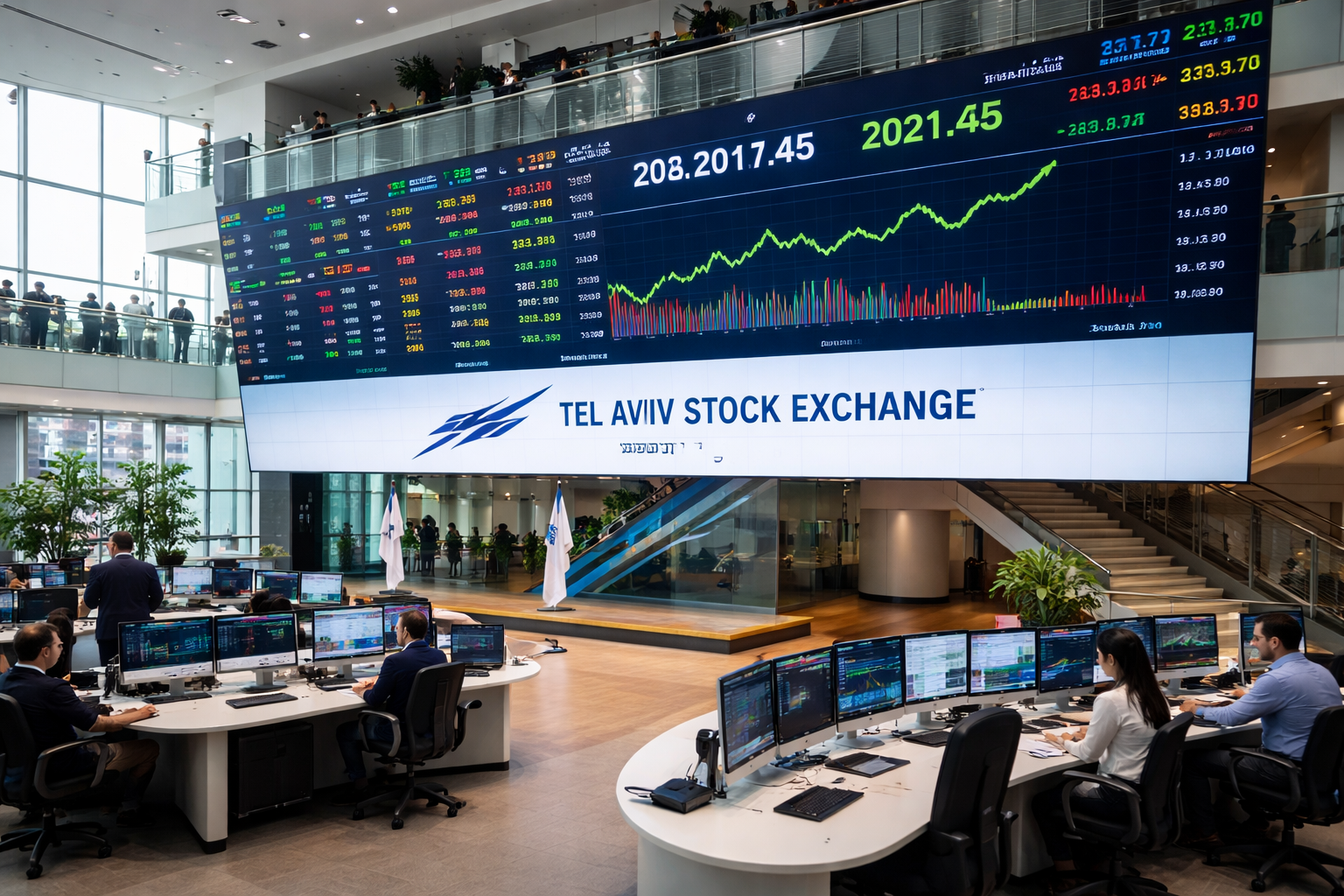
Israeli financial markets closed today, February 11, 2026, with a moderate pullback after two consecutive days of strong advances. Following a powerful rebound earlier in the week, investors appeared to lock in profits and rebalance positions, resulting in broad but controlled declines across the equity market.
Equity Indices Ease After Momentum Surge
The large-cap index declined 0.79 percent, giving back a portion of Tuesday’s gains. Despite the drop, the index remains near elevated levels compared with last week’s lows, indicating that the broader recovery trend has not yet been fully reversed. Market breadth tilted negative, with declining stocks outnumbering advancers, reflecting a cooling of short-term momentum.
Mid-cap stocks fell 0.42 percent, a more modest decline compared with large caps. The combined mid-cap and banking index slipped only 0.13 percent, suggesting that financial stocks helped cushion broader weakness. This relative stability in banks could indicate continued confidence in the sector’s fundamentals despite short-term equity volatility.
The broader market index dropped 0.62 percent, signaling that selling pressure extended beyond a handful of heavyweight stocks. However, the decline was orderly rather than abrupt, consistent with a phase of consolidation rather than a sharp reversal.
Value Stocks and Sector Balance Index Turn Lower
Value-oriented stocks, which had led the rally in previous sessions, declined 0.63 percent. This pullback suggests that investors rotated out of recent outperformers as part of profit-taking activity. While the decline was noticeable, it was not accompanied by extreme breadth deterioration, indicating a measured reduction in exposure rather than widespread liquidation.
The sector balance index slipped 0.25 percent, reflecting mixed performance across industries. The relatively mild decline in this index compared with large caps suggests that weakness was somewhat concentrated rather than universally distributed.
Trading volume in the equity market reached approximately 5.3 billion shekels, a solid level of activity. Elevated turnover during a down session can reflect active repositioning, though today’s price action lacked signs of panic or forced selling.
Bond Markets Remain Steady Amid Equity Weakness
Fixed income markets provided a stabilizing influence. Short-term bonds rose slightly by 0.02 percent, while the broad bond index declined just 0.03 percent. Inflation-linked bonds also posted minor declines, remaining largely stable.
Bond market turnover reached roughly 5.6 billion shekels, indicating active participation without significant directional pressure. The absence of a strong bond rally suggests that investors were not fleeing equities in fear but instead adjusting portfolios in a balanced manner.
This steady bond performance reinforces the interpretation that today’s equity decline reflects healthy consolidation following a rapid advance rather than a breakdown in confidence or liquidity.
Looking Ahead: Monitoring Momentum and Market Breadth
As markets turn toward tomorrow’s session, the key question will be whether today’s pullback evolves into a deeper retracement or proves to be a brief pause within a broader recovery trend. Investors will watch large-cap performance closely to see if recent support levels hold. Sustained weakness in this segment could weigh on sentiment, while stabilization would reinforce the bullish narrative.
Market breadth will be another critical indicator. A rebound in advancing stocks could signal renewed buying interest, particularly if mid-caps and banking shares regain momentum. On the risk side, continued selling in value stocks may suggest further near-term consolidation.
Opportunities may emerge if selective weakness creates attractive entry points in fundamentally strong companies. At the same time, risks remain if volatility accelerates and investor confidence fades. The next trading session will be important in determining whether the market resumes its upward trajectory or extends this phase of short-term adjustment.
Comparison, examination, and analysis between investment houses
Leave your details, and an expert from our team will get back to you as soon as possible
* This article, in whole or in part, does not contain any promise of investment returns, nor does it constitute professional advice to make investments in any particular field.
To read more about the full disclaimer, click here
- orshu
- •
- 6 Min Read
- •
- ago 20 minutes
SKN | FTSE 100 Climbs to Fresh Highs as Global Exposure Fuels Strong February 11 Rally
The UK equity market delivered a strong performance on February 11, with the FTSE 100 closing firmly higher as
- ago 20 minutes
- •
- 6 Min Read
The UK equity market delivered a strong performance on February 11, with the FTSE 100 closing firmly higher as
- orshu
- •
- 5 Min Read
- •
- ago 48 minutes
SKN | European Markets Close Mixed as UK Strength Offsets Continental Weakness
European markets closed mixed on February 11, as investors digested regional divergences in equity performance and currency moves. While
- ago 48 minutes
- •
- 5 Min Read
European markets closed mixed on February 11, as investors digested regional divergences in equity performance and currency moves. While
- orshu
- •
- 6 Min Read
- •
- ago 2 hours
SKN | U.S. Markets Push Higher as Risk Appetite Improves While Volatility Cools
U.S. financial markets opened higher on February 11, extending a constructive tone as investors balance solid risk appetite with
- ago 2 hours
- •
- 6 Min Read
U.S. financial markets opened higher on February 11, extending a constructive tone as investors balance solid risk appetite with

- sagi habasov
- •
- 8 Min Read
- •
- ago 5 hours
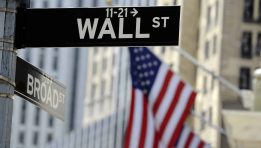
SKN | Is Wall Street’s New AI Trade a Sign of Smart Risk Management or Blind Panic?
Wall Street has entered a new phase of the artificial intelligence trade — and it is defined less by enthusiasm
- ago 5 hours
- •
- 8 Min Read
Wall Street has entered a new phase of the artificial intelligence trade — and it is defined less by enthusiasm

