


- orshu
- •
- 7 Min Read
- •
- 3 days ago
Key Points
- Tokyo Electron’s raised outlook reinforces confidence in AI-driven semiconductor capex.
- Advanced memory tools are emerging as the backbone of the next growth phase.
- China softness persists, but global hyperscaler investment is accelerating.
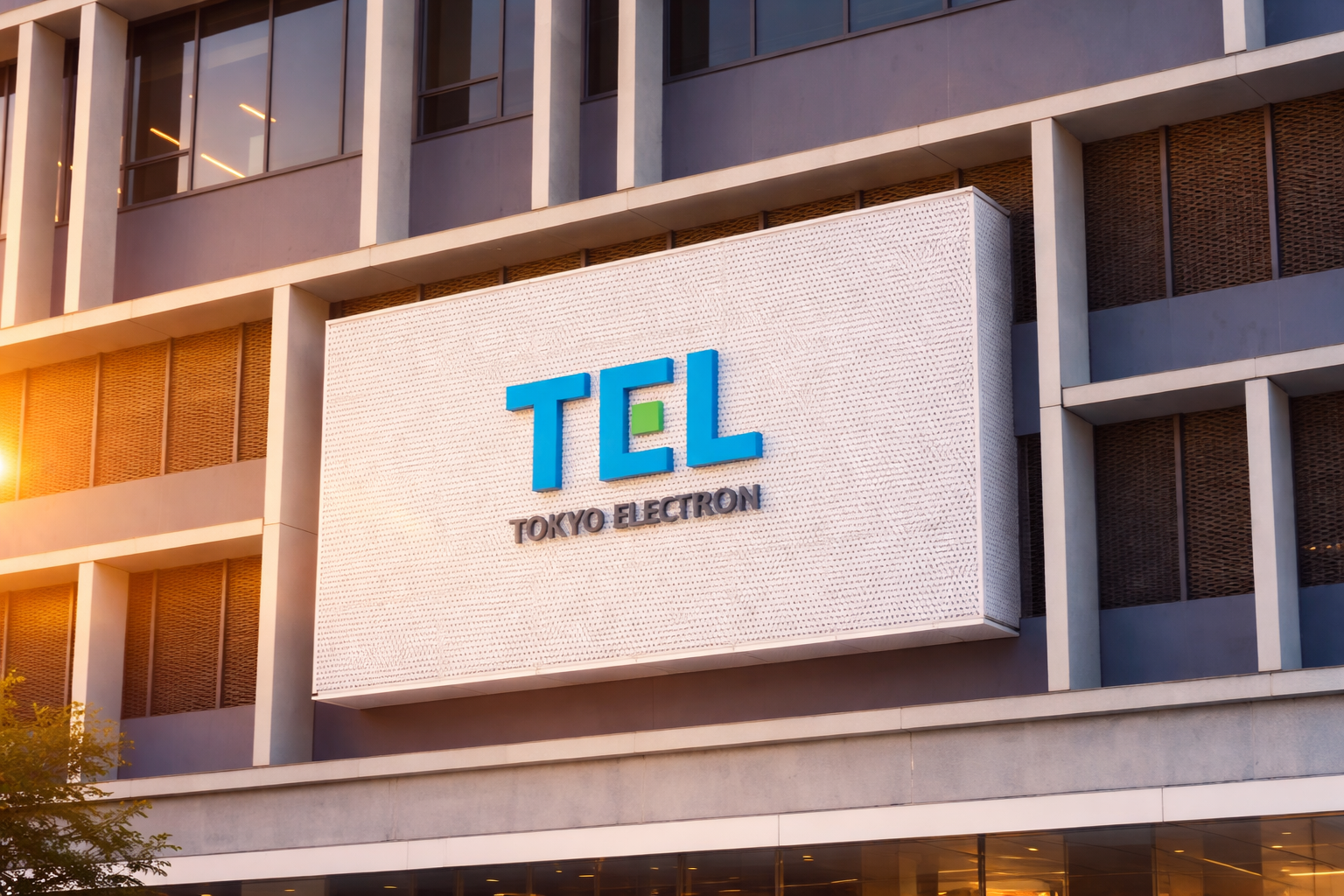
Tokyo Electron’s decision to raise its full-year outlook is being read by markets as another confirmation that the artificial-intelligence investment wave is reshaping the semiconductor supply chain. Even after posting quarterly results that missed analyst expectations, the Japanese chip-equipment supplier struck an optimistic tone, highlighting exceptionally strong customer inquiries and a spending environment that could support growth well beyond the current fiscal year.
Outlook Raised Despite a Quarterly Miss
Tokyo Electron Ltd. now expects operating profit of ¥593 billion for the year ending March, up from its previous forecast of ¥586 billion. While the upgrade still came in slightly below market expectations, the direction of travel mattered more than the absolute number.
For the December quarter, operating profit totaled ¥116.14 billion, well short of the ¥158.6 billion average analyst estimate. Management attributed the shortfall to shipment timing rather than underlying demand, a distinction investors tend to scrutinize closely during cyclical upswings. Reinforcing confidence, the company also announced a share buyback of up to ¥150 billion, signaling balance-sheet strength and management conviction.
AI Memory Demand Takes Center Stage
The strongest signal from the earnings call centered on memory. Tokyo Electron said demand for equipment used in DRAM manufacturing—ranging from high-bandwidth memory critical for AI accelerators to more conventional chips—remains particularly robust. Management expects this trend to persist for several years, reflecting how AI workloads are pushing memory intensity far beyond historical norms.
Finance Division Officer Hiroshi Kawamoto noted that customer inquiries are “extremely strong,” adding that growth exceeding 20% this year is possible if bottlenecks such as cleanroom capacity and procurement constraints are resolved quickly. That comment underscores how the current cycle is being shaped not by end-demand uncertainty, but by physical and logistical limits within the semiconductor ecosystem.
China Cools as Global Capex Heats Up
Not all regions are moving in sync. Momentum from Chinese memory makers has softened somewhat, while local logic-chip producers are delaying equipment deliveries. This cooling reflects a combination of inventory normalization and the impact of export controls tied to the intensifying technology rivalry between the U.S. and China.
Even so, global spending momentum remains powerful. Hyperscalers and sovereign investors are committing unprecedented capital to AI infrastructure. Companies such as Amazon.com Inc., Alphabet Inc., and Alibaba Group Holding Inc. are pouring hundreds of billions of dollars into data centers, chips, and related hardware, creating a rising tide for equipment suppliers.
Strategic Positioning and Key Customers
Tokyo Electron sits at the heart of this build-out. Its customer list includes industry leaders such as Taiwan Semiconductor Manufacturing Co. and Samsung Electronics Co., both of which are aggressively investing in advanced nodes and memory technologies. The company is also expected to benefit from TSMC’s plan to deploy 3-nanometer processes at its upcoming second factory in Japan, reinforcing domestic demand.
What to Watch Going Forward
Looking ahead, the key question is duration. If AI-related memory demand proves as structural as management suggests, Tokyo Electron’s outlook upgrade may be an early marker of a longer capex supercycle rather than a short-term rebound. Risks remain—from geopolitical restrictions to execution constraints—but for now, the balance of signals points toward sustained equipment spending rather than a near-term peak.
Comparison, examination, and analysis between investment houses
Leave your details, and an expert from our team will get back to you as soon as possible
* This article, in whole or in part, does not contain any promise of investment returns, nor does it constitute professional advice to make investments in any particular field.
To read more about the full disclaimer, click here
- Lior mor
- •
- 6 Min Read
- •
- ago 2 hours
SKN | A $1 Trillion S&P 500 Rebound Brings Relief — But Little Reassurance for Wall Street
The S&P 500’s recent rebound, which has restored an estimated $1 trillion in market capitalization, has done little to
- ago 2 hours
- •
- 6 Min Read

The S&P 500’s recent rebound, which has restored an estimated $1 trillion in market capitalization, has done little to

- sagi habasov
- •
- 7 Min Read
- •
- ago 2 hours
SKN | Alphabet’s $15 Billion Bond Move: Confidence in AI or Early Signs of Capital Market Strain?
Alphabet Inc.’s plan to raise roughly $15 billion through a U.S. investment-grade bond sale highlights how the artificial intelligence boom
- ago 2 hours
- •
- 7 Min Read

Alphabet Inc.’s plan to raise roughly $15 billion through a U.S. investment-grade bond sale highlights how the artificial intelligence boom

- orshu
- •
- 8 Min Read
- •
- ago 10 hours
SKN | How Gold and Silver Volatility Is Fueling a Breakout Moment for Algo and Machine-Learning Funds
Wild price swings in gold and silver are no longer just unsettling discretionary investors — they are actively powering a
- ago 10 hours
- •
- 8 Min Read

Wild price swings in gold and silver are no longer just unsettling discretionary investors — they are actively powering a
- orshu
- •
- 8 Min Read
- •
- ago 11 hours
SKN | Are AI Shocks Exposing Hidden Fault Lines in the $3 Trillion Private Credit Market?
Fresh volatility in equity markets is reigniting long-simmering concerns about the resilience of the private credit industry, a market now
- ago 11 hours
- •
- 8 Min Read
Fresh volatility in equity markets is reigniting long-simmering concerns about the resilience of the private credit industry, a market now

