


- orshu
- •
- 6 Min Read
- •
- 3 months ago
Key Points
- US stock markets are closed on Christmas Day, halting equity and options trading.
- Christmas Eve typically brings shortened trading hours, affecting liquidity and volatility.
- Global markets follow varied holiday calendars, creating cross-border timing and execution risks.
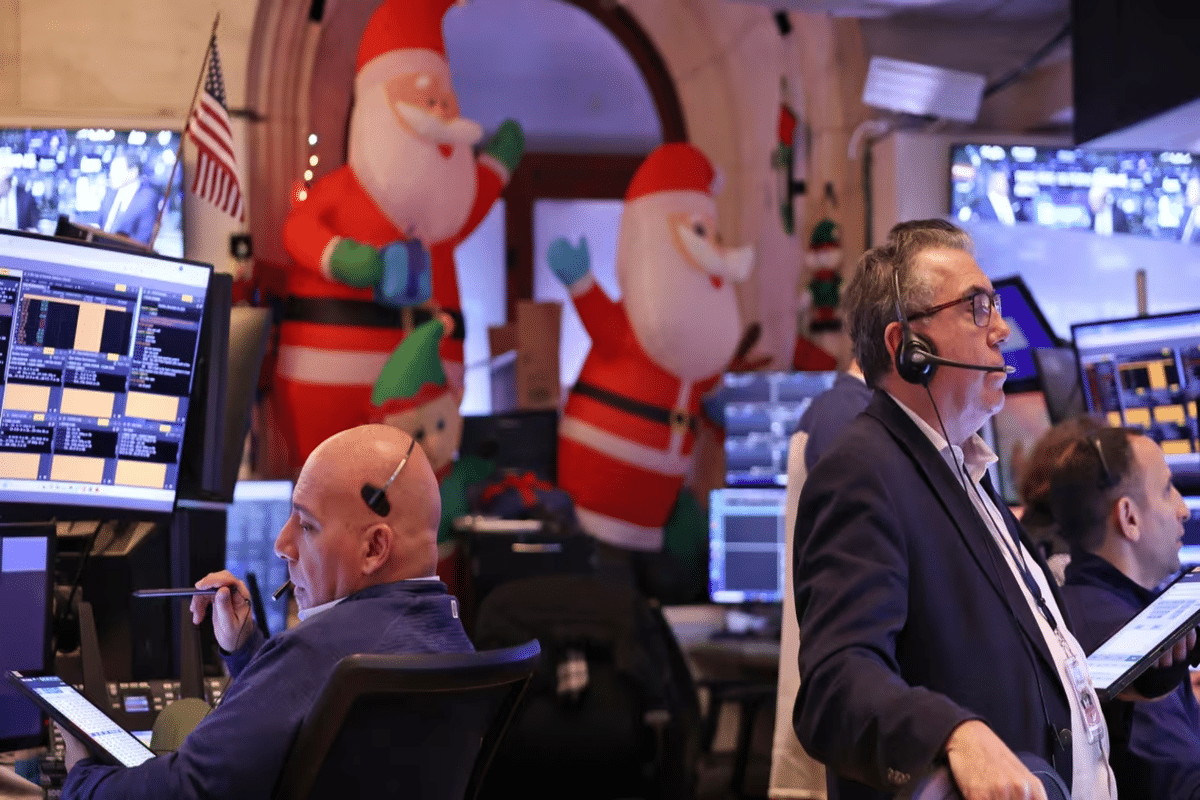
As global markets enter the year-end stretch, investors are once again navigating reduced liquidity, altered trading hours, and holiday-driven volatility. A key question for both institutional and retail participants is whether stock markets are open on Christmas—and how holiday schedules may influence portfolio decisions.
Understanding these closures is especially important at a time when macro data, central bank guidance, and geopolitical risks continue to shape short-term market moves.
US markets close for Christmas Day
In the United States, major exchanges including the New York Stock Exchange (NYSE) and Nasdaq are closed on December 25 in observance of Christmas Day. This applies to equities, exchange-traded funds, and options markets, with no regular trading sessions taking place.
If Christmas falls on a weekend, the holiday is typically observed on the nearest weekday, meaning markets may close on a Friday or Monday instead. Bond markets generally follow a similar pattern, though exact schedules are set by industry bodies and can vary slightly.
For investors, the closure effectively pauses price discovery for US-listed securities, concentrating activity into the surrounding sessions.
Christmas Eve often sees shortened trading hours
While Christmas Eve is not a full market holiday in the US, trading hours are often reduced. When December 24 falls on a weekday, US equity markets typically close early—often around 1:00 p.m. Eastern Time. Fixed-income markets may also shut earlier than usual.
These abbreviated sessions tend to be characterized by lower trading volumes and thinner liquidity, which can amplify price moves even in the absence of major news. Professional investors often adjust execution strategies accordingly, limiting large trades or using algorithmic tools to manage slippage.
The combination of early closes and lighter participation can increase short-term volatility, particularly in single stocks and smaller-cap names.
Global and Israeli market calendars differ
Outside the US, holiday observance varies widely. Many European exchanges, including those in London and Frankfurt, are also closed on Christmas Day, while some operate shortened sessions on December 24. Asian markets follow different calendars, with several remaining open during the Western holiday period.
In Israel, the Tel Aviv Stock Exchange does not observe Christmas as a market holiday and typically remains open, creating timing mismatches for global investors managing cross-listed assets or international portfolios.
These differences can affect currency markets, hedging activity, and global capital flows, especially when US markets reopen after the holiday pause.
Looking ahead, investors should pay close attention to official exchange calendars and clearing schedules as the year draws to a close. Reduced liquidity around holidays can magnify reactions to late-breaking economic data or geopolitical developments. As markets transition into the final trading days of the year, managing execution risk and monitoring global reopening dynamics will be key considerations for navigating the post-holiday landscape.
Comparison, examination, and analysis between investment houses
Leave your details, and an expert from our team will get back to you as soon as possible
* This article, in whole or in part, does not contain any promise of investment returns, nor does it constitute professional advice to make investments in any particular field.
To read more about the full disclaimer, click here
- Arik Arkadi Sluzki
- •
- 7 Min Read
- •
- ago 9 hours
SKN | Formula 1 Faces Strategic Test as Middle East Tensions Intensify
Global sporting events are increasingly intersecting with geopolitical risk, and Formula 1 is now facing the possibility of significant calendar
- ago 9 hours
- •
- 7 Min Read

Global sporting events are increasingly intersecting with geopolitical risk, and Formula 1 is now facing the possibility of significant calendar

- Lior mor
- •
- 7 Min Read
- •
- ago 10 hours
SKN | Uber Co-Founder Travis Kalanick Launches Atoms: A New Bet on Specialized Robotics
The global race to develop advanced automation technologies is accelerating as companies search for ways to improve productivity and
- ago 10 hours
- •
- 7 Min Read

The global race to develop advanced automation technologies is accelerating as companies search for ways to improve productivity and

- orshu
- •
- 6 Min Read
- •
- ago 10 hours
SKN | Markets Extend Decline on March 13, 2026 as Dollar Surges and Volatility Stays Elevated
U.S. equity markets closed lower on Friday, March 13, 2026, extending the week’s losses as investors remained cautious amid rising
- ago 10 hours
- •
- 6 Min Read
U.S. equity markets closed lower on Friday, March 13, 2026, extending the week’s losses as investors remained cautious amid rising
- orshu
- •
- 7 Min Read
- •
- ago 15 hours
SKN | Israel Market Close – March 12, 2026: Tel Aviv Stocks Slide Sharply as Broad Selloff Hits Mid-Caps and Value Shares
Israeli markets closed significantly lower on March 12, 2026, as widespread selling pressure pushed most major indices into negative territory.
- ago 15 hours
- •
- 7 Min Read

Israeli markets closed significantly lower on March 12, 2026, as widespread selling pressure pushed most major indices into negative territory.

