


- Ronny Mor
- •
- 7 Min Read
- •
- 11 hours ago
Key Points
- Capital is rotating out of mega-cap tech and into energy, materials, and industrials.
- Energy stocks are up 22% year to date amid stronger oil prices.
- Analysts expect broader earnings growth as the Fed easing cycle continues.
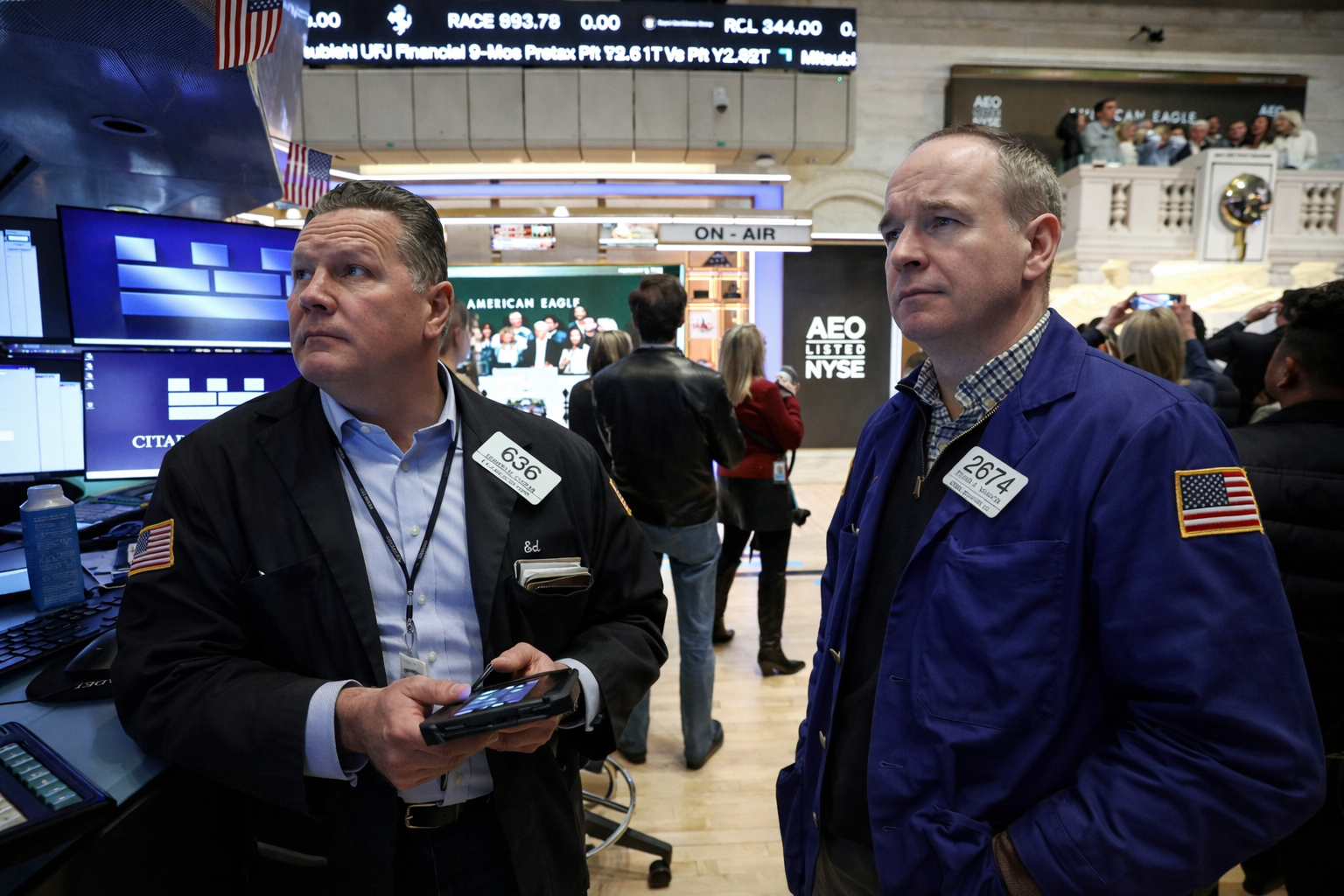
Wall Street is undergoing a notable shift as capital rotates out of mega-cap technology stocks and into sectors that lagged during the AI-driven rally of recent years. While stocks snapped a two-week losing streak on Friday, year-to-date performance tells a more nuanced story: Technology, Consumer Discretionary, and Financials remain in negative territory, while Energy, Materials, and Industrials are delivering double-digit gains. The transition suggests investors are reassessing risk concentration in the “Magnificent Seven” and broadening exposure amid rising volatility and evolving AI narratives.
Capital Rotation Signals Changing Risk Appetite
Technology’s dominance appears to be cooling. The Technology Select Sector SPDR Fund (XLK) and Consumer Discretionary (XLY) remain under pressure, reflecting outflows from mega-cap names such as Microsoft, Amazon, and Tesla. According to Truist strategist Keith Lerner, “Money’s moving out of tech,” highlighting investor fatigue with crowded positioning and stretched valuations.
The “AI scare trade” — triggered by concerns that artificial intelligence could disrupt enterprise software business models — has weighed heavily on the iShares Expanded Tech-Software Sector ETF (IGV), which is down 23% year to date. The impact has extended beyond software into cybersecurity, logistics, and wealth management, as investors scrutinize AI’s potential to reshape cost structures across industries.
This dispersion marks a departure from the narrow leadership that defined much of the prior bull market.
Energy and Cyclicals Take the Baton
Energy stocks are among the biggest beneficiaries of the rotation. The Energy Select Sector SPDR Fund (XLE) has surged 22% year to date, supported by rising oil prices and resilient global demand. Shares of Chevron and ExxonMobil are up roughly 20% and 22%, respectively, reinforcing the appeal of tangible asset exposure during periods of macro uncertainty.
Materials (XLB) and Industrials (XLI) have also climbed 15% and 14%, reflecting optimism around AI infrastructure buildouts, reshoring initiatives, and capital expenditure cycles. As supply chains realign and domestic investment accelerates, these sectors are capturing incremental capital flows.
Defensive plays are also gaining traction. Consumer Staples (XLP) have attracted investors seeking stability, with Walmart reaching an all-time high earlier this month. The move suggests a balance between cyclical optimism and risk management.
Macro Backdrop and Forward Outlook
While portfolio rebalancing often occurs at the start of a new year, the current shift has been amplified by volatility tied to AI disruption fears and shifting rate expectations. Polymarket participants anticipate two to three Federal Reserve rate cuts in 2026, a factor that could support broader earnings expansion.
UBS strategists expect the S&P 500 to reach 7,700 by year-end, projecting healthy and widening profit growth across financials, healthcare, utilities, consumer discretionary, and industrials. A continued easing cycle combined with economic resilience could sustain sector rotation rather than a wholesale market retreat.
The critical question is whether the rotation marks a durable regime change or a temporary recalibration. If AI-related disruption fears stabilize and earnings momentum broadens, leadership may diversify further. However, should growth concerns intensify, defensive positioning could dominate.
For now, market leadership is less concentrated and more tactical. Investors appear increasingly willing to look beyond technology, seeking value and stability in sectors poised to benefit from infrastructure spending, energy resilience, and evolving macro conditions.
Comparison, examination, and analysis between investment houses
Leave your details, and an expert from our team will get back to you as soon as possible
* This article, in whole or in part, does not contain any promise of investment returns, nor does it constitute professional advice to make investments in any particular field.
To read more about the full disclaimer, click here
- orshu
- •
- 5 Min Read
- •
- ago 1 minute
SKN | European Markets Rally Broadly as France Leads Strong Start to the Week
European markets opened the week on a strong footing on Monday, February 23, 2026, with broad-based gains across major indices.
- ago 1 minute
- •
- 5 Min Read
European markets opened the week on a strong footing on Monday, February 23, 2026, with broad-based gains across major indices.

- Lior mor
- •
- 7 Min Read
- •
- ago 2 days
SKN | Is Active Investing Back? Smart Money Outpaces Indexes Amid Tariff Whiplash and AI Turbulence
In a market defined by policy reversals, AI disruption fears, and geopolitical escalation, Wall Street’s “smart money” is finally outperforming
- ago 2 days
- •
- 7 Min Read

In a market defined by policy reversals, AI disruption fears, and geopolitical escalation, Wall Street’s “smart money” is finally outperforming
- orshu
- •
- 6 Min Read
- •
- ago 3 days
SKN | Gold Extends Weekly Gains as U.S.-Iran Tensions Reinforce Safe-Haven Demand
Gold prices moved modestly higher this week as escalating tensions between the United States and Iran supported demand for
- ago 3 days
- •
- 6 Min Read

Gold prices moved modestly higher this week as escalating tensions between the United States and Iran supported demand for
- orshu
- •
- 6 Min Read
- •
- ago 3 days
SKN | Nasdaq Climbs Toward 22,900 as Tech Reasserts Leadership on February 20
The Nasdaq Composite advanced to 22,862.46 on February 20, gaining 179.73 points, or 0.79%, as investors rotated back into
- ago 3 days
- •
- 6 Min Read

The Nasdaq Composite advanced to 22,862.46 on February 20, gaining 179.73 points, or 0.79%, as investors rotated back into

