


- sagi habasov
- •
- 7 Min Read
- •
- 32 minutes ago
Key Points
- Tesla is evaluating multiple U.S. sites to begin large-scale solar cell manufacturing.
- The move revives Elon Musk’s long-stated ambition to build 100 gigawatts of annual solar capacity.
- AI-driven electricity demand and trade barriers are reshaping domestic energy strategy.
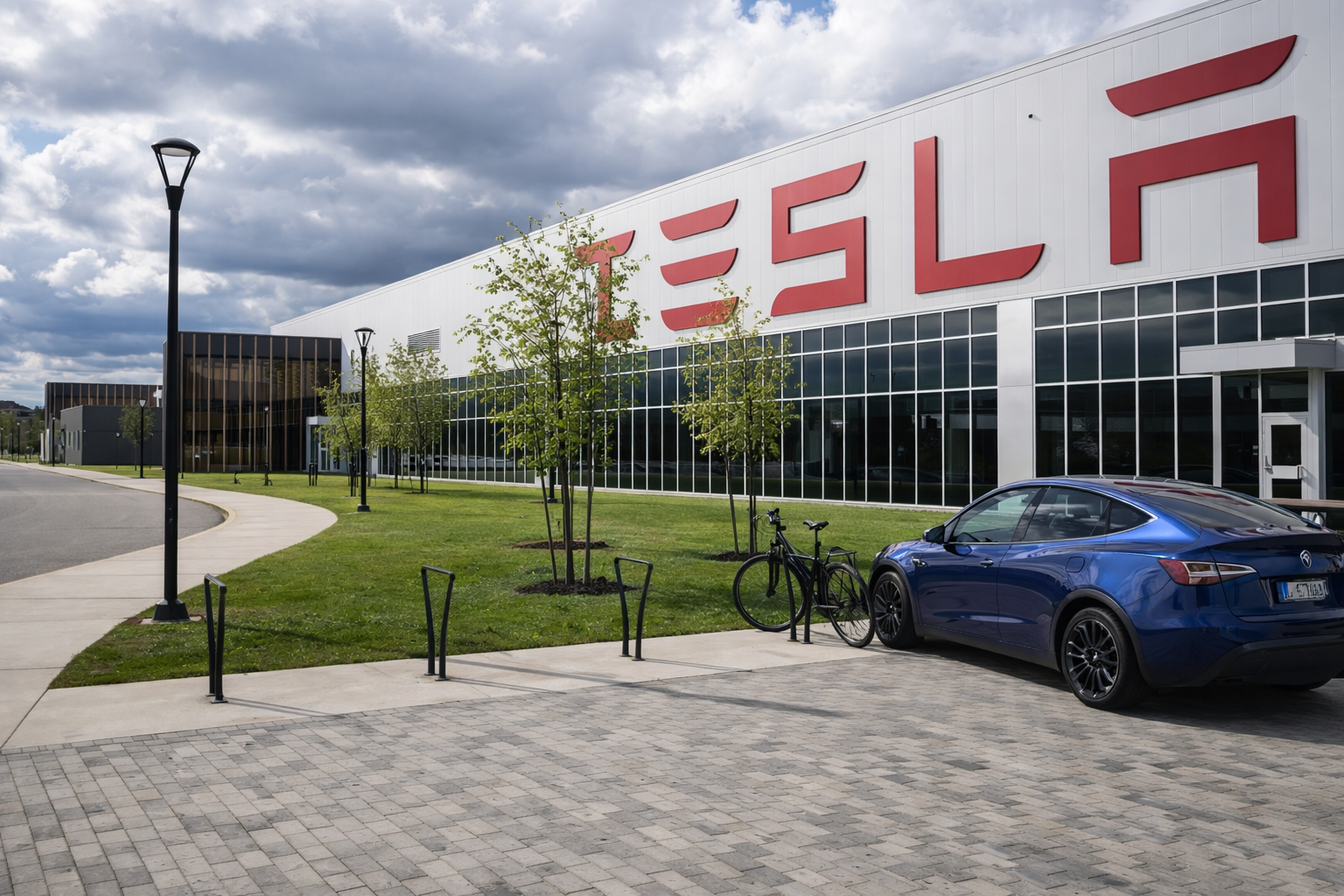
Tesla is quietly laying the groundwork for a major expansion into U.S.-based solar cell manufacturing, transforming what once sounded like an aspirational vision into a concrete industrial plan. According to people familiar with the discussions, the company is assessing several locations across the United States, including New York, Arizona, and Idaho, as it explores how to scale production and reduce reliance on foreign supply chains.
From Vision to Site Selection
Tesla Inc. is considering expanding output at its existing facility in Buffalo, New York, where solar manufacturing capacity could ultimately reach as much as 10 gigawatts. That level of production would be comparable to the output of roughly 10 nuclear power plants, underscoring the scale of Tesla’s ambition. Longer term, one scenario under review involves building an additional factory elsewhere in New York state, according to one of the sources.
Beyond New York, Arizona and Idaho have emerged as potential candidates. The effort is being led by Tesla Vice President Bonne Eggleston, who has publicly signaled increased hiring for domestic solar manufacturing roles. While Tesla has not confirmed the plans, the geographic scope suggests the company is prioritizing regions with favorable logistics, labor availability, and energy infrastructure.
AI Power Demand Rewrites the Solar Equation
The renewed push comes as artificial intelligence dramatically reshapes electricity demand projections. Data centers powering AI models are consuming vast amounts of energy, pushing technology leaders to rethink long-term power sourcing. For Elon Musk, this has brought solar back to the forefront after earlier efforts, such as Tesla’s Solar Roof, failed to gain mass-market traction.
Solar cells, the thin wafers used to manufacture panels, are the focus of the current strategy. Musk recently said that both Tesla and SpaceX are building toward 100 gigawatts of annual solar cell production, framing the effort as a response to both energy demand and trade realities. On a recent podcast, Musk highlighted what he described as “gigantic” U.S. tariffs on imported solar products, reinforcing the economic logic of domestic manufacturing.
Competing With China’s Dominance
The challenge is formidable. China dominates global solar cell production, while the United States currently produces only about 3 gigawatts annually, according to BloombergNEF. Most U.S. solar manufacturing capacity is concentrated in panel assembly rather than upstream cell production, leaving the sector exposed to supply disruptions and pricing power from abroad.
Tesla’s interest in scaling domestic cell manufacturing reflects a broader strategic recalibration. Tariffs alone have not been enough to jump-start U.S. solar manufacturing, and recent policy moves under President Donald Trump have rolled back incentives that once supported solar demand. Against that backdrop, Tesla’s plan appears less dependent on subsidies and more aligned with long-term industrial self-sufficiency and AI-driven energy needs.
Global Sourcing Meets Domestic Ambitions
Even as Tesla explores U.S. sites, Musk’s teams from Tesla and SpaceX have reportedly visited solar manufacturers in China to study production equipment and processes. That dual-track approach highlights a pragmatic reality: building competitive domestic capacity may still require leveraging global expertise, at least in the early stages.
What Comes Next
Whether Tesla’s solar expansion ultimately reaches Musk’s 100-gigawatt target remains uncertain. The company’s past struggles in residential solar serve as a cautionary tale. Still, the scale and urgency of today’s energy transition—amplified by AI—create a very different backdrop. If Tesla succeeds, it could reshape U.S. solar manufacturing and reposition the company as a central player in the next phase of the energy-industrial buildout.
Comparison, examination, and analysis between investment houses
Leave your details, and an expert from our team will get back to you as soon as possible
* This article, in whole or in part, does not contain any promise of investment returns, nor does it constitute professional advice to make investments in any particular field.
To read more about the full disclaimer, click here
- omer bar
- •
- 7 Min Read
- •
- ago 4 hours
SKN | Is Norwegian Gas Becoming Europe’s Transitional Anchor in the Energy Shift?
Equinor and Eneco have struck a five-year natural gas supply agreement that underscores how Europe’s energy transition is increasingly defined
- ago 4 hours
- •
- 7 Min Read

Equinor and Eneco have struck a five-year natural gas supply agreement that underscores how Europe’s energy transition is increasingly defined
- omer bar
- •
- 7 Min Read
- •
- ago 1 day
SKN | Is GE Aerospace’s India Expansion Becoming a Strategic Engine for Global Aviation Growth?
GE Aerospace’s decision to expand its operational and manufacturing presence in India reflects more than a response to short-term aircraft
- ago 1 day
- •
- 7 Min Read

GE Aerospace’s decision to expand its operational and manufacturing presence in India reflects more than a response to short-term aircraft

- Lior mor
- •
- 6 Min Read
- •
- ago 2 days
SKN | Can Venezuela Defy U.S. Pressure and Keep China on Side in the Global Oil Market?
Venezuela has moved quickly to calm Chinese concerns over oil pricing and investment security, pushing back against speculation that Washington
- ago 2 days
- •
- 6 Min Read

Venezuela has moved quickly to calm Chinese concerns over oil pricing and investment security, pushing back against speculation that Washington
- omer bar
- •
- 7 Min Read
- •
- ago 2 days
SKN | Can Shell Beat the Market Again as Oil Prices and Buyback Pressures Collide?
Shell enters its fourth-quarter earnings release at a pivotal moment, with expectations shaped less by raw profit figures and more
- ago 2 days
- •
- 7 Min Read

Shell enters its fourth-quarter earnings release at a pivotal moment, with expectations shaped less by raw profit figures and more

