


- sagi habasov
- •
- 7 Min Read
- •
- 2 months ago
Key Points
- South Korea uncovered an alleged $102 million crypto laundering operation tied to cross-border FX violations.
- Customs authorities are leading enforcement amid regulatory fragmentation.
- Stricter AML and transaction monitoring rules are likely to follow.
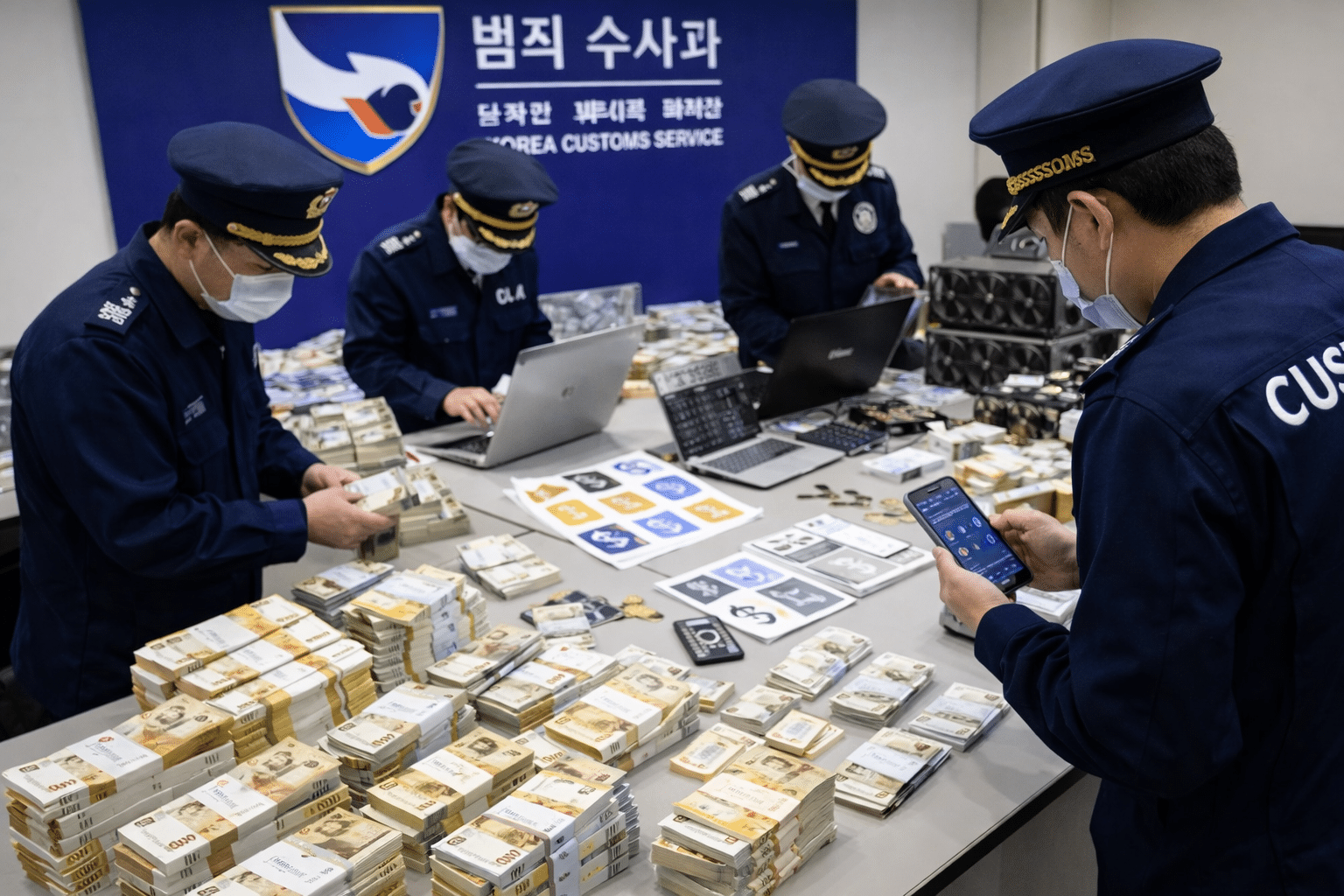
South Korea has intensified its reputation as one of the world’s most aggressive jurisdictions in policing cryptocurrency-related financial crime. Authorities revealed this week that they have dismantled an alleged cross-border crypto laundering operation involving nearly 149 billion won, or about $102 million, highlighting how digital assets are increasingly intersecting with foreign exchange violations and national security concerns.
The investigation, led by the Korea Customs Service, resulted in three Chinese nationals being referred to prosecutors after officials determined that the suspects had allegedly moved funds between domestic and overseas crypto accounts while routing transactions through South Korean bank accounts. According to reporting by Yonhap News Agency, the activity spanned from September 2021 through mid-2025.
Customs at the Center of Crypto Enforcement
Unlike many jurisdictions where financial regulators or central banks take the lead, South Korea’s customs authority has emerged as the primary enforcer of cross-border crypto activity. Officials have not disclosed which exchanges or intermediaries were used, nor whether assets were seized or frozen, underscoring that the probe remains at an early prosecutorial stage.
Analysts say this reflects a structural reality in South Korea’s regulatory framework. With no single, comprehensive law governing cross-border cryptocurrency transfers, authorities rely heavily on existing foreign exchange statutes. That places customs officials at the forefront as crypto becomes an increasingly common vehicle for capital flight, sanctions evasion, and illicit fund transfers.
“Enforcement First, Regulation Later”
Industry observers describe Seoul’s posture as deliberately assertive. Researchers note that regulatory fragmentation—particularly disagreements between the Bank of Korea and the Financial Services Commission—has slowed the development of a unified crypto rulebook. In response, enforcement has filled the gap.
Data cited by customs officials show that more than 80% of foreign exchange crimes detected over the past five years have involved cryptocurrency transactions. A prior case uncovered in 2025 revealed nearly $39 million moved illegally between South Korea and Russia through thousands of transactions using USDT, reinforcing concerns that digital assets can bypass traditional financial controls.
The 2024 Virtual Asset User Protection Act further expanded authorities’ powers, allowing for faster intervention and clearer legal grounds for seizures. Combined with a reported 40% surge in crypto-related seizures in 2025, the message to market participants is clear: oversight is tightening, even if regulation remains a work in progress.
Implications for Exchanges and Investors
While the identities of the suspects and counterparties remain undisclosed, the case is already reverberating through South Korea’s crypto ecosystem. Compliance experts expect heightened scrutiny of exchanges, including stricter know-your-customer rules, real-time transaction monitoring, and deeper AML audits aligned with FATF standards.
This comes as South Korea has also pressured major platforms such as Google Play to block unregistered crypto exchanges, narrowing access points for retail users. Together, these measures suggest a strategic pivot from reactive fraud investigations toward systemic control of digital asset flows.
What Comes Next
Prosecutors will now decide whether to bring formal charges, a step that could clarify how courts interpret existing foreign exchange laws in crypto-related cases. More broadly, the investigation highlights a growing consensus among policymakers that digital assets can no longer sit outside traditional financial crime frameworks.
For global markets, South Korea’s approach may offer a preview of what lies ahead elsewhere: aggressive enforcement first, followed by regulatory consolidation. As cross-border crypto activity continues to expand, investors and platforms operating in Asia may need to prepare for a landscape where compliance expectations rise faster than formal rulemaking.
Comparison, examination, and analysis between investment houses
Leave your details, and an expert from our team will get back to you as soon as possible
* This article, in whole or in part, does not contain any promise of investment returns, nor does it constitute professional advice to make investments in any particular field.
To read more about the full disclaimer, click here
- Lior mor
- •
- 8 Min Read
- •
- ago 3 days
SKN | Is Stress Emerging in the $1.8 Trillion Private Credit Market as JPMorgan Tightens Lending?
JPMorgan Chase has begun tightening lending conditions for some private credit funds after reducing the value of certain loans used
- ago 3 days
- •
- 8 Min Read
JPMorgan Chase has begun tightening lending conditions for some private credit funds after reducing the value of certain loans used

- omer bar
- •
- 7 Min Read
- •
- ago 3 days
SKN | Why Is Amazon Raising Nearly $50 Billion in Bonds as AI Spending Accelerates?
Amazon has launched one of the largest corporate bond offerings in history as technology giants race to secure funding for
- ago 3 days
- •
- 7 Min Read

Amazon has launched one of the largest corporate bond offerings in history as technology giants race to secure funding for

- orshu
- •
- 7 Min Read
- •
- ago 4 days
SKN | South Korea’s KOSPI Surges Over 5% in Powerful Rally — What Drove the March 10 Market Breakout?
South Korea’s KOSPI Composite Index delivered a powerful rally on March 10, surging 280.72 points (+5.35%) to close at
- ago 4 days
- •
- 7 Min Read
South Korea’s KOSPI Composite Index delivered a powerful rally on March 10, surging 280.72 points (+5.35%) to close at
- orshu
- •
- 6 Min Read
- •
- ago 4 days
SKN | European Stocks Rally Sharply as DAX, EURO STOXX 50 Lead Broad Market Gains
European financial markets closed significantly higher on March 10, with broad-based gains across major stock indices. Investors returned to
- ago 4 days
- •
- 6 Min Read

European financial markets closed significantly higher on March 10, with broad-based gains across major stock indices. Investors returned to

