


- omer bar
- •
- 7 Min Read
- •
- 36 minutes ago
Key Points
- Oracle’s cloud revenue continues to accelerate, driven by AI infrastructure demand and large hyperscale partnerships.
- The company’s remaining performance obligations (RPO) have surged, signaling strong forward visibility.
- Valuation has expanded significantly, raising the question of whether growth can justify current pricing.
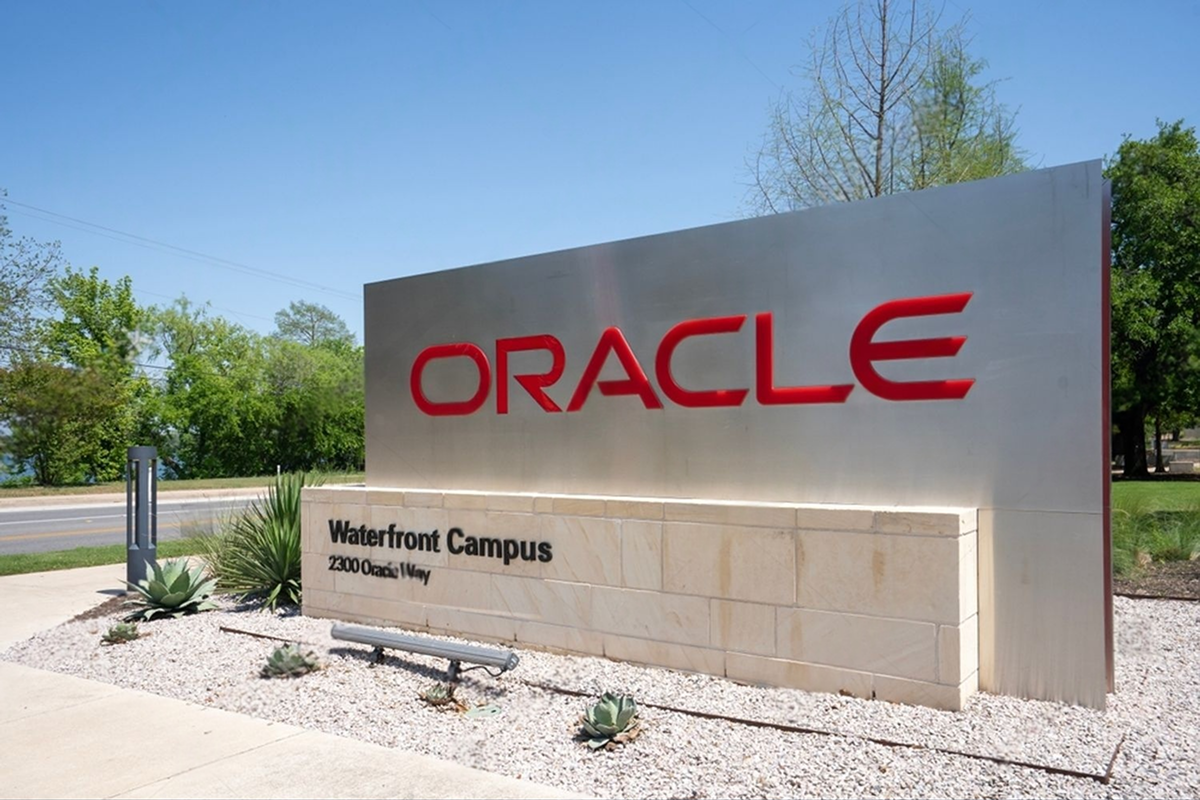
Oracle Corporation (NYSE: ORCL) has reemerged as a central player in the global AI infrastructure race, delivering a sharp re-rating in its share price over the past year. Once viewed primarily as a legacy database provider, Oracle is now positioning itself as a critical backbone of enterprise cloud and artificial intelligence workloads. The debate facing investors is whether this transformation represents a structural shift that justifies long-term upside — or whether expectations have already been priced in.
Cloud and AI: A Structural Pivot
Oracle’s transformation is anchored in the rapid growth of Oracle Cloud Infrastructure (OCI). In its most recent fiscal year (FY2024), the company reported total revenue of approximately $53 billion, with cloud services and license support revenue growing at a double-digit rate year over year. OCI revenue, in particular, has posted growth above 40% in recent quarters, reflecting rising demand for high-performance computing and AI model training.
Management has emphasized multi-billion-dollar cloud contracts tied to AI workloads, including partnerships with hyperscale customers. Remaining performance obligations — a key measure of contracted future revenue — have expanded sharply, surpassing $90 billion in recent filings. This backlog provides unusual forward visibility for a company once criticized for slow growth.
The strategic implications are significant. AI training requires immense computing capacity, and Oracle’s Gen2 cloud architecture is designed for high bandwidth and low-latency workloads. If enterprise AI adoption accelerates globally, Oracle stands to benefit disproportionately from infrastructure demand rather than just application-layer services.
Financial Strength and Capital Allocation
Despite heavy capital expenditures tied to data center expansion, Oracle continues to generate substantial free cash flow. In FY2024, operating cash flow exceeded $18 billion, supporting dividends and share repurchases. The company maintains an investment-grade credit profile, though net debt remains elevated following prior acquisitions, including Cerner.
Margins remain robust compared to many cloud peers. Oracle’s operating margin consistently exceeds 30%, reflecting the durability of its database franchise and support contracts. This profitability provides a cushion as the company invests aggressively in AI-related infrastructure.
However, valuation metrics have shifted meaningfully. Oracle’s forward price-to-earnings multiple has expanded relative to its historical range, reflecting its repositioning as an AI infrastructure play rather than a mature enterprise software provider. The key question is whether earnings growth can sustain this multiple expansion over the next several years.
Macro Context and Competitive Landscape
Oracle’s opportunity must be assessed within a broader macro environment characterized by elevated interest rates and heightened scrutiny of capital spending. Enterprise IT budgets remain resilient but selective. Large AI projects often require multi-year commitments, making execution risk a factor.
Competition is also intense. Amazon Web Services, Microsoft Azure, and Google Cloud dominate global cloud market share. Oracle’s differentiation lies in performance efficiency and integrated database capabilities, but sustaining share gains will require continued technological leadership and pricing discipline.
For Israeli investors and global institutional allocators alike, Oracle’s exposure to AI infrastructure may offer portfolio diversification relative to pure semiconductor plays. Yet the stock’s recent rally reflects optimism that AI demand will remain durable across economic cycles — an assumption that could be tested if macro conditions deteriorate.
Looking ahead, the trajectory of OCI growth, capital expenditure efficiency, and margin stability will be critical indicators. Investors will also monitor whether large AI contracts convert into recurring, high-margin revenue streams. If execution remains consistent and demand for AI compute continues expanding, Oracle’s transformation may prove structural rather than cyclical. However, elevated expectations mean that even modest disappointments could introduce volatility. The coming quarters will determine whether Oracle’s repositioning represents a multi-year inflection point or simply a powerful phase within a competitive technology cycle.
Comparison, examination, and analysis between investment houses
Leave your details, and an expert from our team will get back to you as soon as possible
* This article, in whole or in part, does not contain any promise of investment returns, nor does it constitute professional advice to make investments in any particular field.
To read more about the full disclaimer, click here
- Ronny Mor
- •
- 7 Min Read
- •
- ago 2 minutes
SKN | Nvidia and Meta Deepen AI Alliance: Will Millions of New GPUs Reinforce Nvidia’s Lead in the AI Arms Race?
Nvidia and Meta have unveiled an expanded multiyear, multi-generational partnership that will see the social media giant deploy millions of
- ago 2 minutes
- •
- 7 Min Read
Nvidia and Meta have unveiled an expanded multiyear, multi-generational partnership that will see the social media giant deploy millions of

- sagi habasov
- •
- 7 Min Read
- •
- ago 39 minutes
SKN | Apple’s AI Wearable Push: Can Smart Glasses, a Pendant and Camera AirPods Redefine the Post-iPhone Era?
Apple is accelerating development of three new wearable devices — smart glasses, a camera-enabled pendant and upgraded AirPods — in
- ago 39 minutes
- •
- 7 Min Read

Apple is accelerating development of three new wearable devices — smart glasses, a camera-enabled pendant and upgraded AirPods — in

- Lior mor
- •
- 7 Min Read
- •
- ago 4 hours
SKN | Amazon vs. Walmart: Which Retail Giant Is Winning the U.S. Consumer in 2026?
The battle for the American consumer has rarely been this intense. In 2026, Walmart has surged roughly 20% year-to-date, reaching
- ago 4 hours
- •
- 7 Min Read

The battle for the American consumer has rarely been this intense. In 2026, Walmart has surged roughly 20% year-to-date, reaching
- sagi habasov
- •
- 7 Min Read
- •
- ago 4 hours
SKN | Apple Accelerates AI Wearables Push – A New Growth Engine Beyond the iPhone?
Apple Inc. is intensifying efforts to integrate artificial intelligence into its wearable product lineup, marking a strategic shift as
- ago 4 hours
- •
- 7 Min Read
Apple Inc. is intensifying efforts to integrate artificial intelligence into its wearable product lineup, marking a strategic shift as

