


- Ronny Mor
- •
- 8 Min Read
- •
- 2 months ago
Key Points
- JPMorgan is forming a dedicated team to help companies raise private capital instead of going public.
- The move reflects a belief that private markets represent a structural shift, not a temporary detour from IPOs.
- Banks are repositioning to stay relevant as companies remain private for longer and investors pour capital into alternative assets.
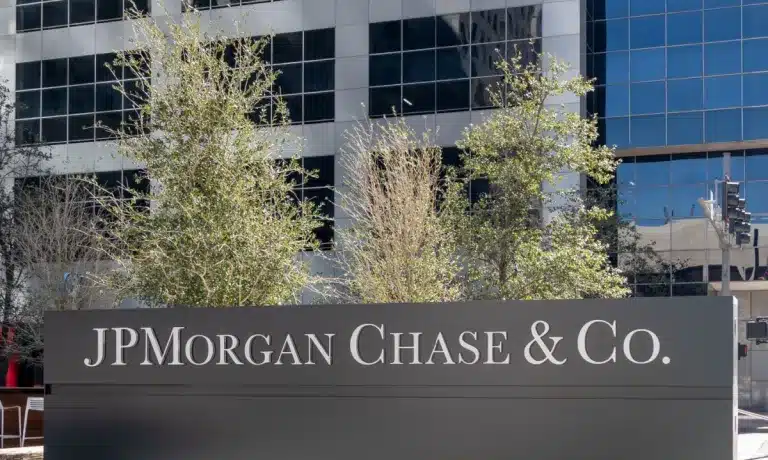
JPMorgan Chase is signaling a decisive shift in how it views the future of capital raising, building a new team within its investment bank to help companies tap private markets as an alternative to traditional initial public offerings. The move underscores a growing conviction on Wall Street that, even if IPO volumes rebound in the near term, the center of gravity in corporate finance has already moved.
Private Capital Takes Center Stage
The new unit, called Private Capital Advisory and Solutions, will operate as a hybrid group inside the investment bank, blending merger-and-acquisition expertise with capital markets advisory. Its mandate is broad: guiding companies through early-stage equity raises, preferred stock issuance, convertible bonds, and secondary transactions that allow existing investors to gain liquidity without a public listing.
Executives say the team reflects a recognition that companies now have far more options than the traditional binary choice of an IPO or an outright sale. Keith Canton, JPMorgan’s co-head of equity capital markets in the Americas, described private markets as having “dwarfed the public markets lately,” arguing that capital formation has increasingly shifted away from stock exchanges.
A Structural Shift, Not a Cyclical One
The timing is notable. While bankers expect several high-profile IPOs later this year, JPMorgan’s strategy suggests skepticism that public markets will regain their former dominance. Over the past decade, IPO volumes have trended lower, while private-equity firms have extended holding periods and institutional investors have committed record sums to private funds.
Secondary transactions — where private companies or sponsors reshuffle ownership without going public — have become especially important. These deals allow founders, employees, and early backers to cash out while companies avoid the scrutiny and regulatory costs of public markets. JPMorgan’s new team aims to sit at the center of that ecosystem.
Staying Close to the Next Generation of Giants
Some of the most valuable U.S. companies remain private far longer than in past cycles. In 2025, the largest equity raise in the country was not an IPO but a $40 billion private offering by OpenAI, accessible to fewer than 50 handpicked investors. Deals of that scale highlight how much capital has migrated behind closed doors.
For JPMorgan, advising private companies may not always generate the same upfront fees as public offerings. But it builds relationships that can pay off handsomely when a company eventually sells, merges, or lists its shares. As Kevin Foley, the bank’s global head of capital markets, put it, the goal is to ensure clients choose JPMorgan regardless of which financing path they pursue.
Tension With Regulators and Old-School Views
The expansion of private markets has drawn criticism from regulators and market purists. Paul Atkins has called for renewed efforts to revitalize public markets, warning that private capital increasingly benefits only wealthy, well-connected investors. Critics argue that prolonged privatization reduces transparency and limits ordinary investors’ access to growth.
Even Jamie Dimon, JPMorgan’s own chief executive, has historically been skeptical of the trend. He has blamed regulation, proxy advisers, and short-term investor pressure for making public markets less attractive, pushing companies into private hands.
What Comes Next
JPMorgan’s move reflects a pragmatic recalibration rather than a rejection of IPOs. Public markets still matter, but banks are increasingly organizing around where capital is flowing today — not where it flowed a decade ago. As private markets continue to swell, the lines between public and private finance are blurring, and advisory models are evolving with them.
For investors, the shift raises broader questions about access, transparency, and where the next generation of market-defining companies will be financed. JPMorgan’s answer appears clear: wherever that happens, it intends to be there first.
Comparison, examination, and analysis between investment houses
Leave your details, and an expert from our team will get back to you as soon as possible
* This article, in whole or in part, does not contain any promise of investment returns, nor does it constitute professional advice to make investments in any particular field.
To read more about the full disclaimer, click here
- omer bar
- •
- 6 Min Read
- •
- ago 22 hours
SKN | Could Rule Changes Fast-Track SpaceX Into the S&P 500 After Its IPO?
S&P Dow Jones Indices is reportedly evaluating potential rule changes that could accelerate the inclusion of newly public companies into
- ago 22 hours
- •
- 6 Min Read
S&P Dow Jones Indices is reportedly evaluating potential rule changes that could accelerate the inclusion of newly public companies into

- Lior mor
- •
- 6 Min Read
- •
- ago 2 days
SKN | Why Is Bitcoin Falling as Oil Surges Above $100 Amid Escalating Iran War?
Bitcoin retreated in early Asian trading as global markets reacted to a renewed surge in oil prices following intensified tensions
- ago 2 days
- •
- 6 Min Read

Bitcoin retreated in early Asian trading as global markets reacted to a renewed surge in oil prices following intensified tensions

- Ronny Mor
- •
- 7 Min Read
- •
- ago 2 days
SKN | Why Is Stellantis Raising €5 Billion in Hybrid Bonds After Scaling Back Its EV Strategy?
Stellantis has turned to the bond market to strengthen its financial position after making significant adjustments to its electric vehicle
- ago 2 days
- •
- 7 Min Read

Stellantis has turned to the bond market to strengthen its financial position after making significant adjustments to its electric vehicle

- orshu
- •
- 7 Min Read
- •
- ago 3 days
SKN | South Korea’s KOSPI Surges Over 5% in Powerful Rally — What Drove the March 10 Market Breakout?
South Korea’s KOSPI Composite Index delivered a powerful rally on March 10, surging 280.72 points (+5.35%) to close at
- ago 3 days
- •
- 7 Min Read
South Korea’s KOSPI Composite Index delivered a powerful rally on March 10, surging 280.72 points (+5.35%) to close at

